News and appeals

Here I report on the project's progress, with the latest entries at the top.

No-till farming and the seed drill from Brazil

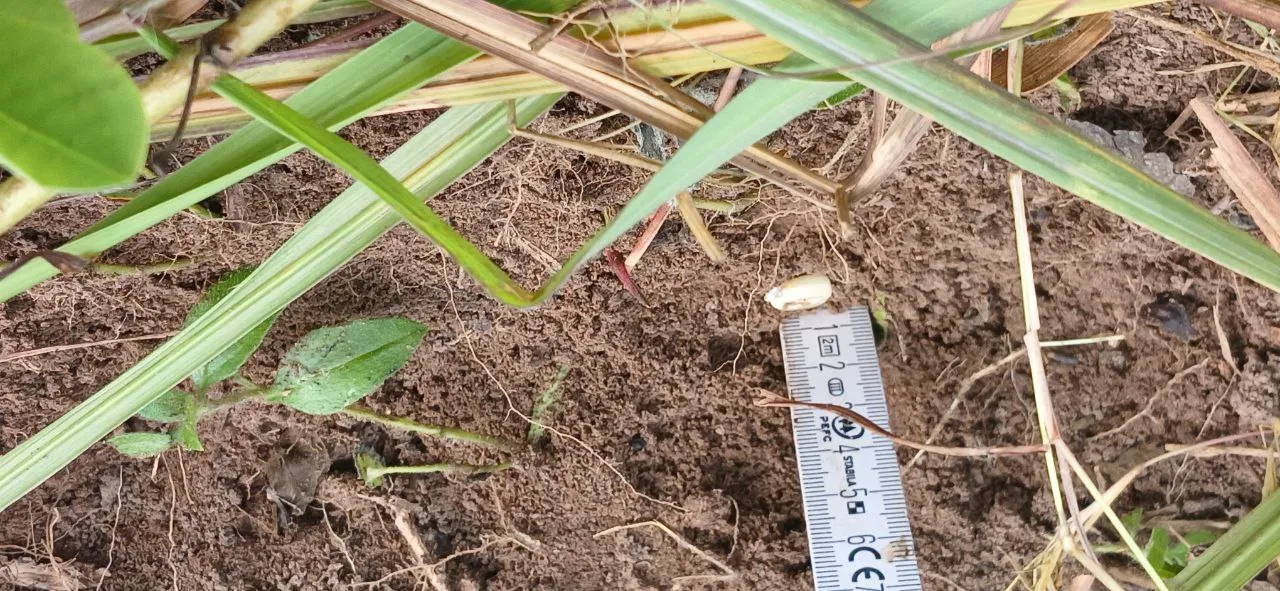
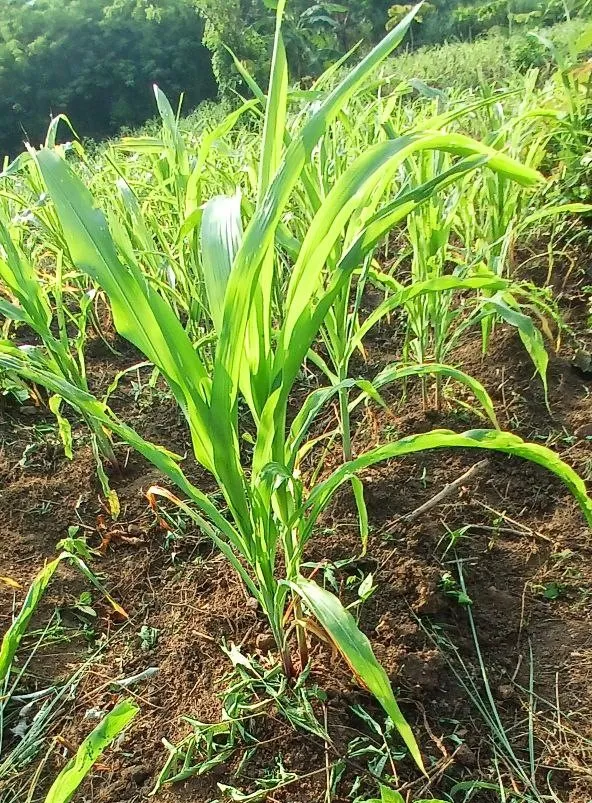
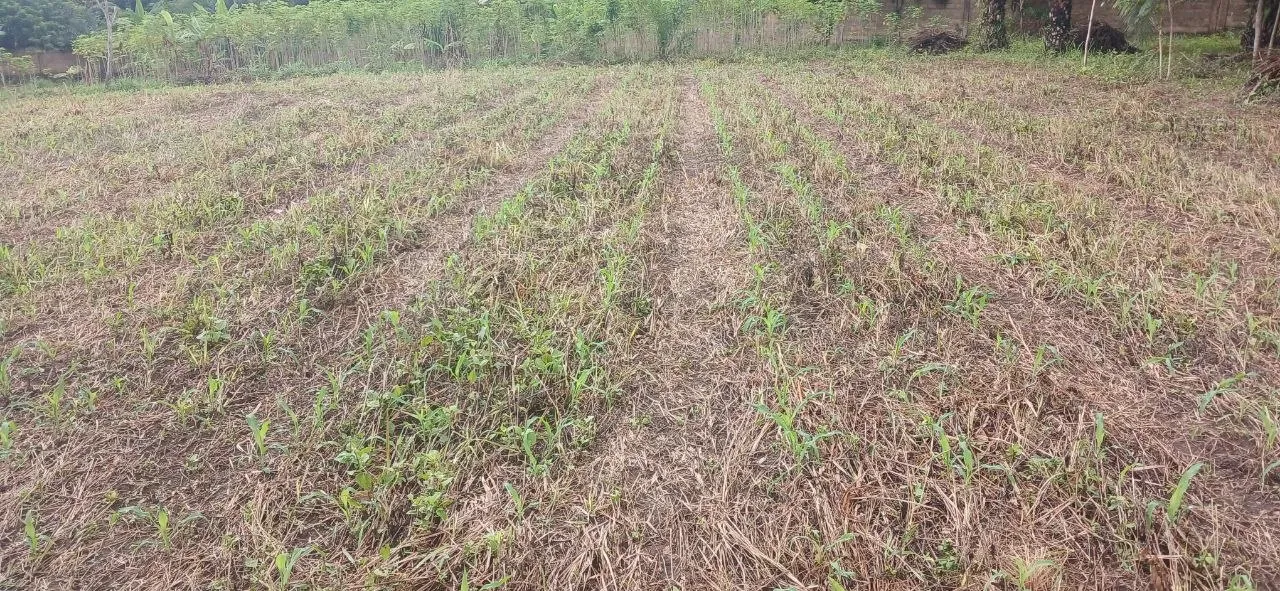
The maize emerged well

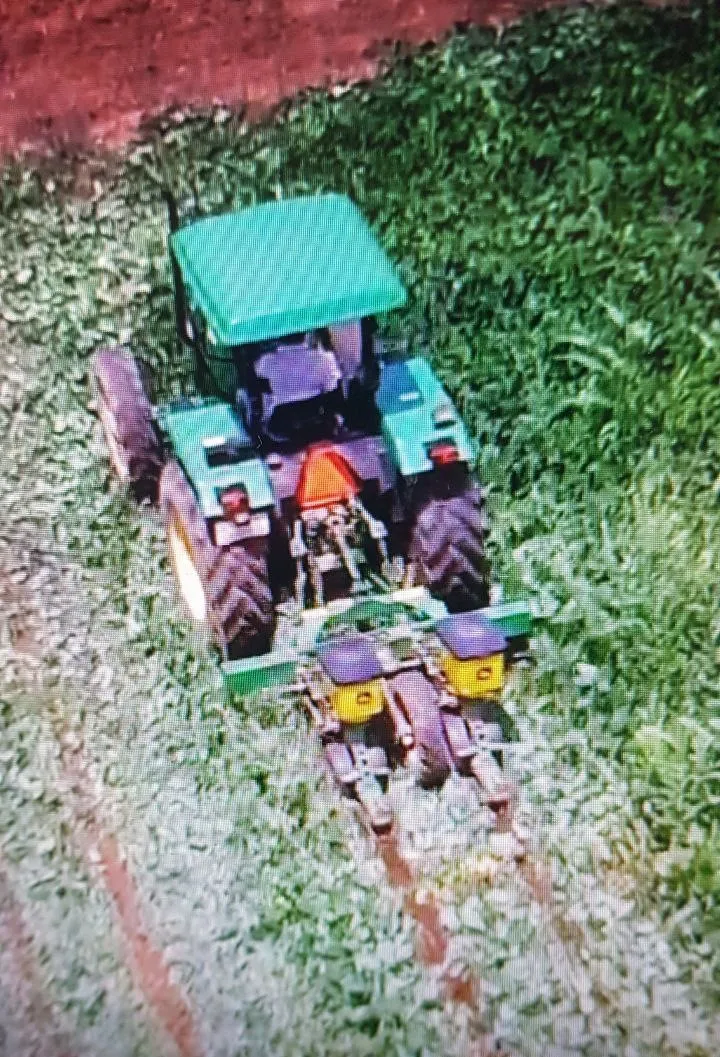
The maize emerged well. When sowing I drive with one wheel in the old track, so no row marker is needed and the same tracks can be used again and again. After sowing I had to apply glyphosate because the plot is not yet perfectly level, so the roller does not catch all the weeds.

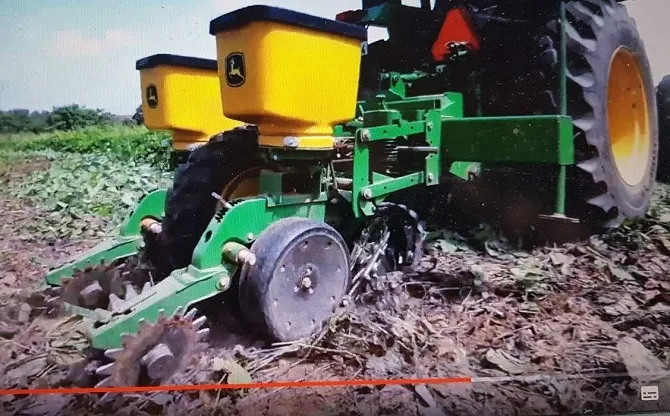
The maize is placed reliably at the right depth

The maize is placed reliably at the right depth. The seeding discs are set in a V shape and open a small seed furrow.

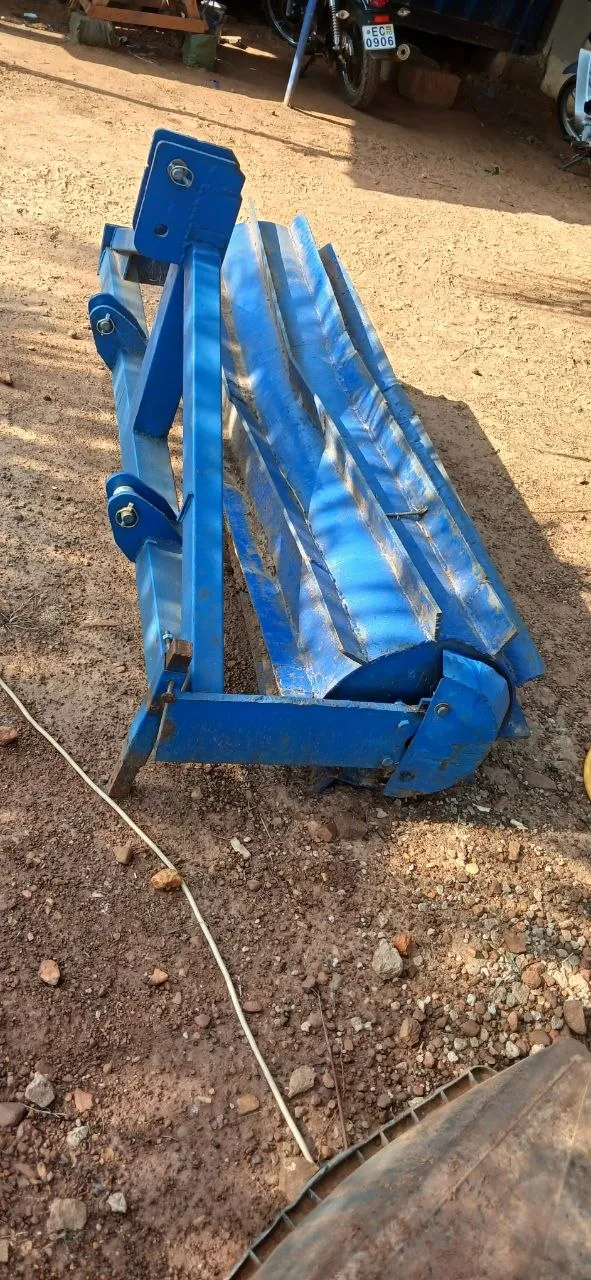
A new addition is this roller, known in America as a roller crimper

A new addition is this roller, known in America as a roller crimper. The roller is filled with water, weighs about 1,000 kg and only crushes the weeds instead of cutting them. The soil stays covered, new weeds germinate later and evaporation drops sharply. According to a training farm in Ghana that I visited last year, this saves up to 50 % water. Video: the roller in action.

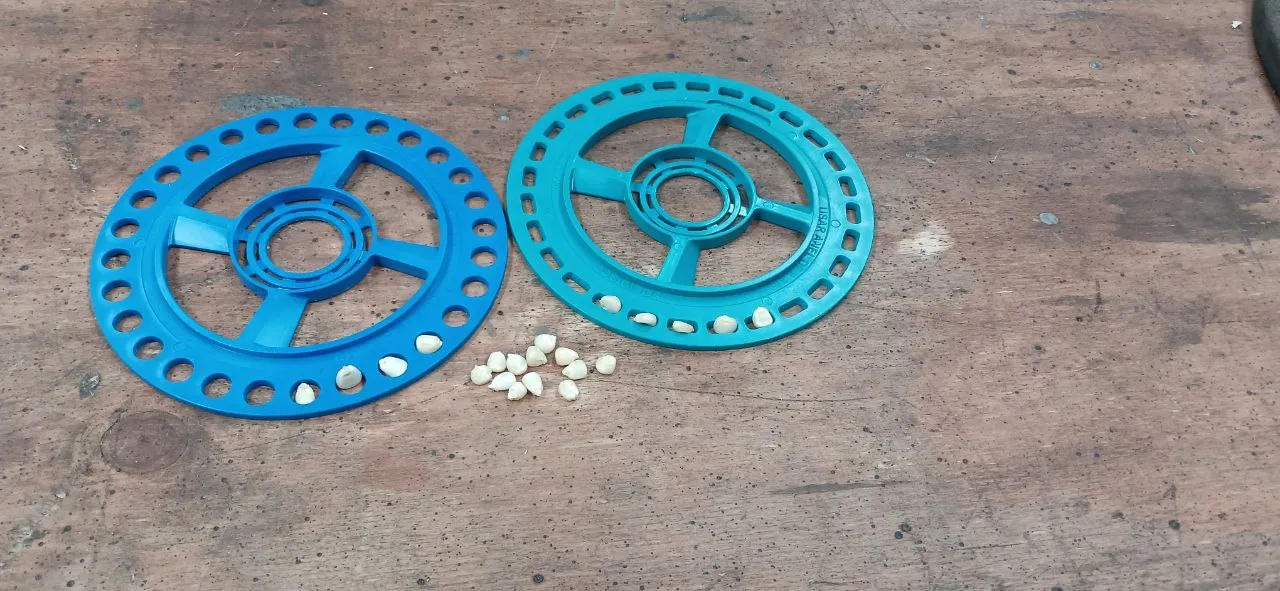
Different seed plates can be fitted in the seed hoppers, so everything from sorghum, soy and maize to broad beans can be

Different seed plates can be fitted in the seed hoppers, so everything from sorghum, soy and maize to broad beans can be sown. The missing plates for broad beans were brought by the seller from Brazil to Agritechnica in Hanover, where Vence Tudo was exhibiting, and my fellow board member Werner Schmeing collected them there. A little graphite powder is added to the seed so the plastic plates run smoothly.

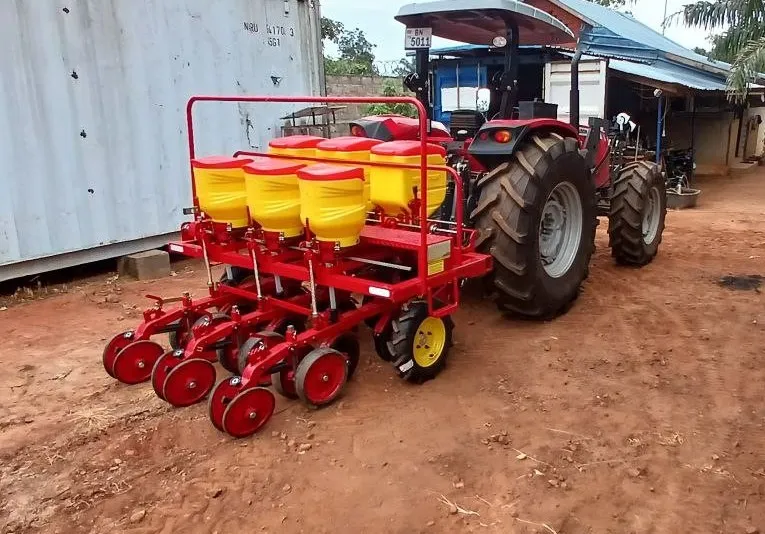
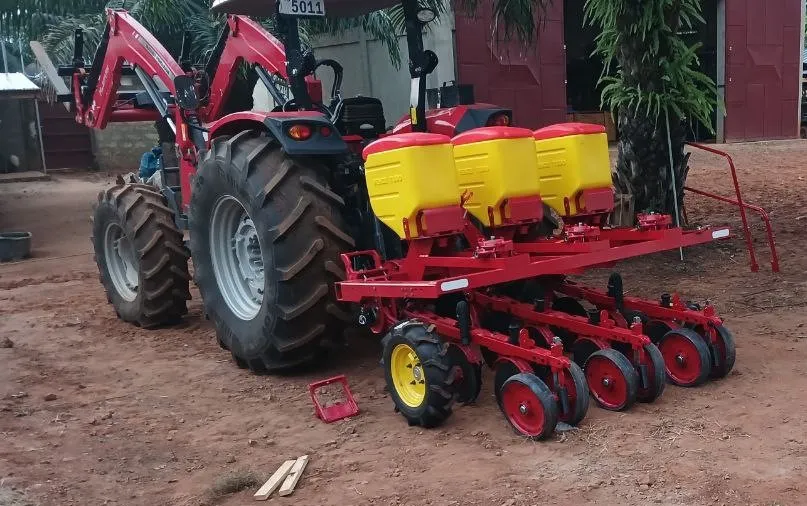
Here the machine is finally fully assembled

Here the machine is finally fully assembled. There were no instructions, so it took several attempts. The seed and fertiliser coulters are discs with slightly different diameters, so they rub against each other and clean themselves. Vence Tudo has been in business for 60 years and has a good reputation.

The machine half assembled: at the front are the hoppers for placing fertiliser under the seed, the seed hoppers follow at

The machine half assembled: at the front are the hoppers for placing fertiliser under the seed, the seed hoppers follow at the back. Seed and fertiliser metering are each driven by a ground wheel with chain and sprockets. It is robust technology, and different sprockets allow different rates and seed spacings.

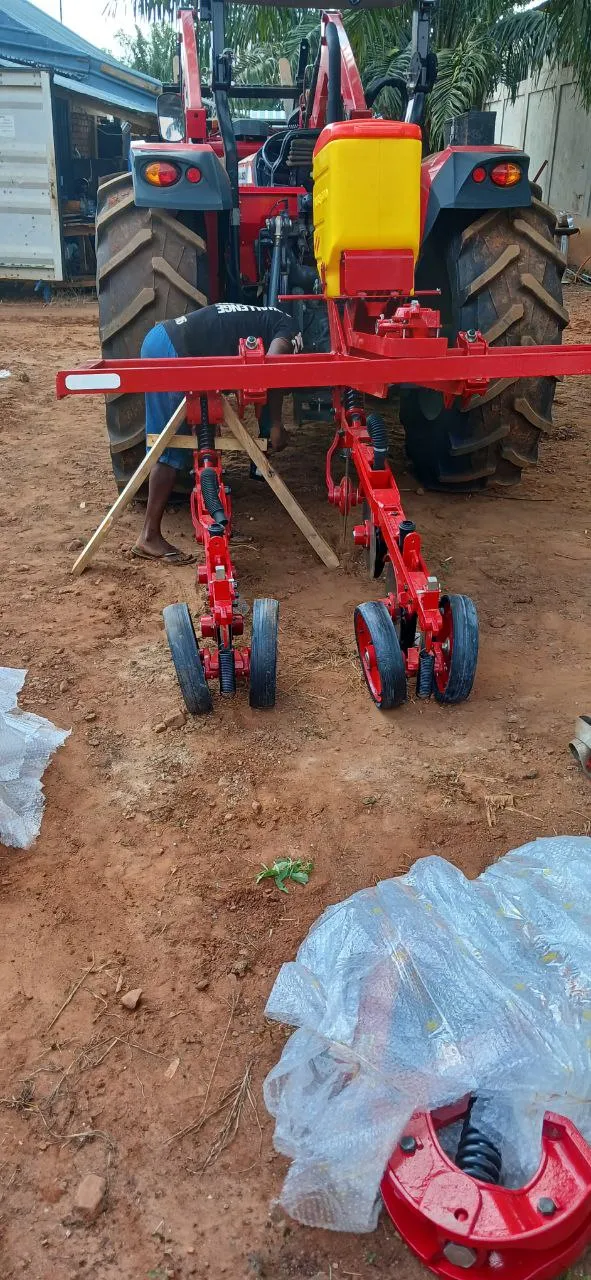
Innocent, one of Anita's brothers, often helps me with the assembly

Innocent, one of Anita's brothers, often helps me with the assembly. The machine is very solidly built and the pre-assembled parts are heavy. I chose a row spacing of 50 cm because it also allows soy and beans.

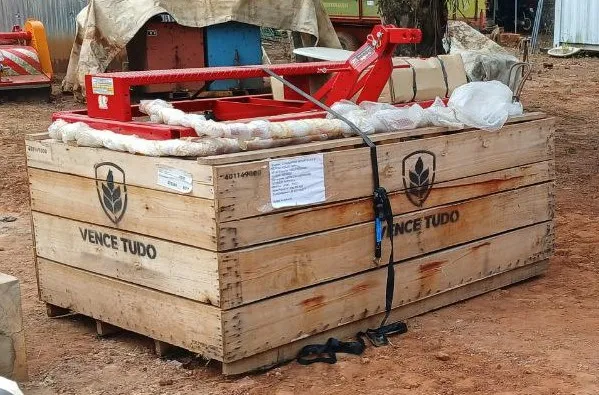
The long-awaited seed drill from Brazil has finally arrived

The long-awaited seed drill from Brazil has finally arrived. A truck with a loading crane delivered it from the port, 1,000 kg including packaging, the machine alone about 800 kg. A big thank you to all donors who made the purchase possible. The seed drill moves the project forward enormously!

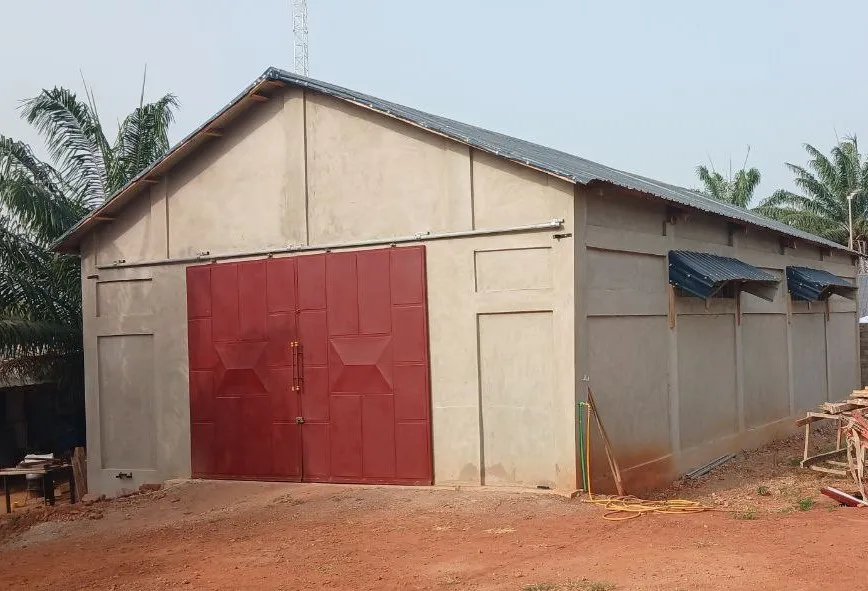
The barn is now finished, including the doors

The barn is now finished, including the doors. Many thanks to Hallenbau Schmeing for donating the door rails and to all other donors who made the building possible. The barn protects not only against theft but also against the relentless sun during many tasks.

Arable farming in the tropics, a challenge

Conditions for arable farming differ greatly between Central Europe and the tropics

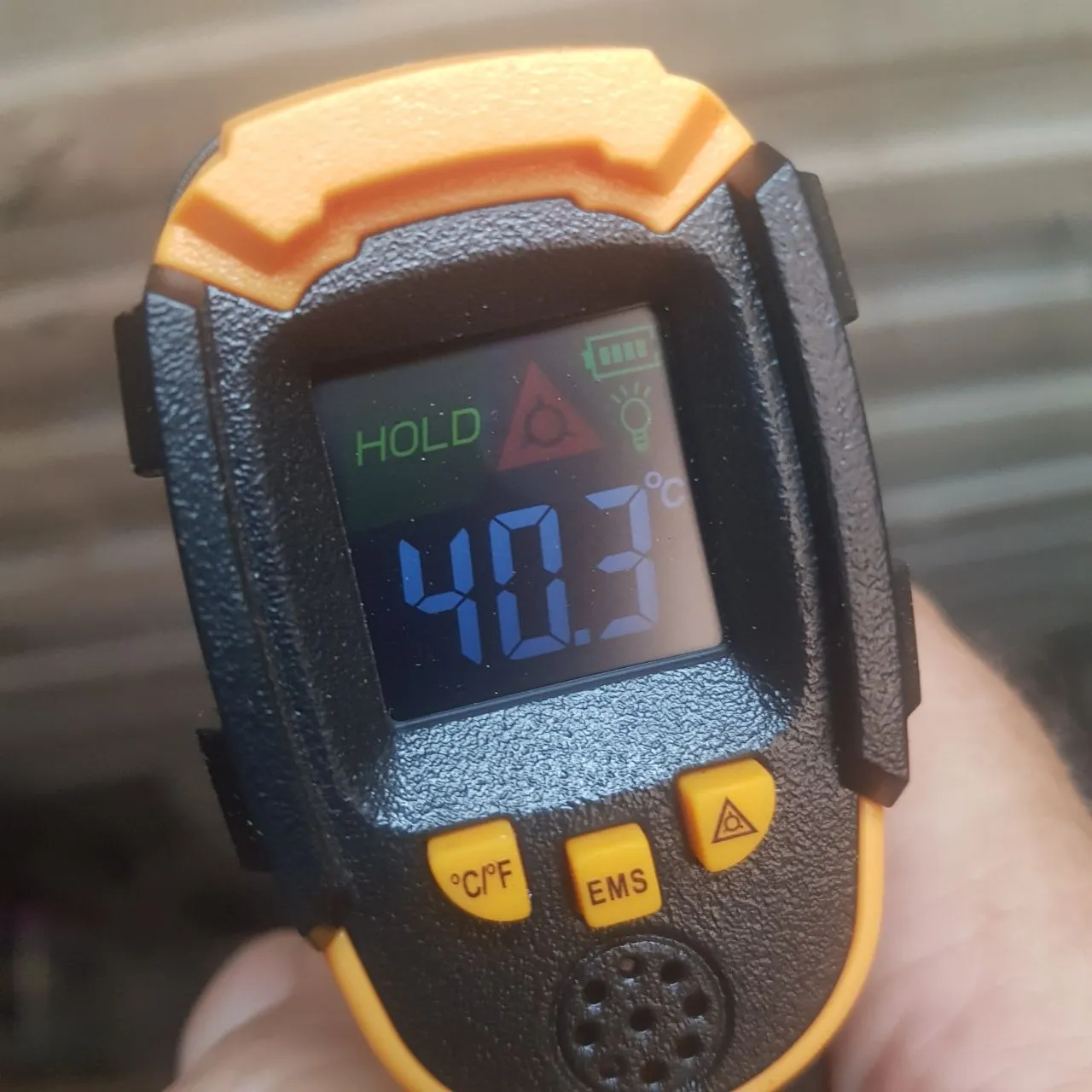
Conditions for arable farming differ greatly between Central Europe and the tropics. Strong sunshine all year round leads to high soil temperatures: in Togo at least 28 °C, and well water from 30 m depth is 27 °C. When this warm soil is aerated by tillage, humus breaks down quickly and what remains is CO2 (more on this, in German). At midday bare soil reaches 40 °C and soil moisture evaporates fast. Water and nutrients can only be stored with enough humus.

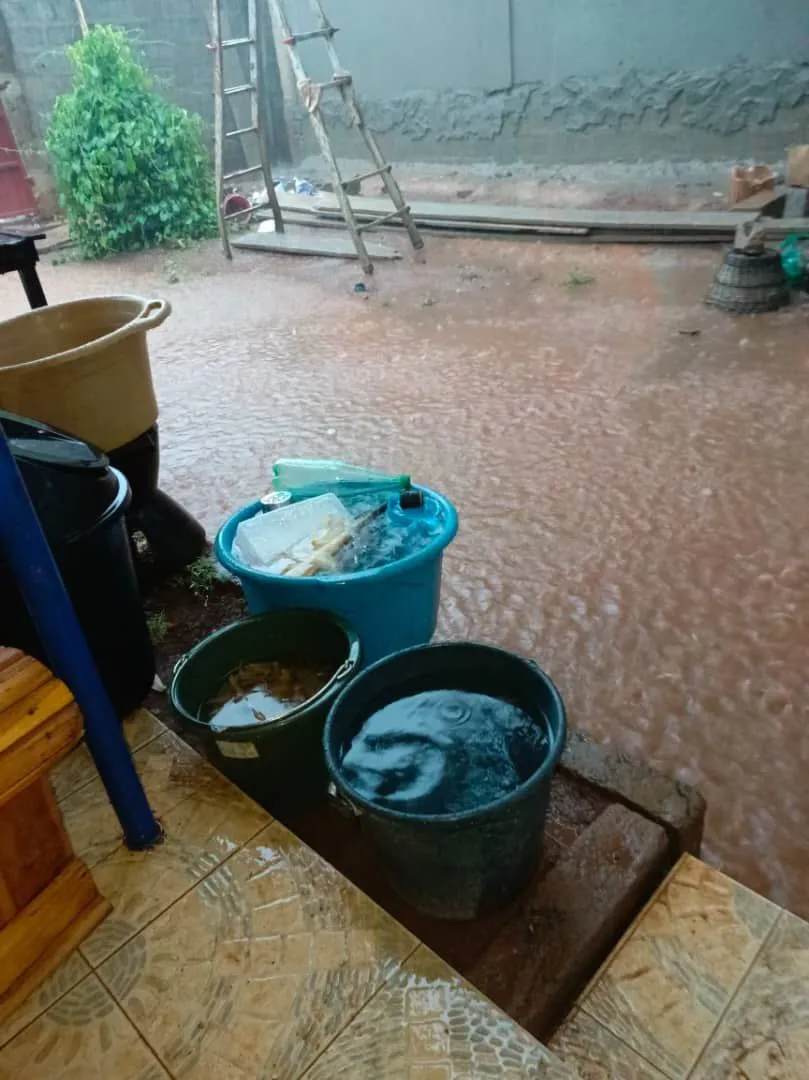
Our terrace, surrounded by water

Our terrace, surrounded by water. The tropical climate brings further problems: heavy rain of sometimes 100 mm or more a day washes dissolved fertiliser salts into deeper soil layers, and as much rainwater as possible has to be stored. A sufficient humus layer can do both. I set up a small weather station to measure rainfall more precisely.

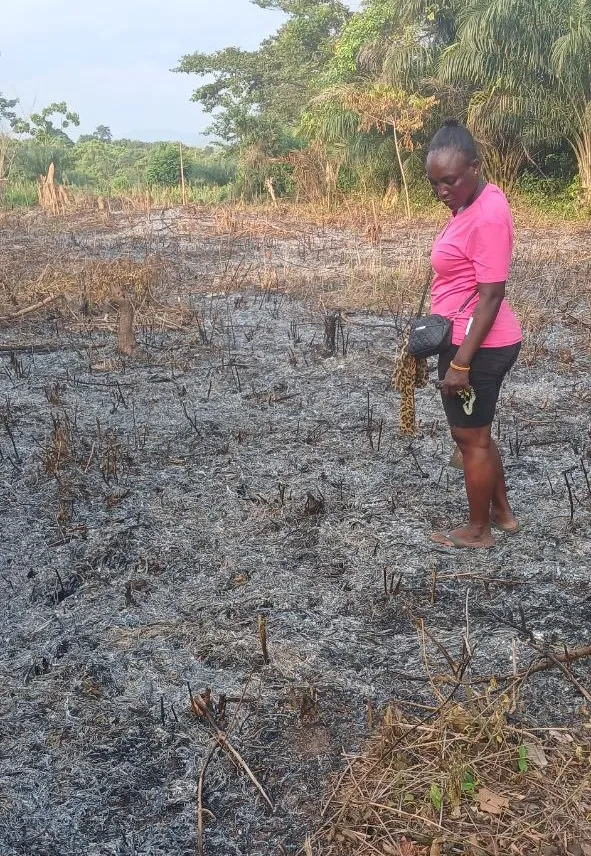
Slash-and-burn, still common, is very bad for the humus balanceSlash-and-burn, still common, is very bad for the humus balance

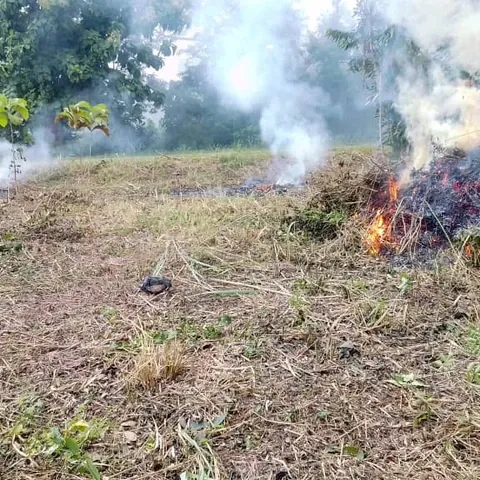
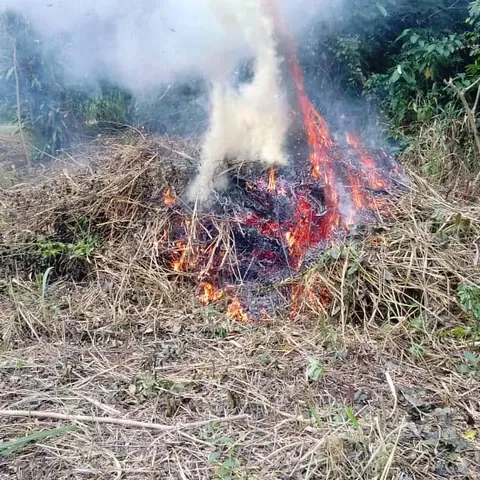
Slash-and-burn, still common, is very bad for the humus balance. It dates from a time when tribes moved around, burned land and used it for three to four years until the soil was exhausted. In the dry season from December to February fires are often set to prepare fields or drive out the last game. There is no fire brigade, and these officially banned fires sometimes get out of control.

The photos show how maize is traditionally sown: three seeds together, usually on a ridge, with 75 cm to 1 m in between. The reason I hear most often: if one seed fails, the others will grow. A former apprentice of mine works on a large farm in the south of the Democratic Republic of the Congo, some 2,500 km away, and the same tradition exists there. The drawbacks: competition keeps the maize from developing well, poor spacing leaves room for weeds that consume the scarce nutrients, and ridges make water shortage worse because rain runs off while heavy aeration breaks down the humus.

No-till sowing into a green manure crop

No-till sowing into a green manure crop. The answer to all these difficulties is no-till farming, practised successfully in Brazil for more than 50 years. Two harvests a year are standard there and possible in Togo with the same climate (information at rolf-derpsch.com). Switching to no-till and not burning the vegetation alone raises yields by 50 %, partly because covered soil evaporates about 45 % less water. My wife Anita and I learned this in April 2024 at the Centre for No Till training farm in Ghana. Its head, Dr Kofi Boa, saw his mother's cocoa plantation destroyed by a fire that got out of control when he was twelve. He vowed to do something about it, studied agriculture and is now supported by the Howard G. Buffett Foundation.

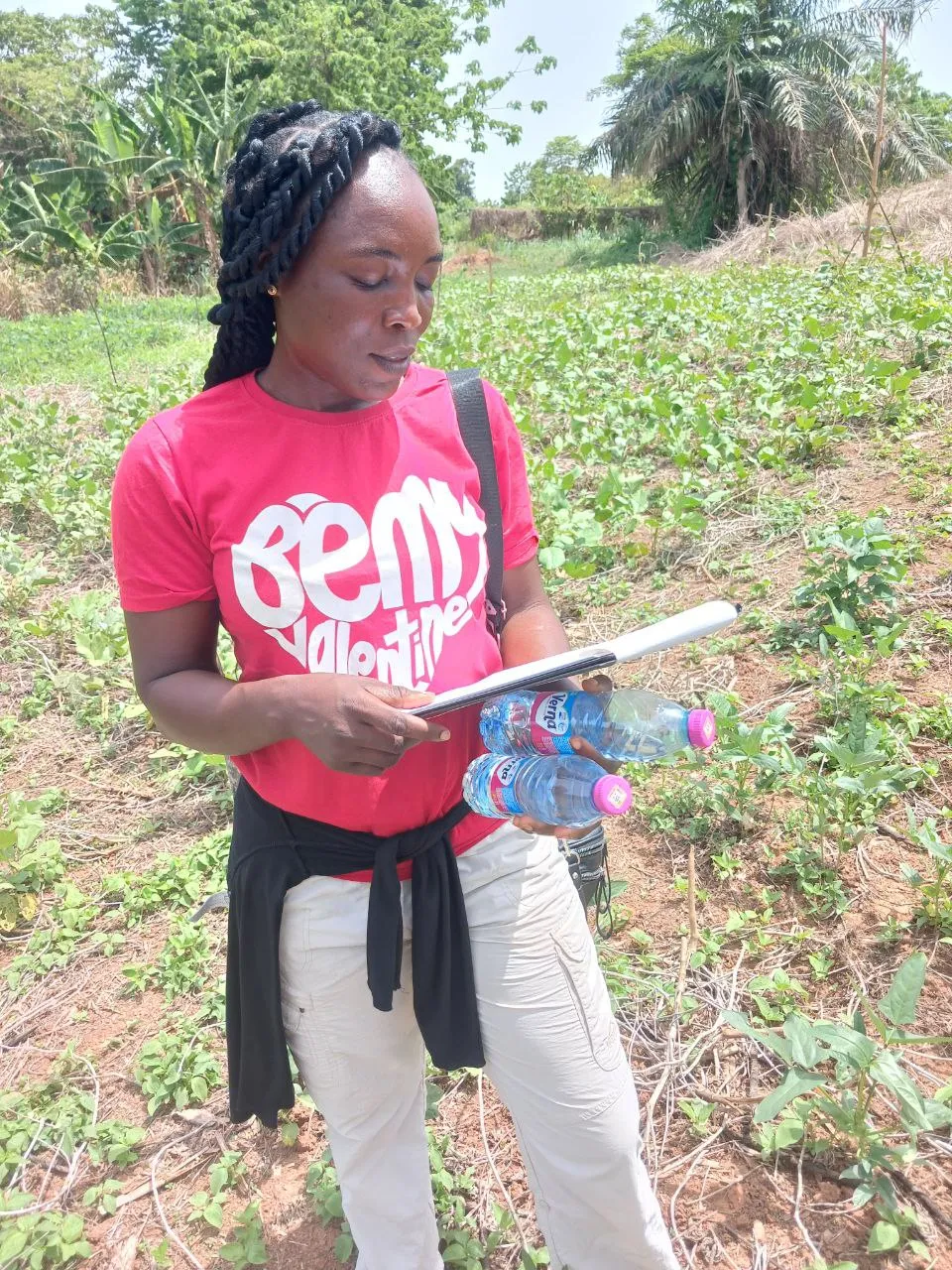
Anita in the trial field

Anita in the trial field. On the farm in Ghana we saw various beans and other legumes. Legumes use nitrogen from the air (78 % of the air we breathe is nitrogen) and store it in the soil, and nitrogen is one of the most important plant nutrients. They can be grown as a cover crop or sown between the maize rows about ten days after the maize, where they supply it with nitrogen. Soy is a legume too and often precedes maize in Brazil.

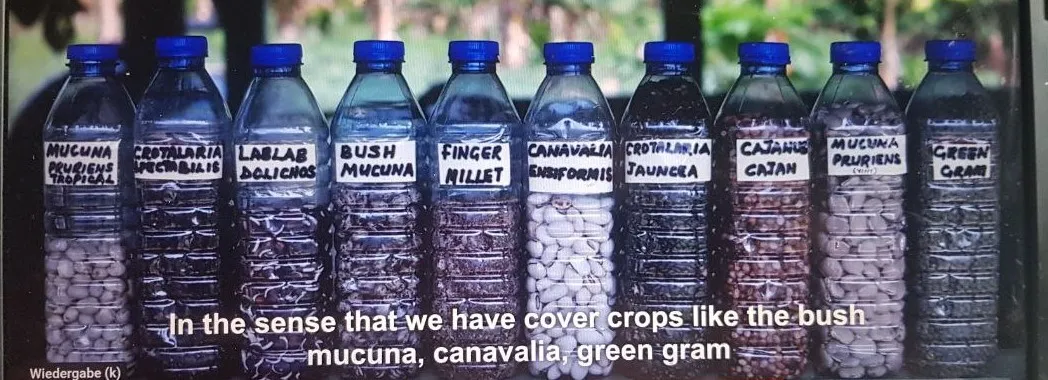
Seed of various legumes and other plants grown and tested on the farm in Ghana

Seed of various legumes and other plants grown and tested on the farm in Ghana. New ones are tried all the time, including plants that make soil phosphate available, another key nutrient besides potassium.

No-till sowing into soil covered with plant residues

No-till sowing into soil covered with plant residues. My aim is to lease 1 to 2 ha of land and show Togolese farmers no-till cultivation there. I know from experience how hard it is to move farmers away from their traditions. But if I show them a way out of this toil and out of poverty, it will convince them. Then they would no longer have to sell their harvest immediately out of need but could store part of it. Around 70 % of the population work in agriculture, so the potential is enormous. What is still missing is a no-till drill like the one we saw in Ghana, and unfortunately we still lack the donations for it. That is the only reason I am in Togo: to help people!

Barn and tractor

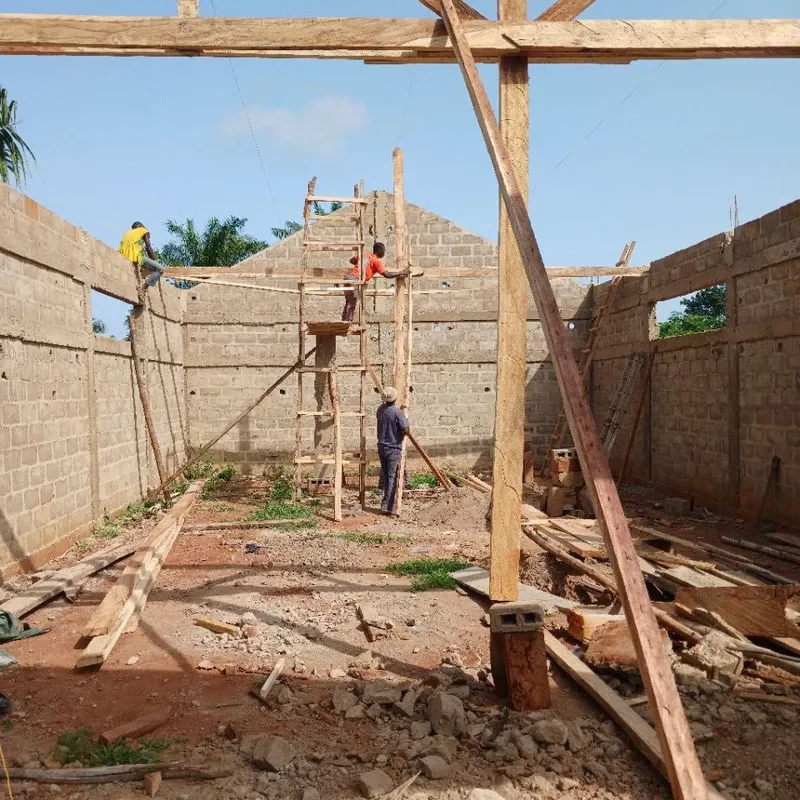
Construction of the barn is finally continuing

Construction of the barn is finally continuing. We had an eight-month halt because of uncertainty about land ownership. That is a big problem in Togo because there is no complete land register as in Germany yet. But we were able to clear everything up, and work is now moving quickly.

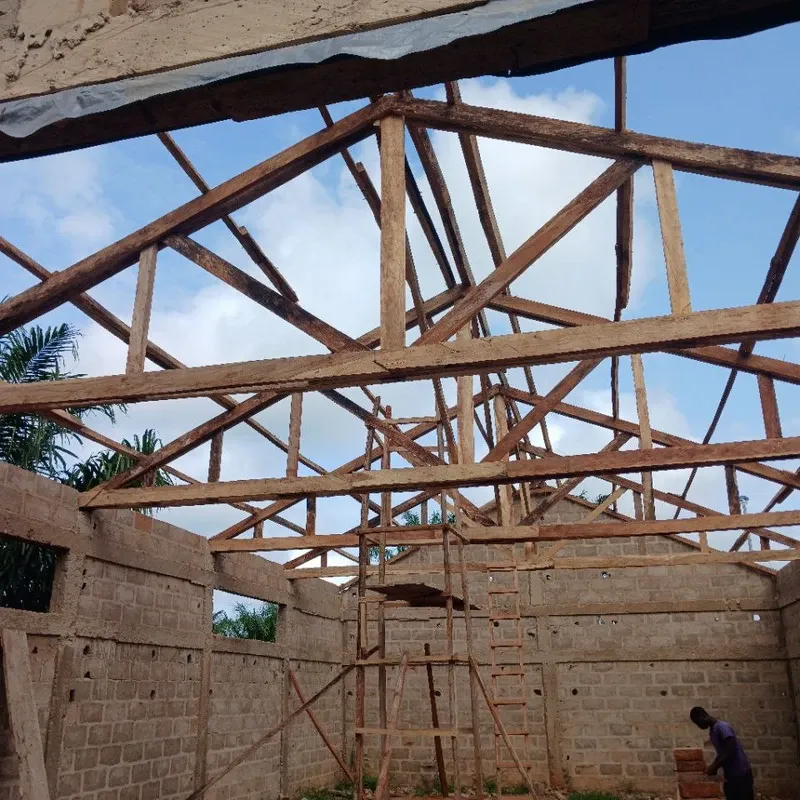
The carpenters work with few tools: handsaw, hammer, string, tape measure and lots of nails

The carpenters work with few tools: handsaw, hammer, string, tape measure and lots of nails. It was fascinating to see how they build a roof truss with an 8 m span using such simple means. Note the mobile scaffold tower on wooden supports. No building permit is required.

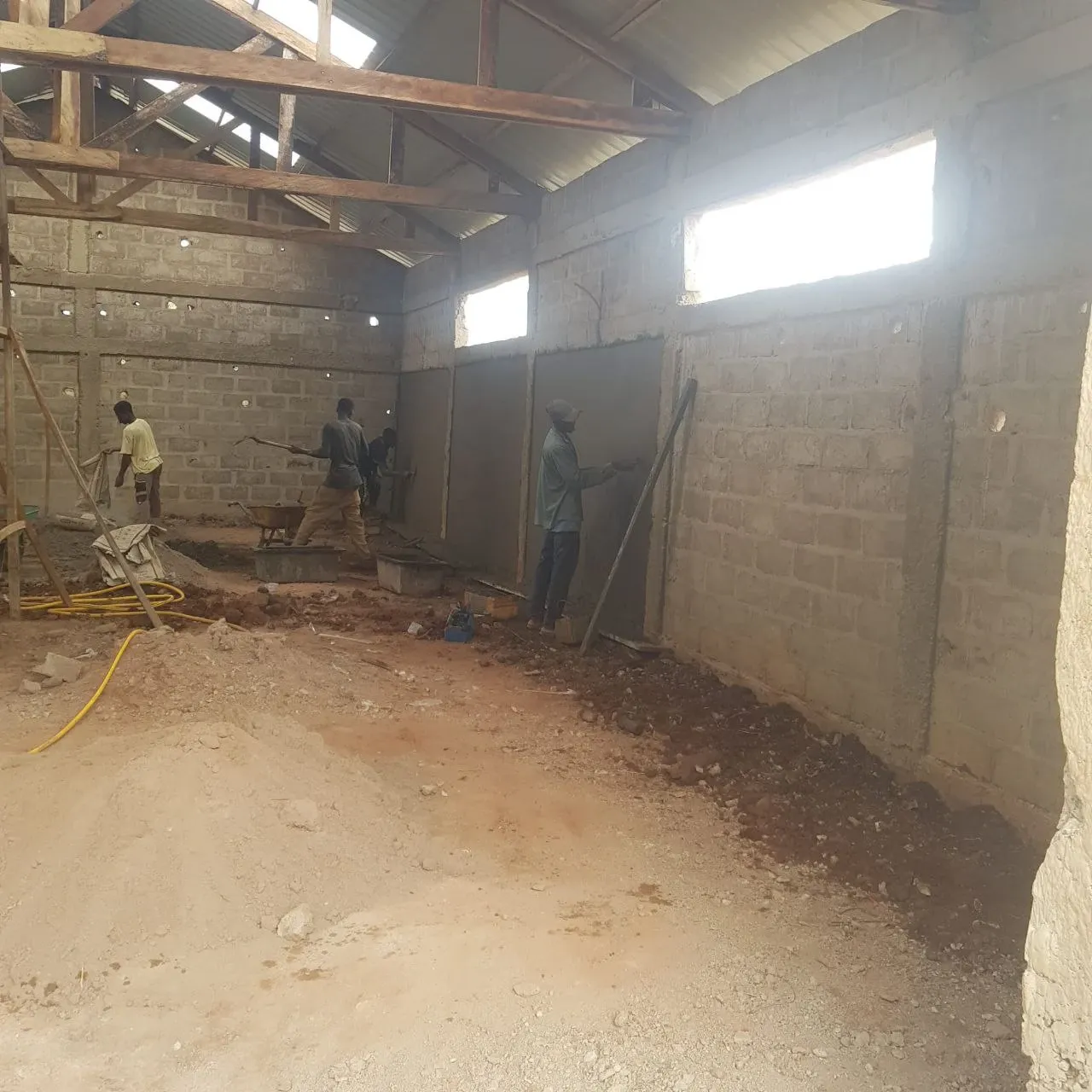
The roof is on, there are even translucent panels here

The roof is on, there are even translucent panels here. The large openings in the wall provide ventilation and will be secured against thieves with round bars. The masons plaster very well even though only cement is available. The small holes in the wall come from the clamps of the concrete formwork.

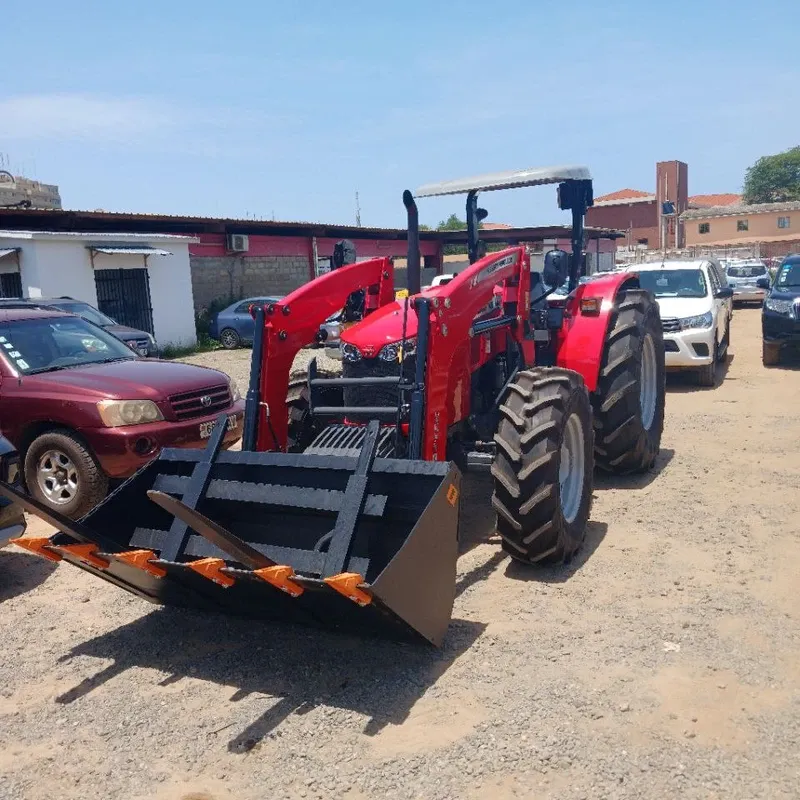
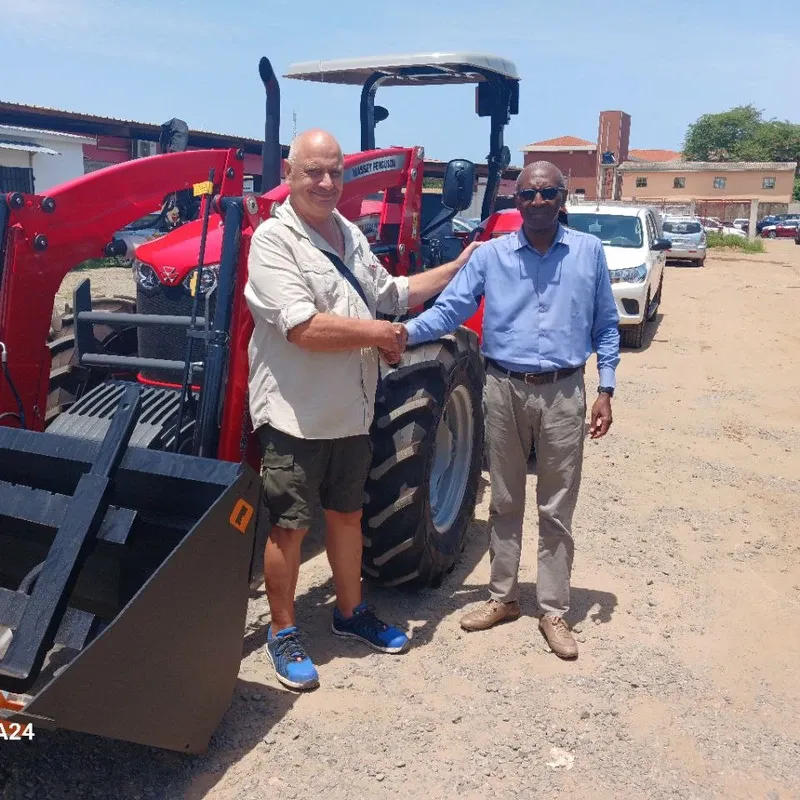
On 15 May 2024 I was finally able to collect the tractor in Lomé

On 15 May 2024 I was finally able to collect the tractor in Lomé. The wait was worth it. A huge thank you to Ludger Gausling from Heek, who donated the tractor almost single-handedly.

I had never seen a tractor with a front loader in Togo, and the seller did not know such a thing either

I had never seen a tractor with a front loader in Togo, and the seller did not know such a thing either. That shows how great the need for machinery is.

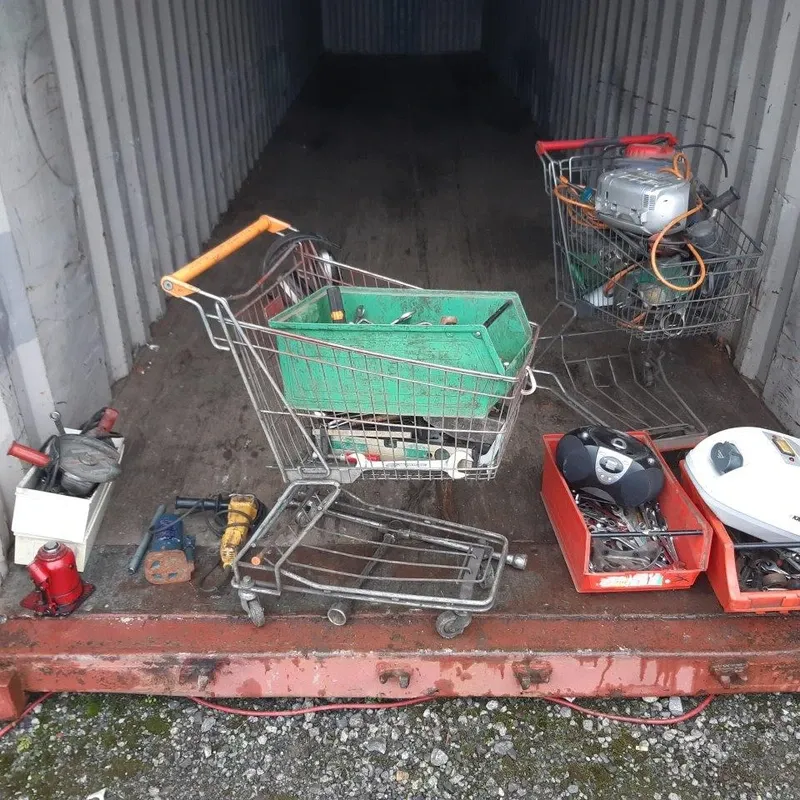
Containers and donations from Münsterland

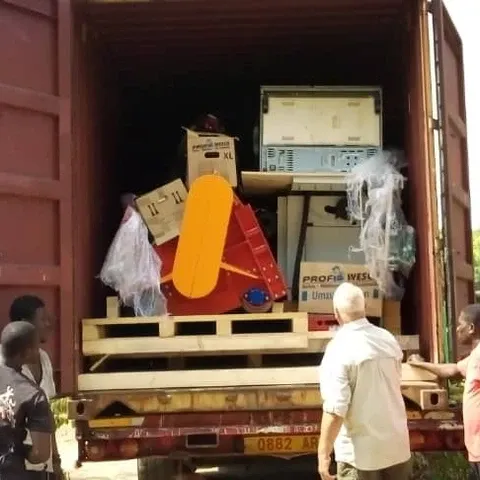
Arrival of the second container in 2023

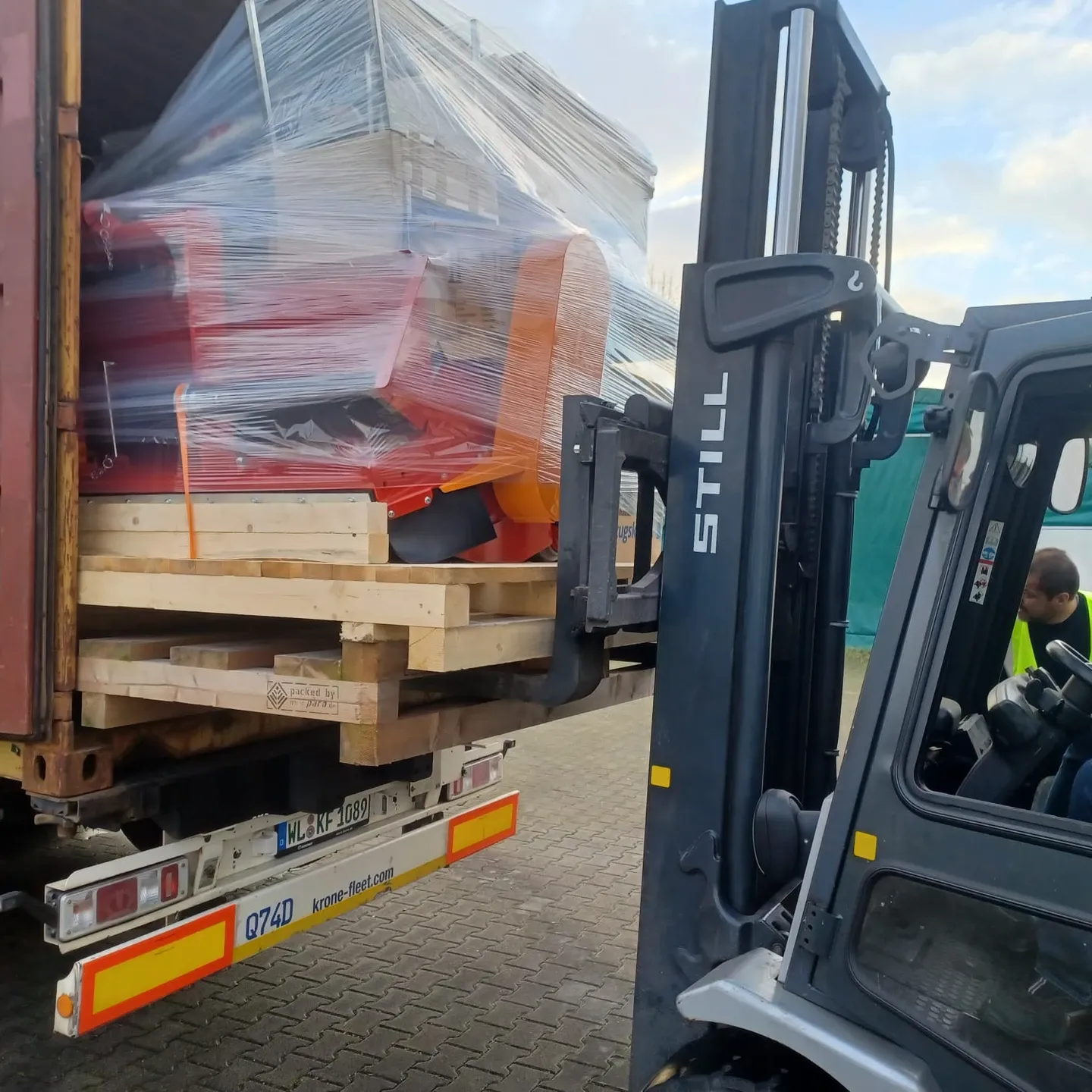
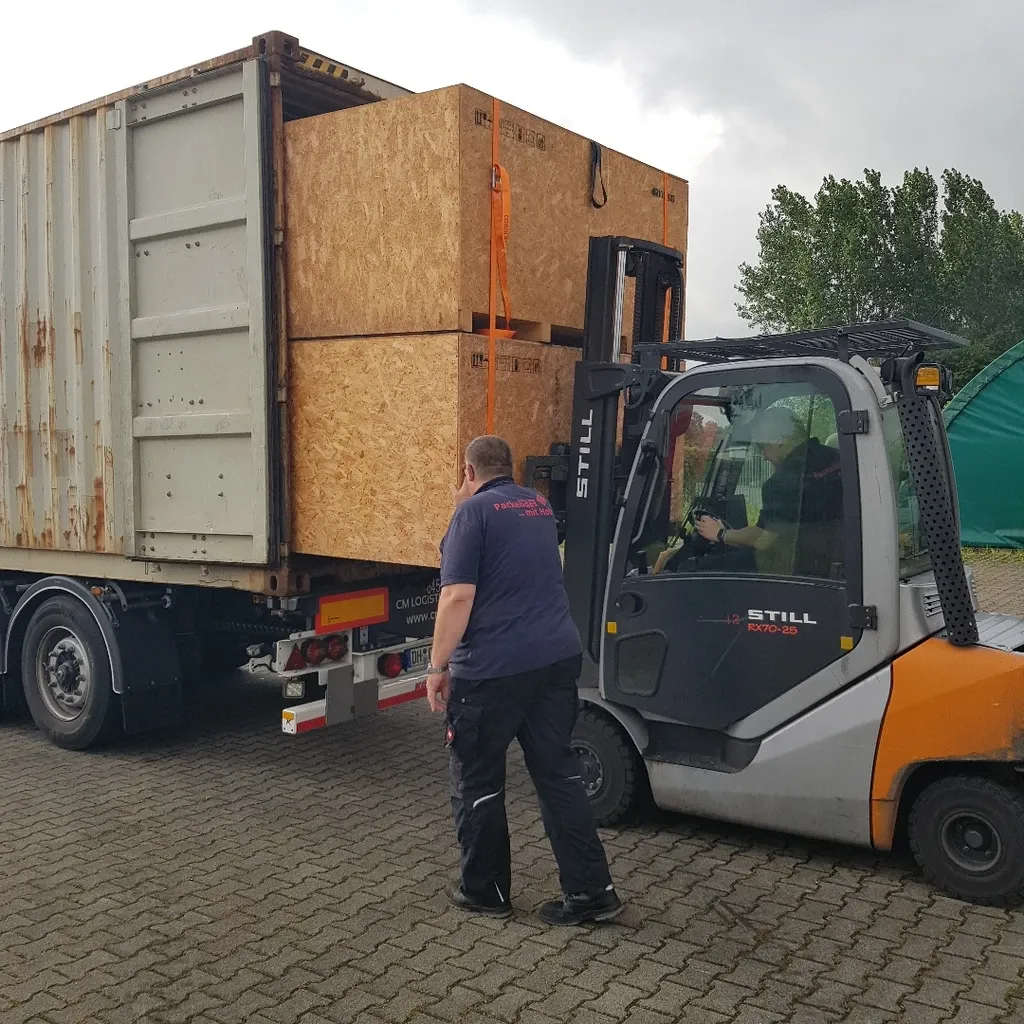
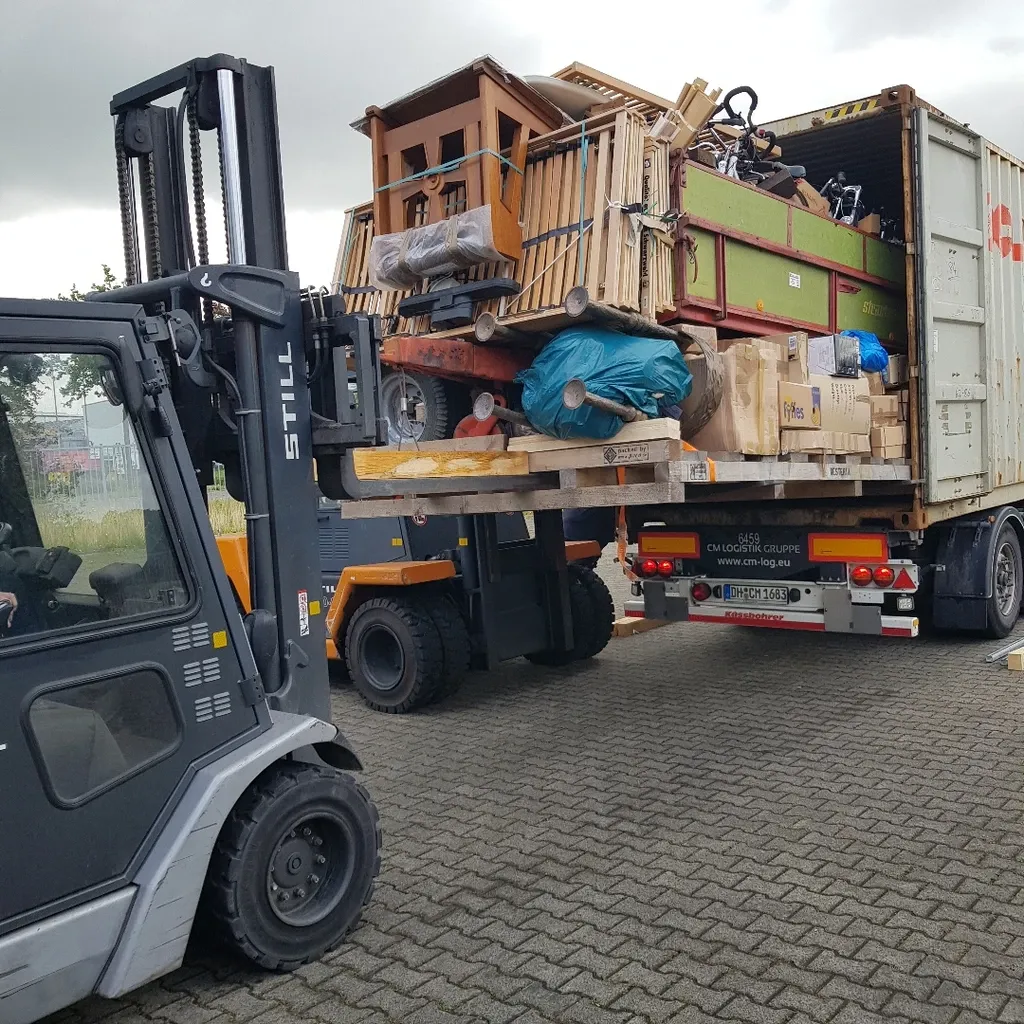
Arrival of the second container in 2023. Everything arrived safely, and this time I was able to organise a forklift for unloading.

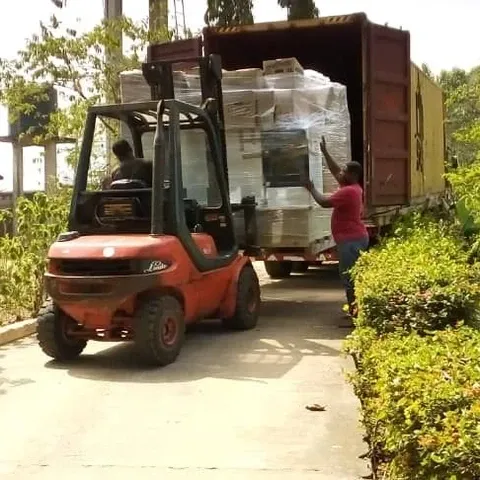
The only forklift in Kpalimé, a town of around 70,000

The only forklift in Kpalimé, a town of around 70,000. Everything else is loaded and unloaded by hand, but with these machines that reaches its limits.

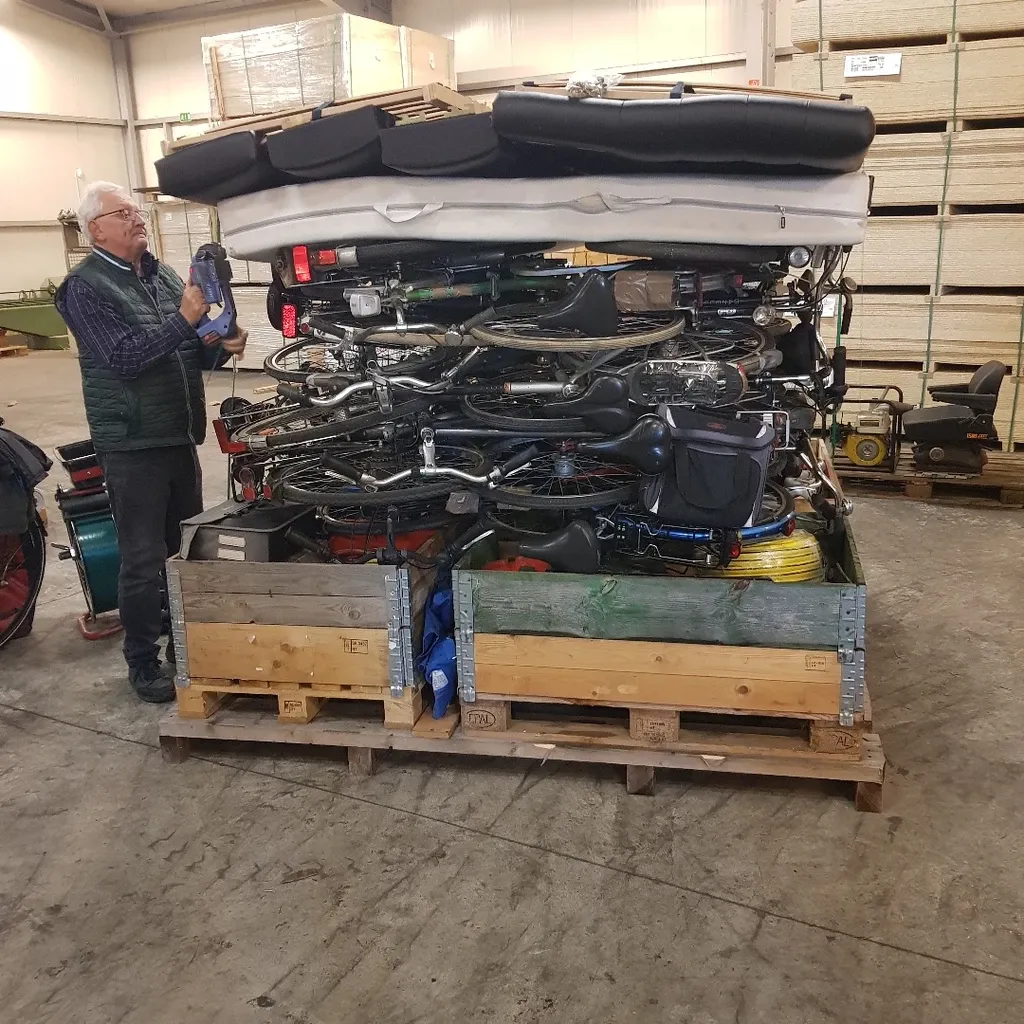
The pallet of bicycles was well packed too, and the bikes were eagerly awaited

The pallet of bicycles was well packed too, and the bikes were eagerly awaited.

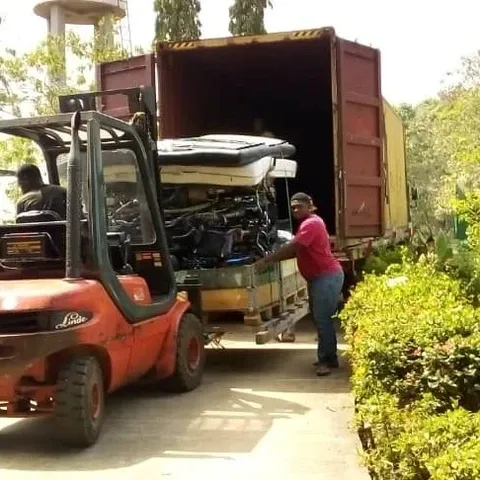
As with the first container, Robers Paletten gave us great support, without which this would not have been possible

As with the first container, Robers Paletten gave us great support, without which this would not have been possible. Special thanks to André Tenk, seen here stowing the flail mower.

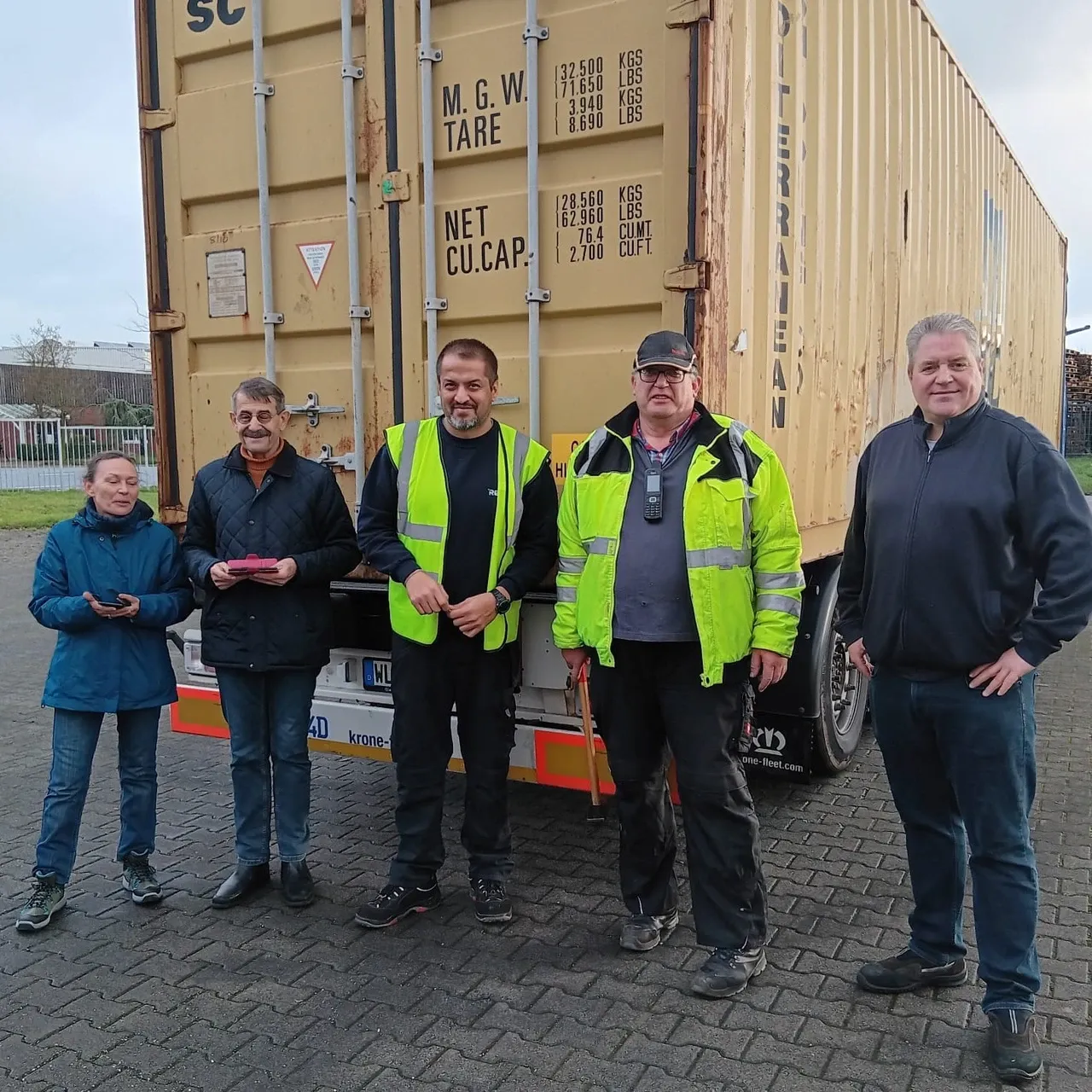
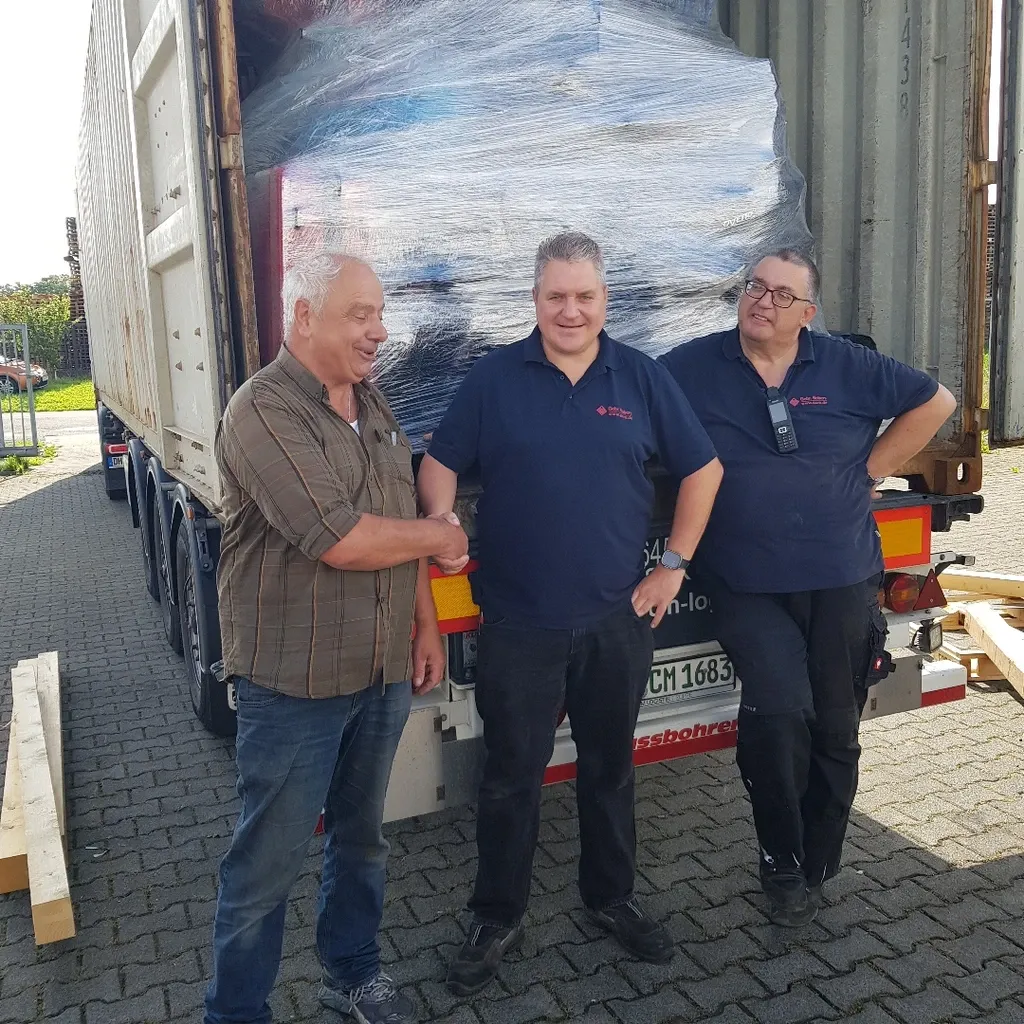
Amazed at how fast the loading went: on the left Mr Wild and his assistant (forwarding and customs), in the middle the

Amazed at how fast the loading went: on the left Mr Wild and his assistant (forwarding and customs), in the middle the driver. For Wolfgang Schulte and André Tenk (right), fast and precise work is everyday routine and the key to success.

A huge thank you to Dücker for donating a flail mower for Togo

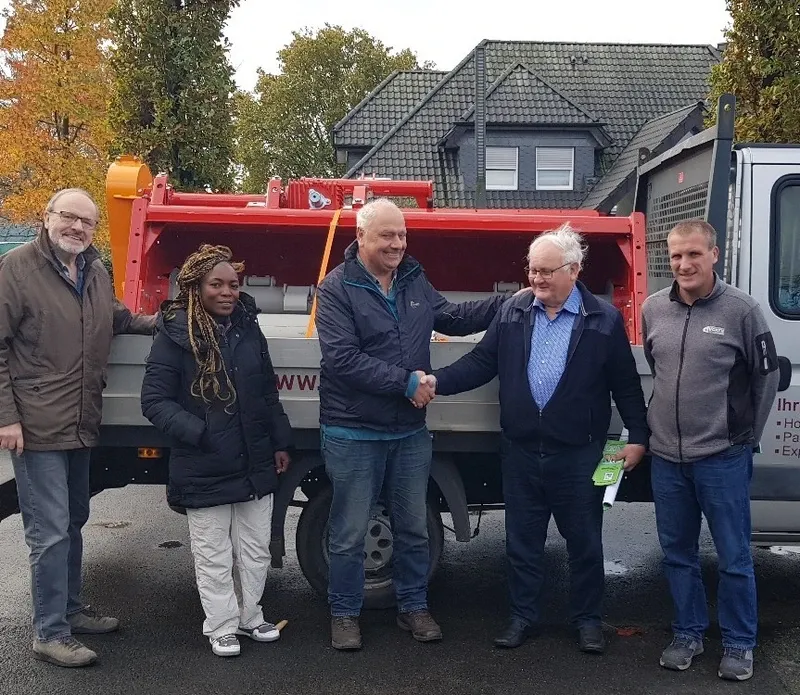
Handover of the Dücker flail mower

A huge thank you to Dücker for donating a flail mower for Togo! The machine is the perfect complement for no-till farming. Anyone interested in no-till under tropical conditions will find a lot of information at rolf-derpsch.com. In Brazil around 95 % of arable farming is no-till. In the picture from left: Werner Schmeing (vice chairman), Anita Komedza, Hermann Schulze Herking (chairman), Gerhard Dücker and Christian Dücker.

Josef Tenk loads and secures a pallet professionally, many thanks for the great support

Loading the pallets

Josef Tenk loads and secures a pallet professionally, many thanks for the great support! Thanks to all donors, a great many things have come together. Monetary donations are still needed, because we want to buy a no-till drill for maize and soy that cannot be bought in Germany, most likely from Brazil. Hermann Schulze Herking has been in Südlohn since 20 October and leaves on the evening of 15 November 2023.

On 14 October the container finally arrived

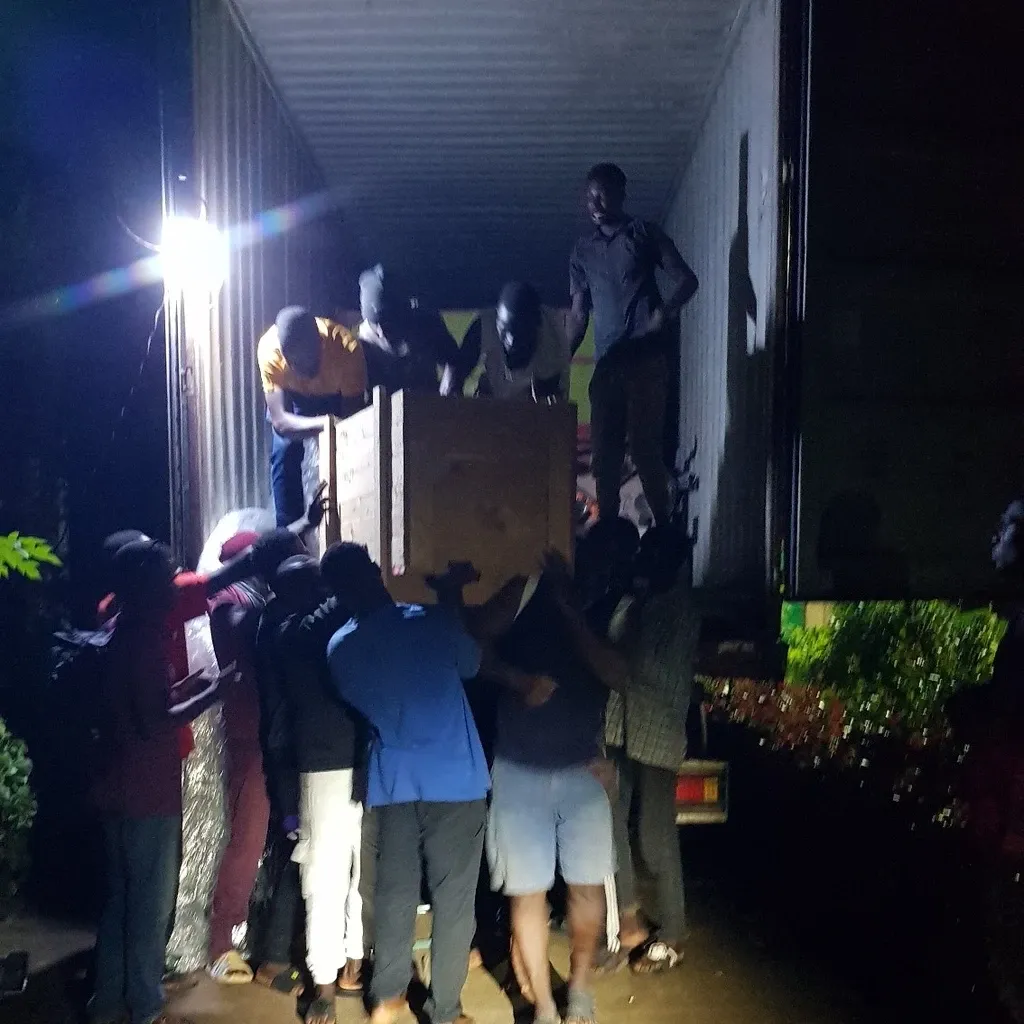
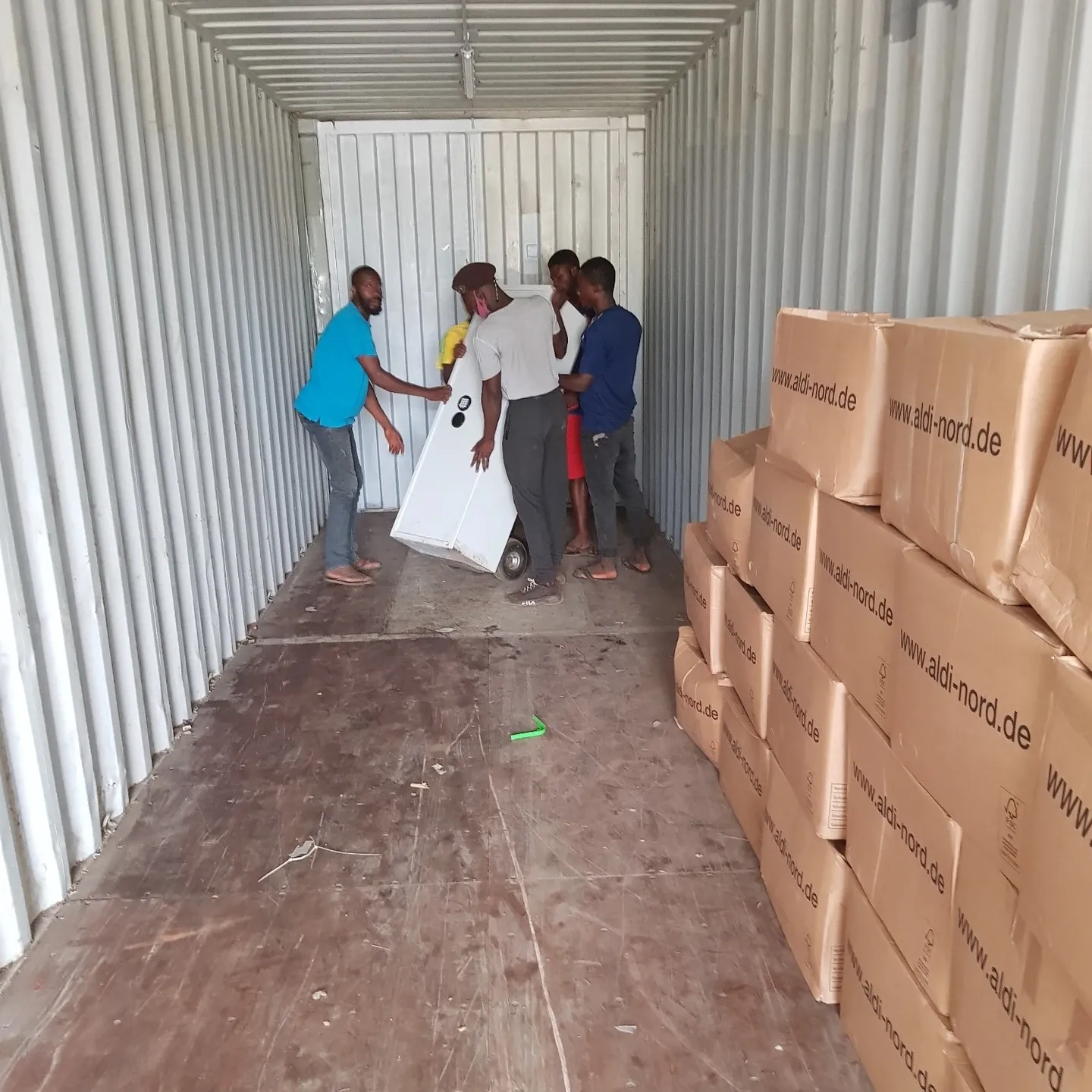
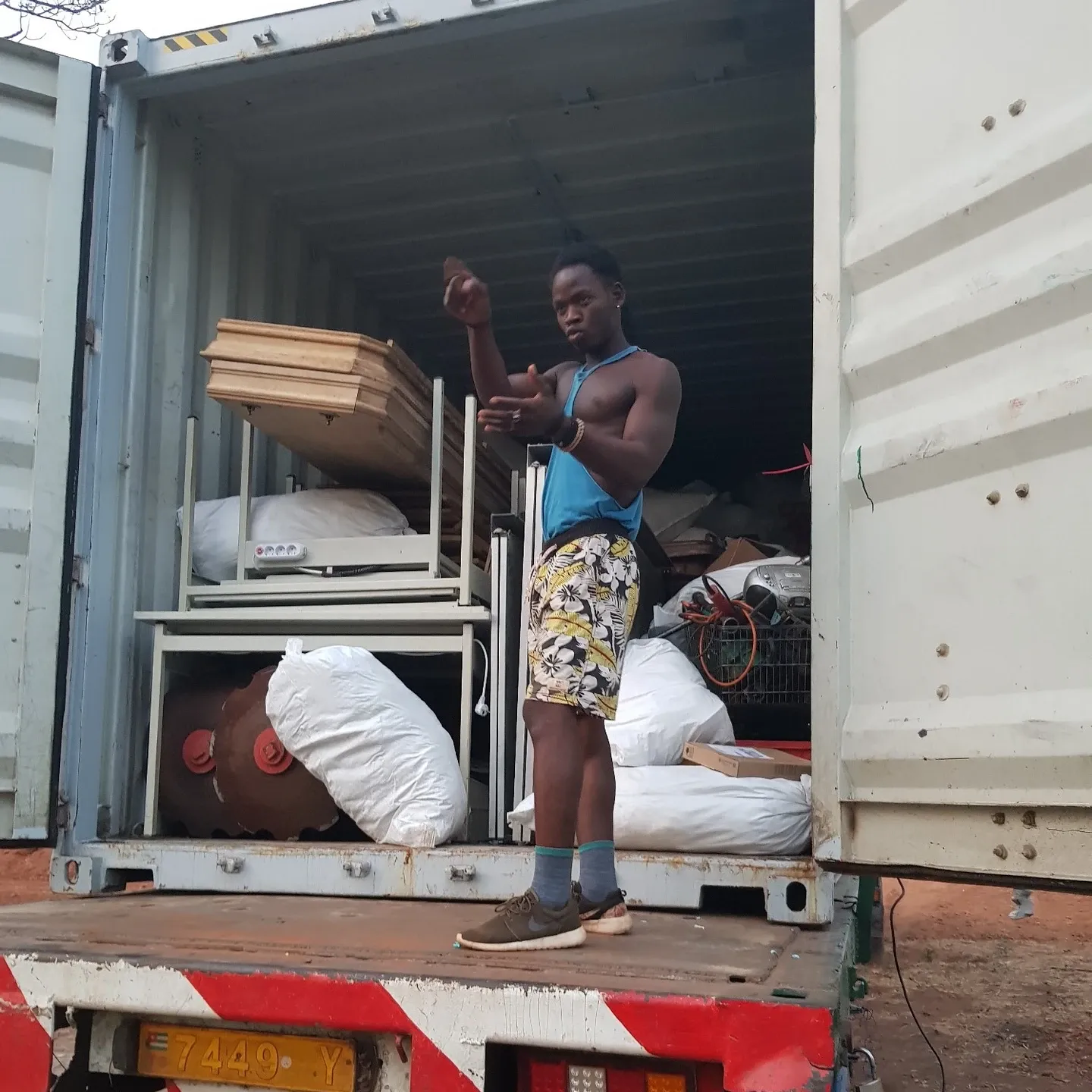
On 14 October the container finally arrived. It had to be unloaded straight away, so we had organised 17 helpers. Everything was unloaded by hand, even these heavy crates of around 300 kg.

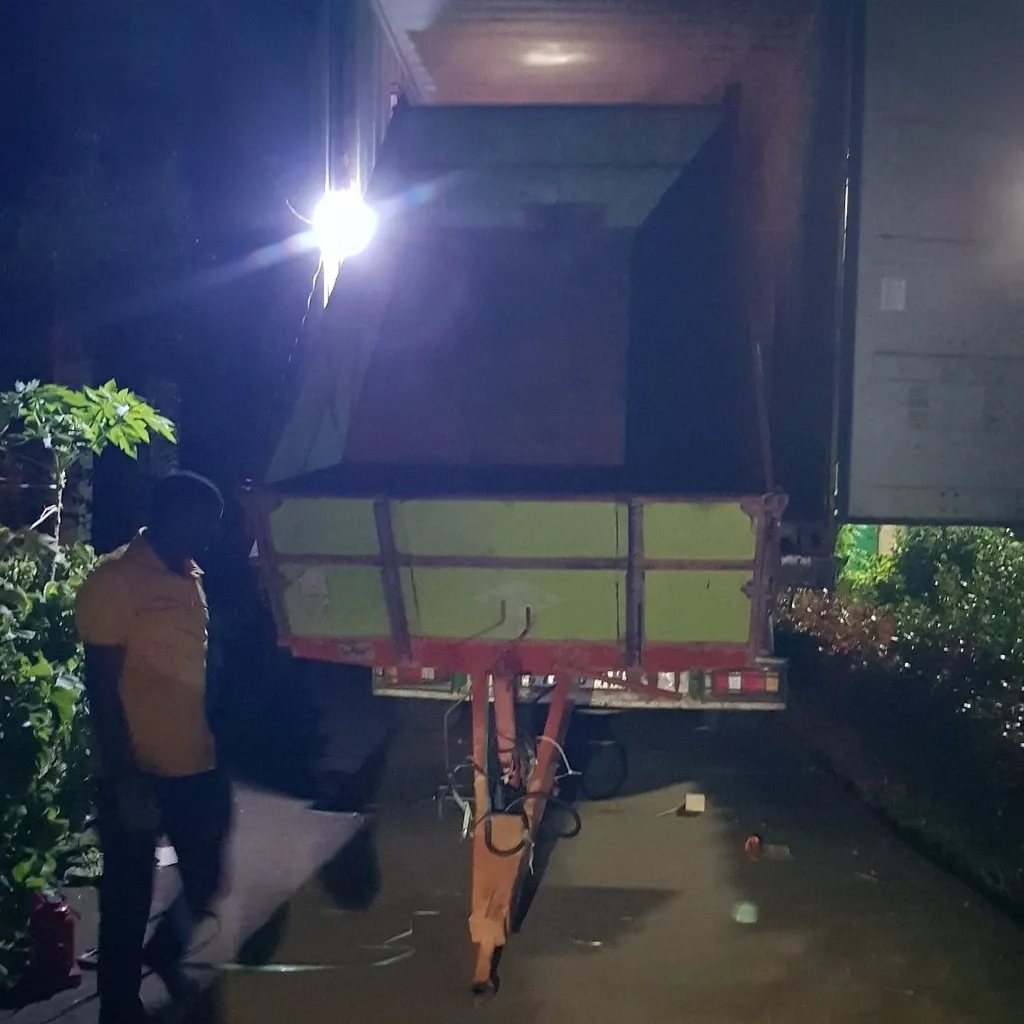
The biggest challenge was unloading the tipper trailer

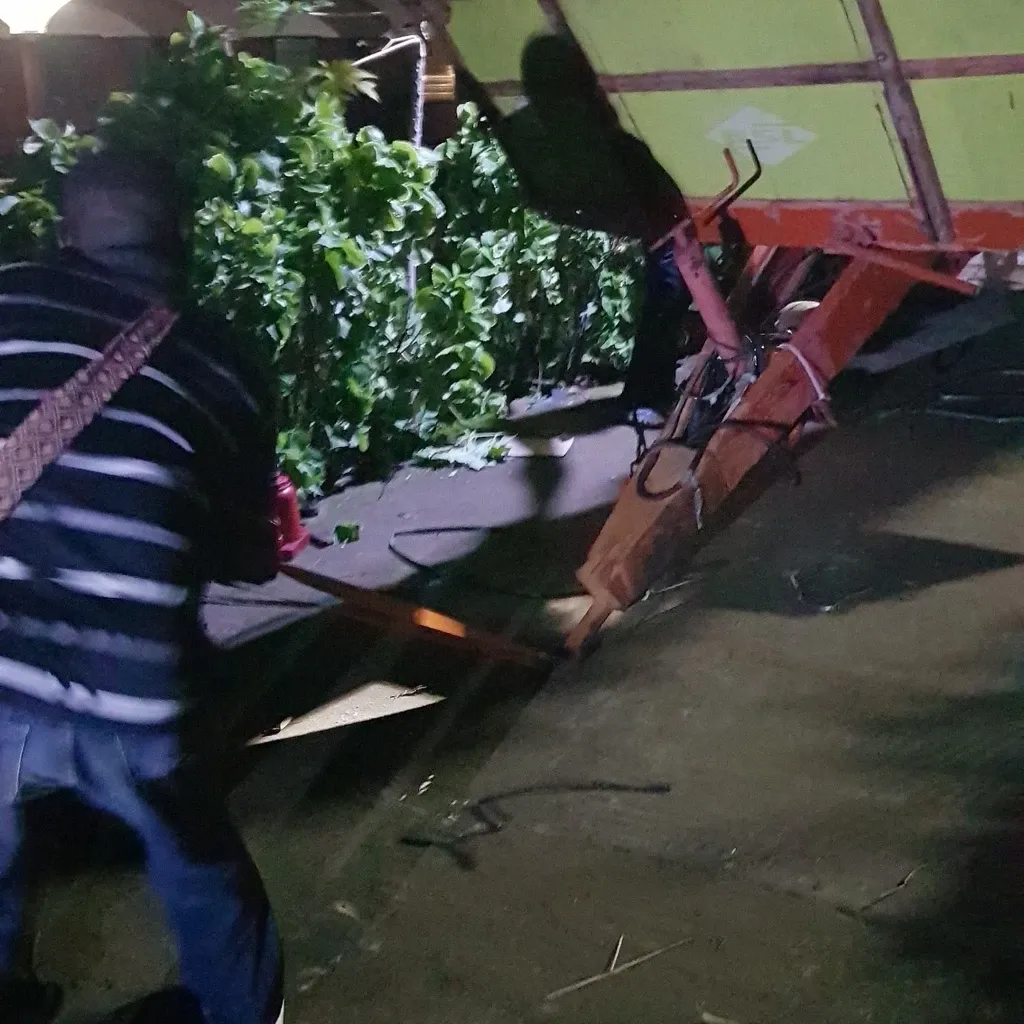
The biggest challenge was unloading the tipper trailer. Bit by bit it came out, pushed from above and pulled from below.

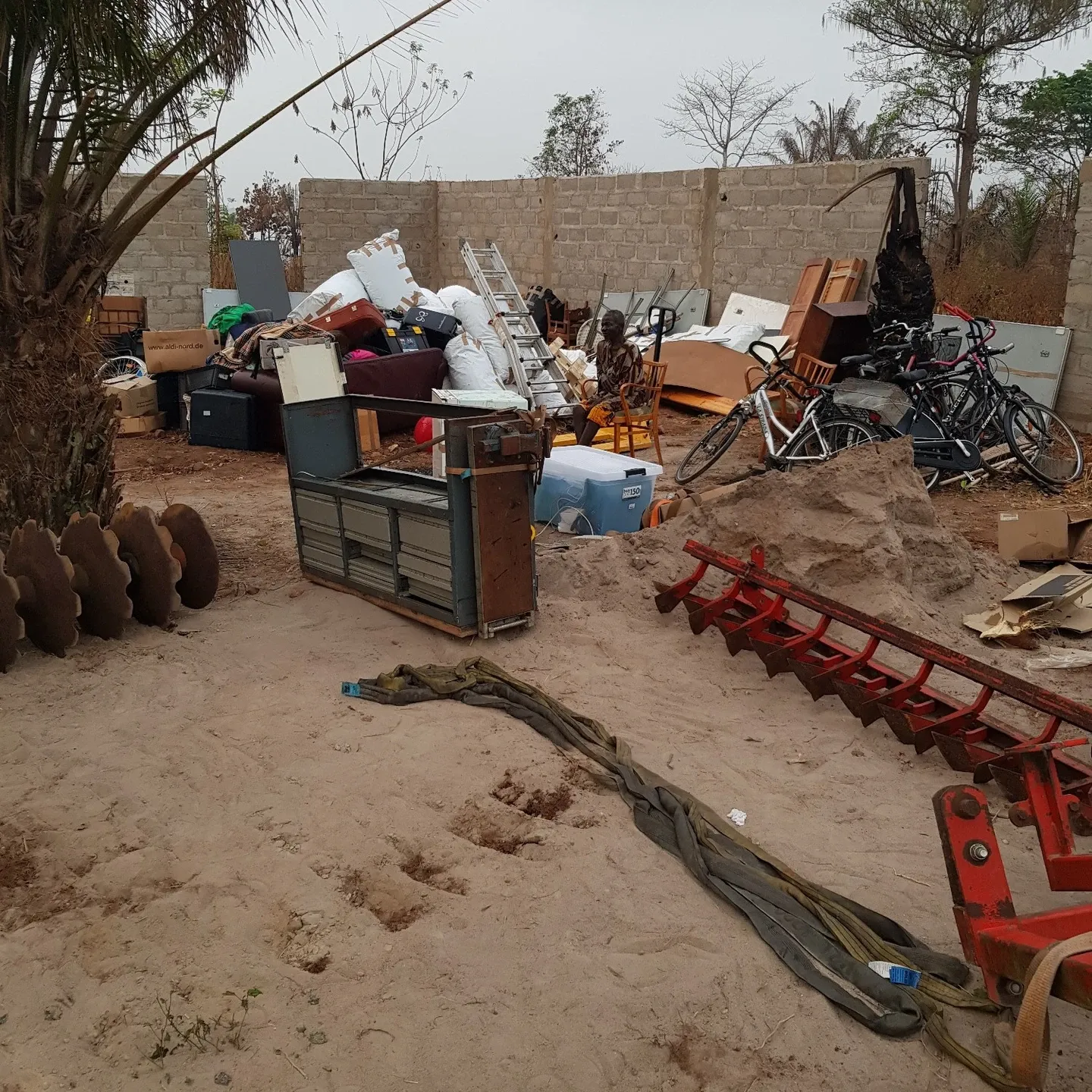
The tipper landed on the ground almost undamaged

The tipper landed on the ground almost undamaged. The whole operation lasted from 7 pm to 12:30 am. The goods are stored for now with Father Marian, about 5 km away, because we first have to finish the barn.

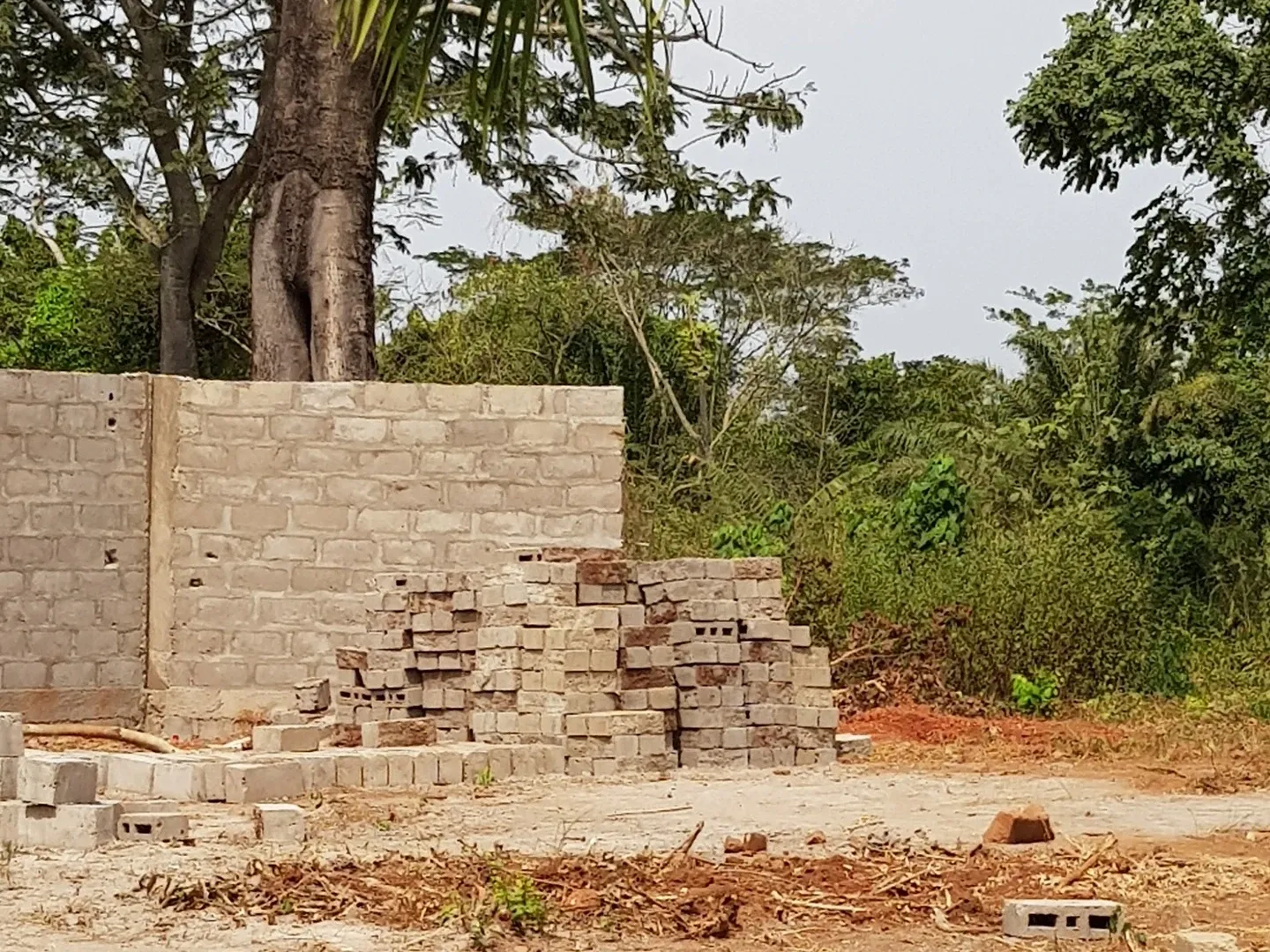
Thanks to the donations received we were able to start building the barn

Thanks to the donations received we were able to start building the barn. The association thanks all donors most warmly.

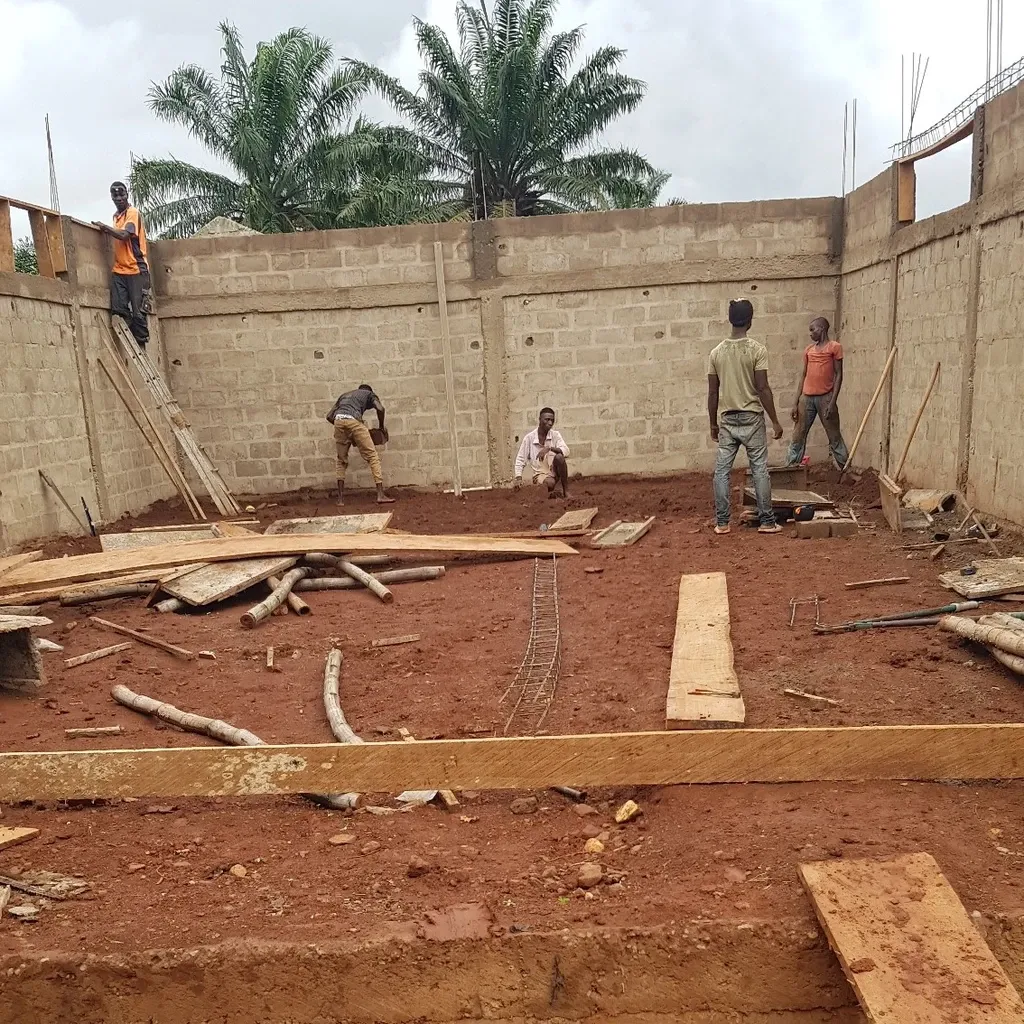
Everything is done by hand, even compacting the ground: stones weighing about 30 kg are thrown onto the ground again and

Everything is done by hand, even compacting the ground: stones weighing about 30 kg are thrown onto the ground again and again. A huge physical effort!

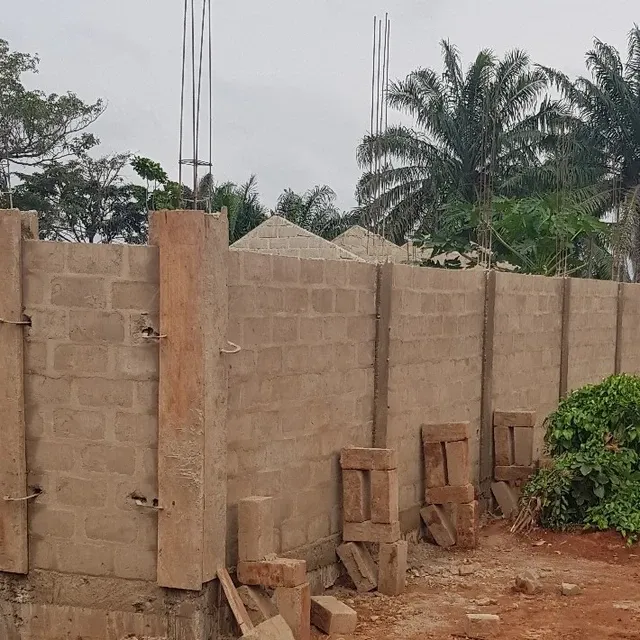
The stones leaning against the wall served as a base for the scaffolding

The stones leaning against the wall served as a base for the scaffolding.

At 8:45 am on 1 August loading of the container began, stowage as the experts call it

At 8:45 am on 1 August loading of the container began, stowage as the experts call it. We received great support from Gebr. Robers in Südlohn. Here crates are loaded that fit the container exactly. Many thanks to Gebr. Robers for donating the crates.

Here the most difficult item is loaded: a 5 m pallet with the trailer on it

Here the most difficult item is loaded: a 5 m pallet with the trailer on it. Every space on and under the trailer was used. Thanks to the driving skills of André Tenk and Peter Wentholt the pallet slid into the container without a problem. Without Gebr. Robers such a loading would not have been possible.

Once everything was stowed there was 1 cm left to the door, that is how precise André Tenk's preparation was

Once everything was stowed there was 1 cm left to the door, that is how precise André Tenk's preparation was. The association warmly thanks Gebr. Robers and above all André Tenk, the fire brigade members for their help, and especially Wolfgang Schulte (right in the picture), who always unlocked the hall for us, even outside working hours.

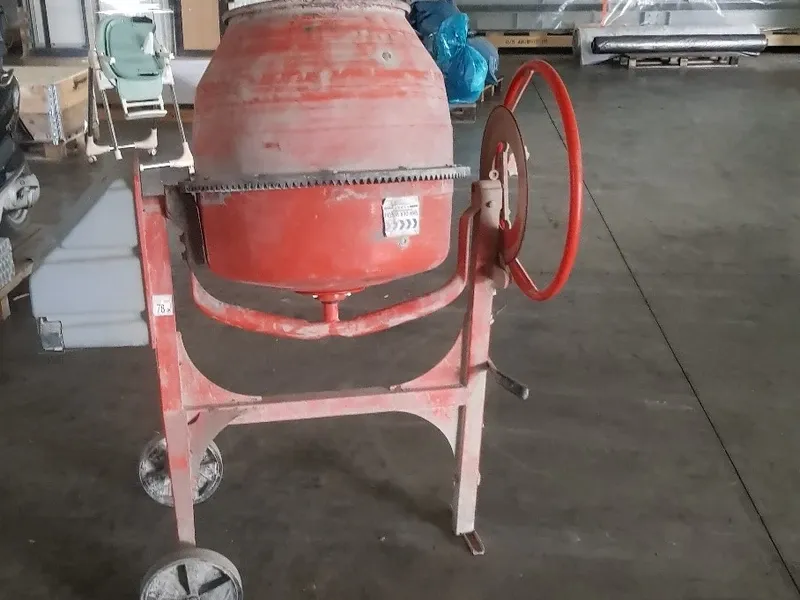
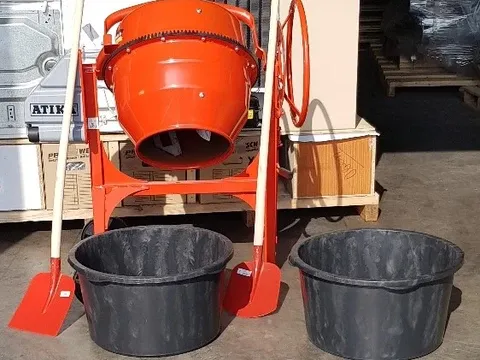
Happily, two concrete mixers were even donated, which will delight people in Togo

Happily, two concrete mixers were even donated, which will delight people in Togo. This one was provided by Van der Walle in Bocholt. Thank you very much!

We received this machine from a fellow farmer, conveniently with shovels and mortar tubs

We received this machine from a fellow farmer, conveniently with shovels and mortar tubs. Thank you very much! I have been in my home town since 13 June to collect donations in kind for Togo and later load a container.

Office, power and gates

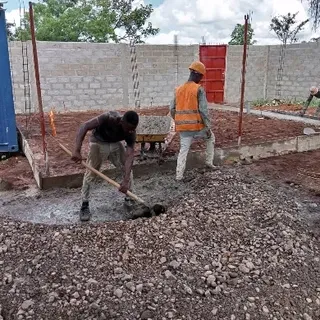
All the concrete has to be mixed by hand, a concrete mixer would make things much easier

All the concrete has to be mixed by hand, a concrete mixer would make things much easier. We needed no permits at all for the construction work or for drilling the well, personal responsibility is what counts.

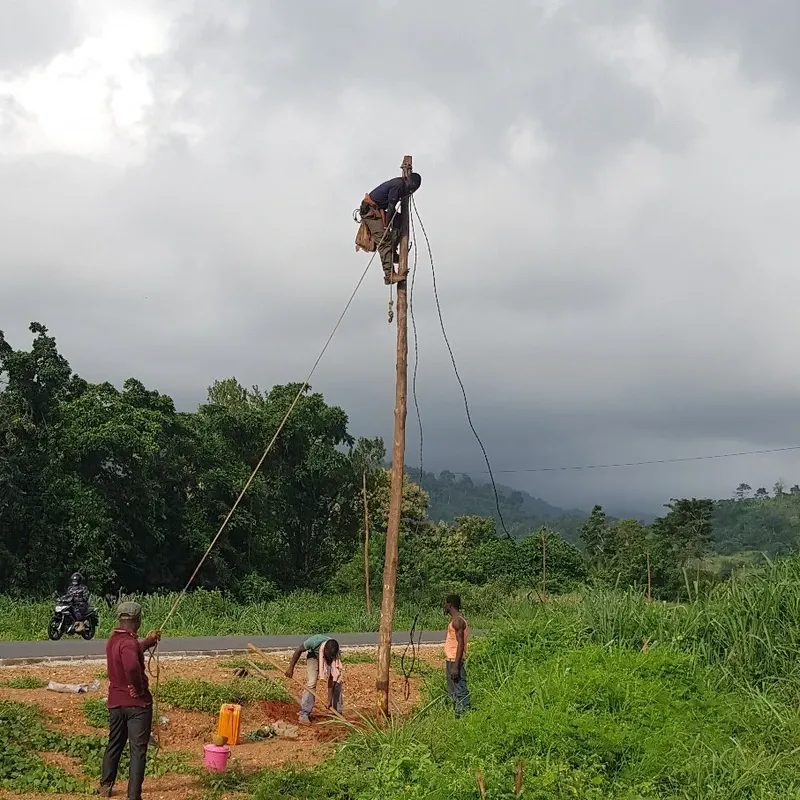
Eventually we got a power connection too

Eventually we got a power connection too. A distance of 400 m had to be covered, including crossing the road. The poles, up to 10 m long, come from a teak plantation; they are peeled at the bottom and coated with used oil to keep termites away.

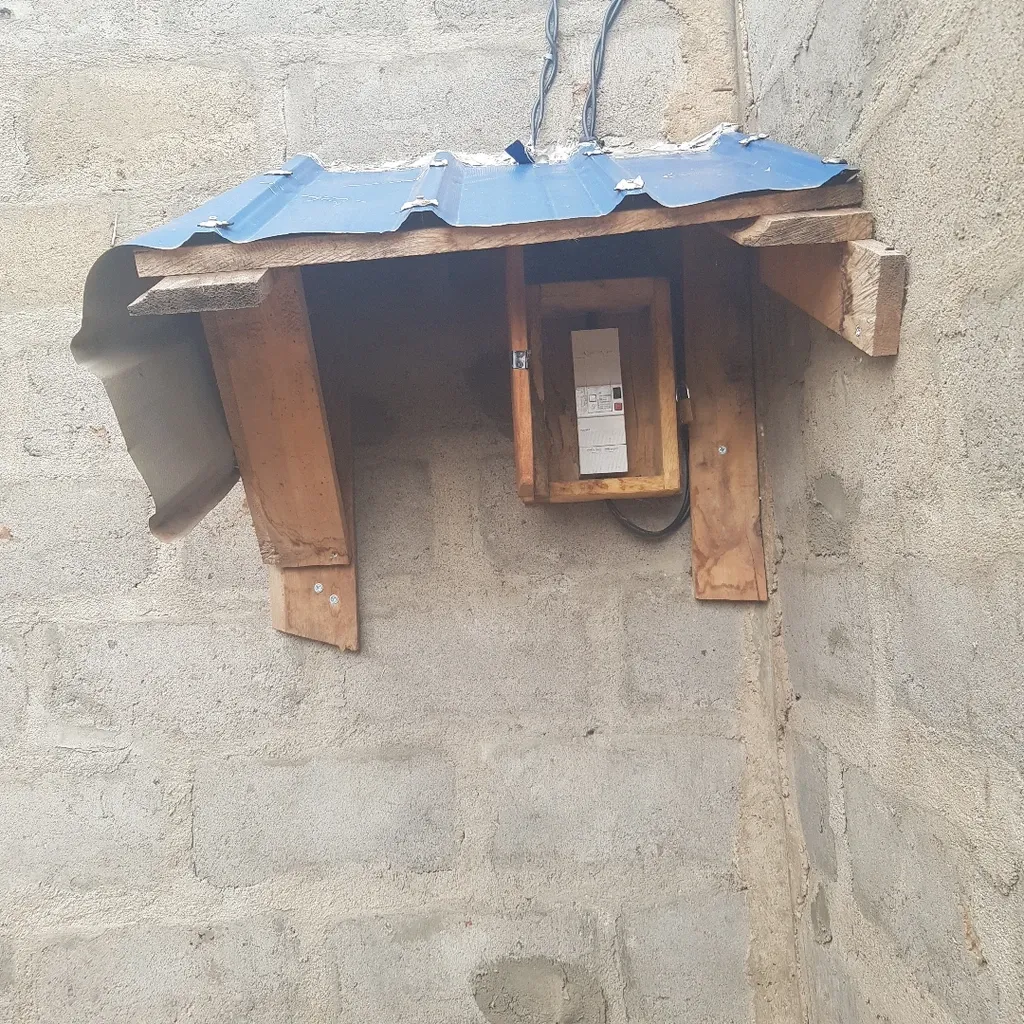
This is our power connection

This is our power connection. The wooden box came with it, I built the roof myself. The circuit breaker (disjoncteur) is limited to 15 A and the cables are aluminium. I paid the cost of about 1,000 euros for the 400 m out of my own pocket.

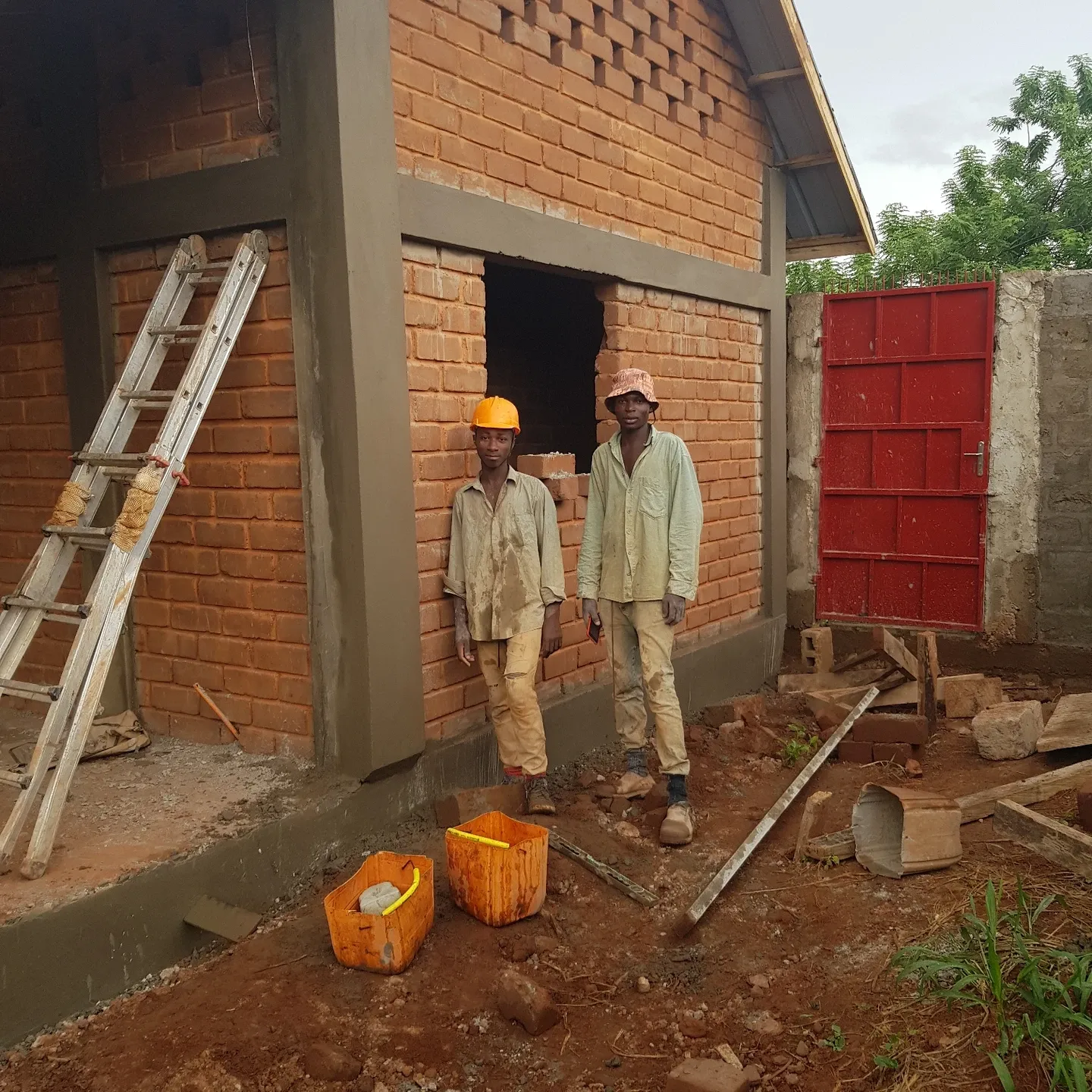
The shell is almost finished, the ladder from Germany has served well

The shell is almost finished, the ladder from Germany has served well. The mason and his apprentice look slight, but I am always amazed at how strong and tireless they are. The orange buckets are halved jerrycans with handles covered in water hose.

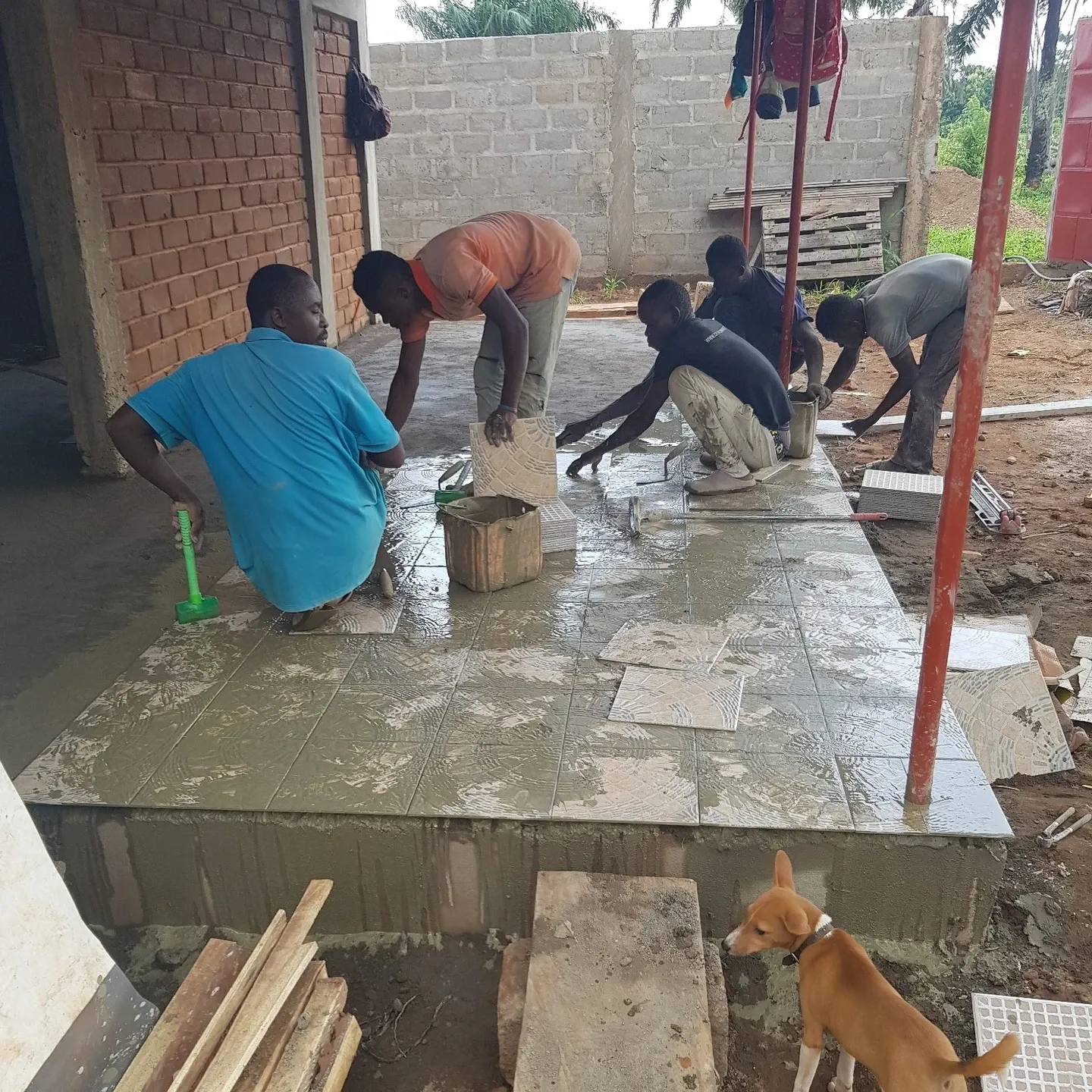
The tiles are laid in cement slurry on the fresh screed

The tiles are laid in cement slurry on the fresh screed. The terrace measures 3 × 7 m, the living space with WC, shower and office 4 × 7 m. Floor tiles cost 3.75 euros per m², wall tiles 4.50 euros per m². A fridge and tiles are considered luxury in Togo. At the bottom of the picture is our guard dog Nico, who has warned us of snakes and scorpions at night and reliably announces strangers.

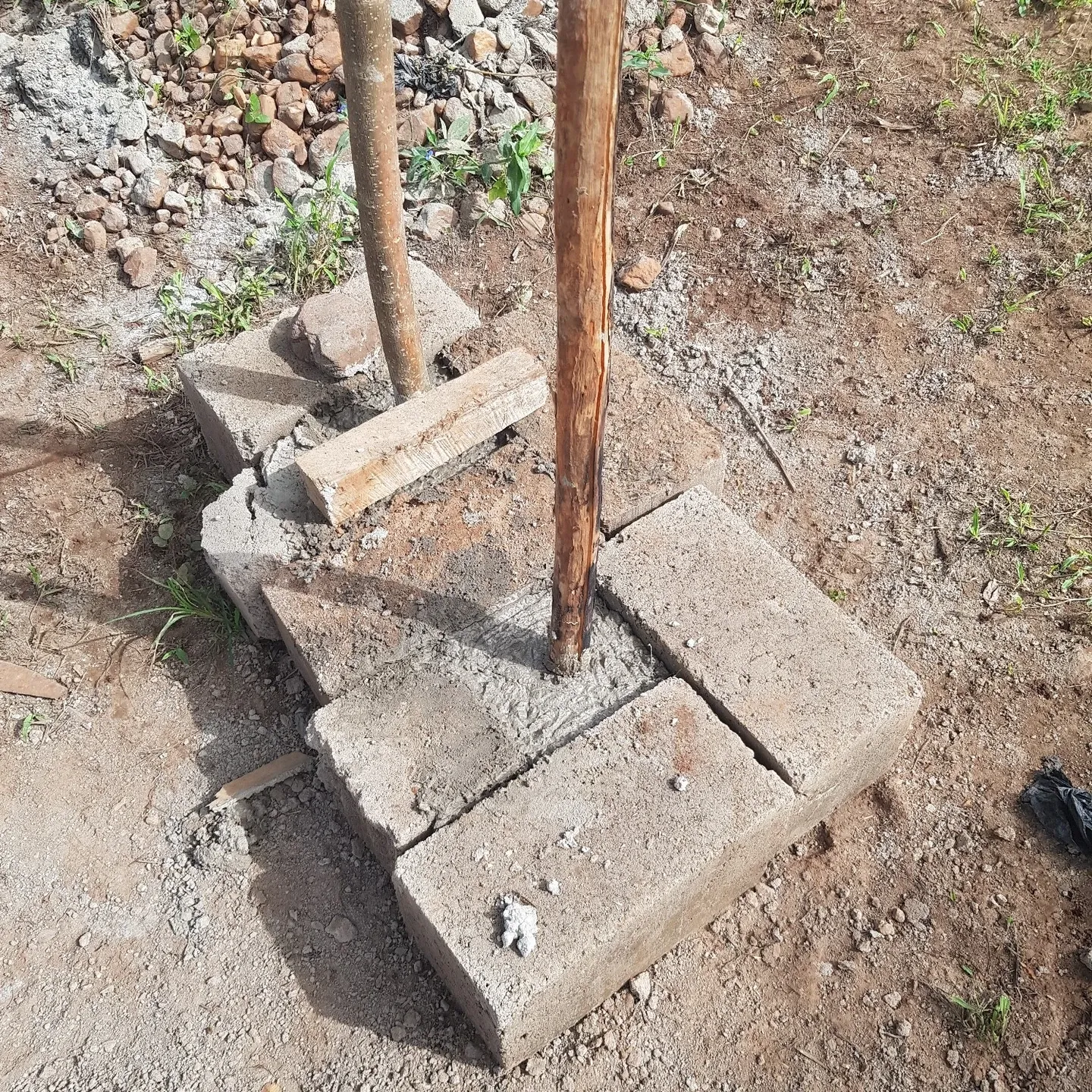
Two home-made tampers, still in their formwork of concrete blocks

Two home-made tampers, still in their formwork of concrete blocks. They were used to compact the ground under the slab before pouring. The blocks measure 20 × 20 × 40 cm.

Finally there is news from Togo, it was overdue

Finally there is news from Togo, it was overdue. Shown is the floor slab for the office with drain pipes for shower and toilet, in the background the small container with a second skin for insulation. Before that I measured temperatures of up to 50 °C inside.

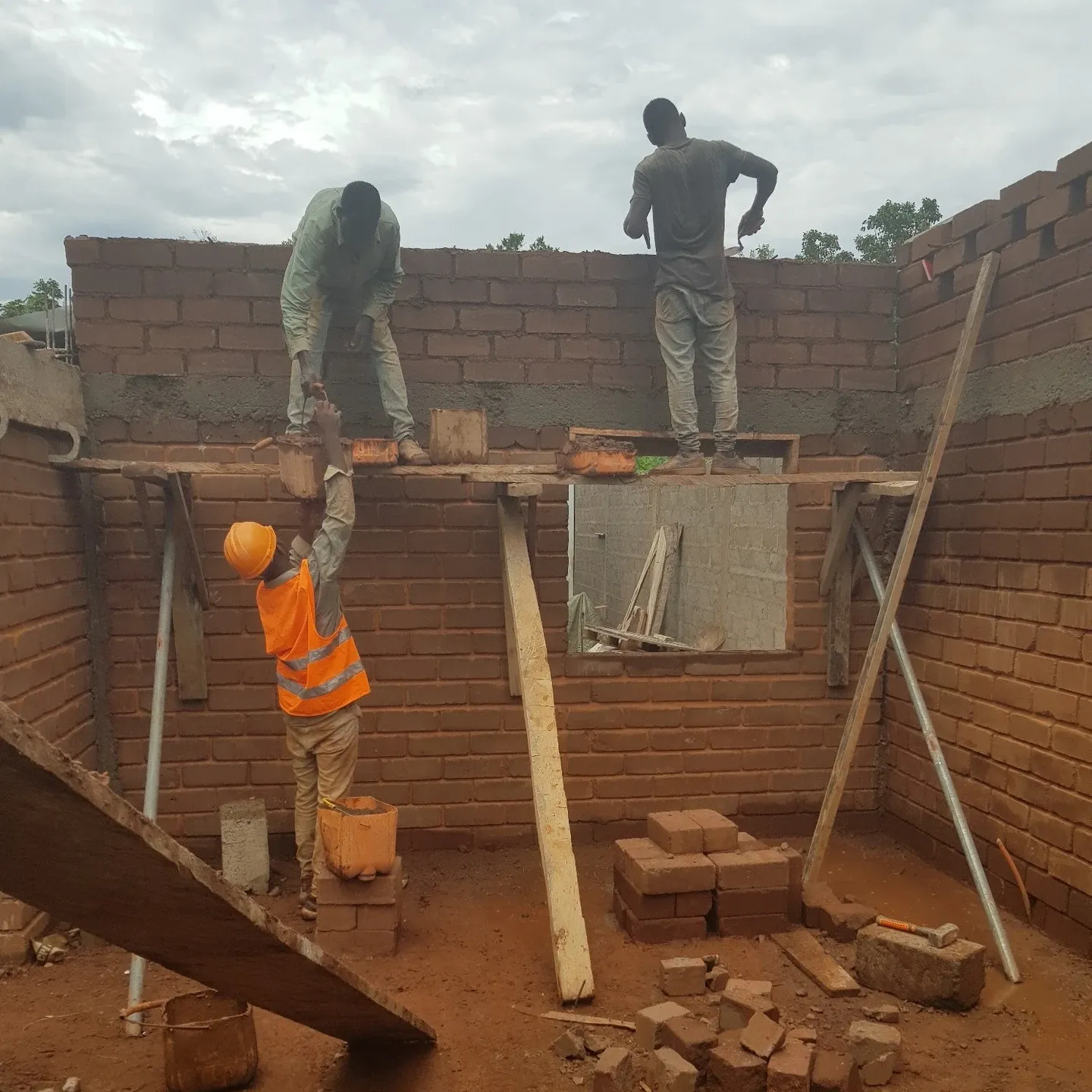
The clay bricks are being laid, and the mortar is made from the same red clay

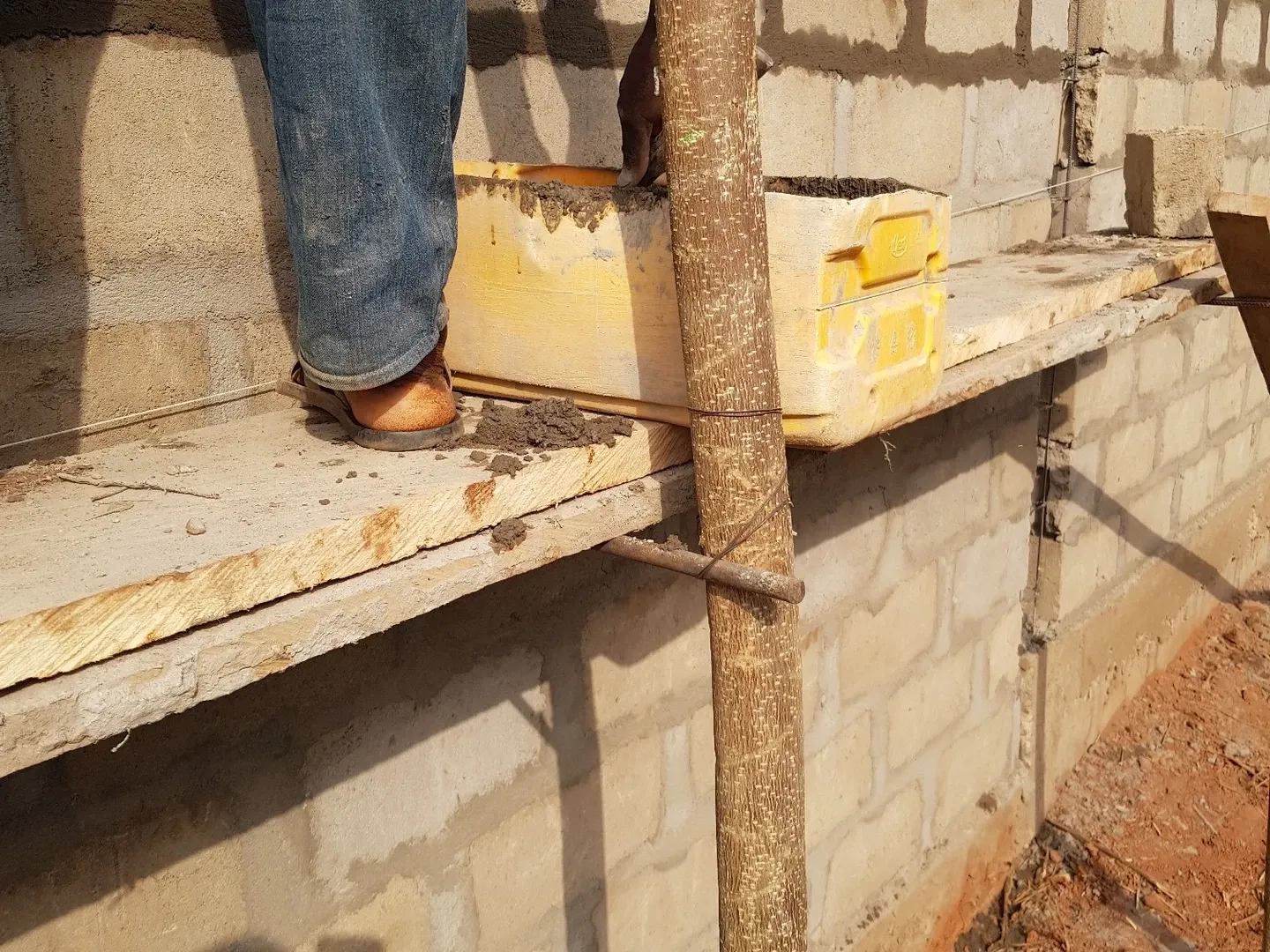
The clay bricks are being laid, and the mortar is made from the same red clay. Note the Togolese scaffolding! The orange hoses in the slab are conduits for electrical cables, with stainless steel draw wires already inside.

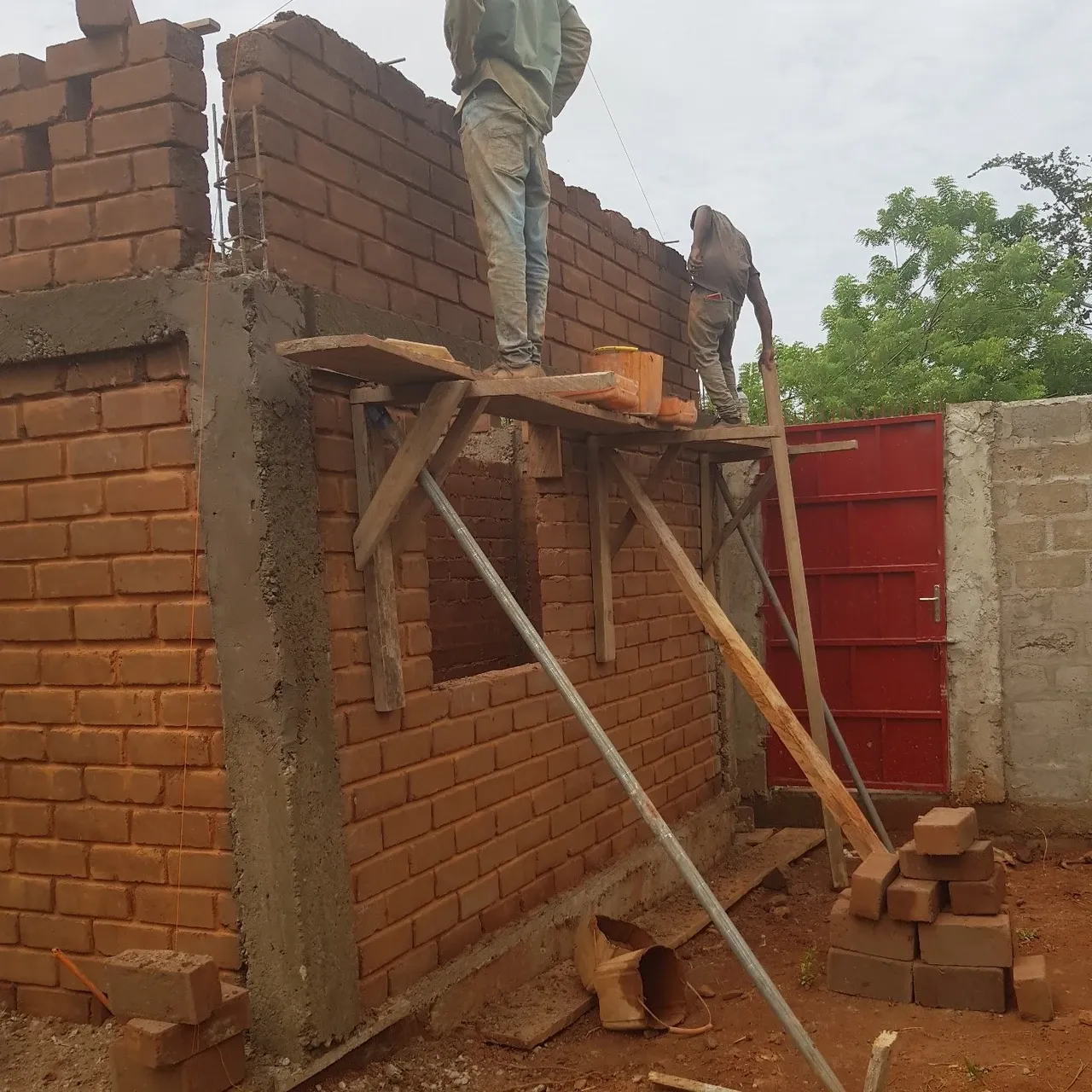
The wall from the outside

The wall from the outside. The scaffolding is simple and effective: Togo has little material but all the more inventiveness. The concrete posts were later plastered and painted.

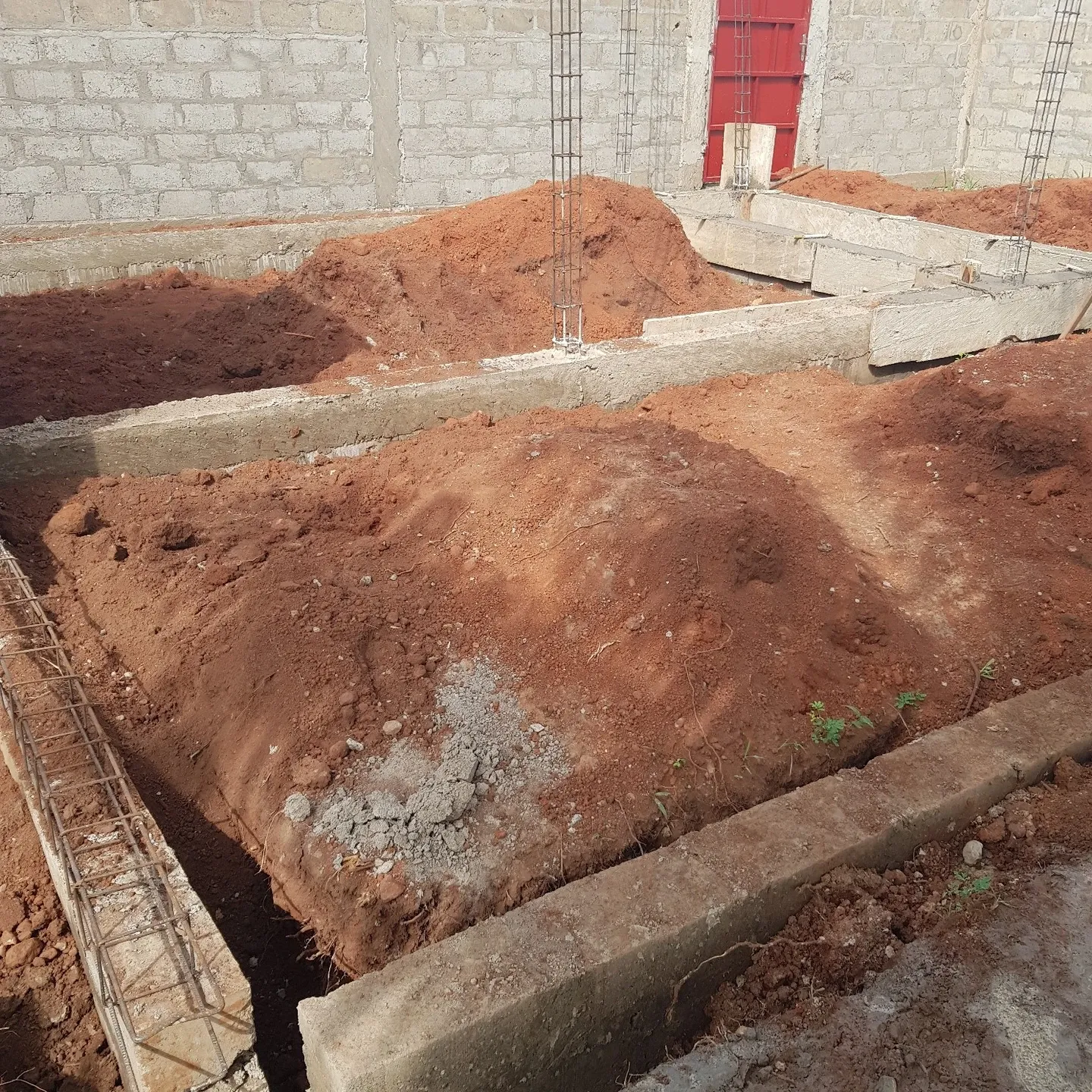
The foundations for the small office are done, but money is still missing to continue building

The foundations for the small office are done, but money is still missing to continue building.

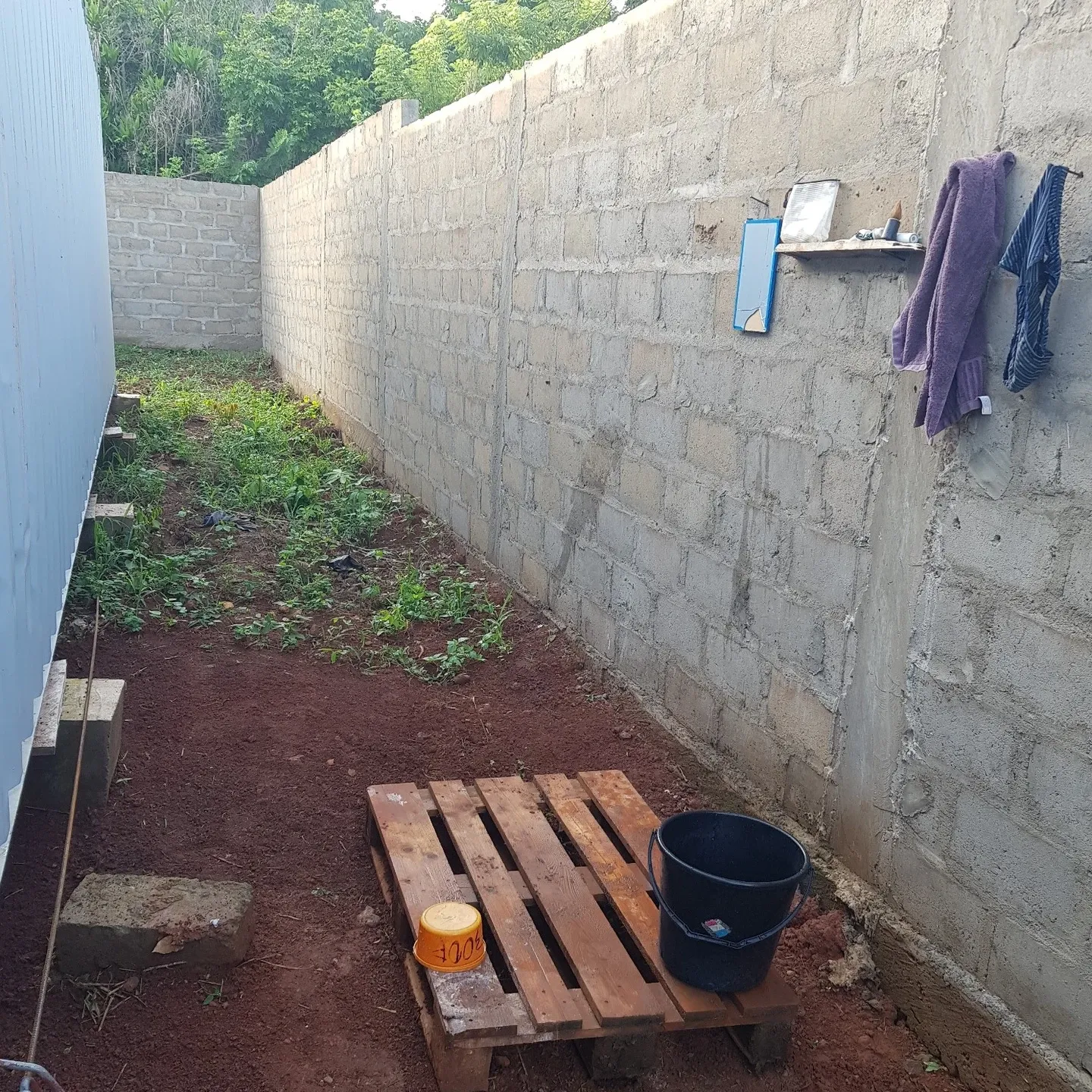
This is my bathroom next to the large container

This is my bathroom next to the large container.

This is my bedroom in the small container

This is my bedroom in the small container. I have been sleeping there for three months.

13 May 2022: news from Togo at last

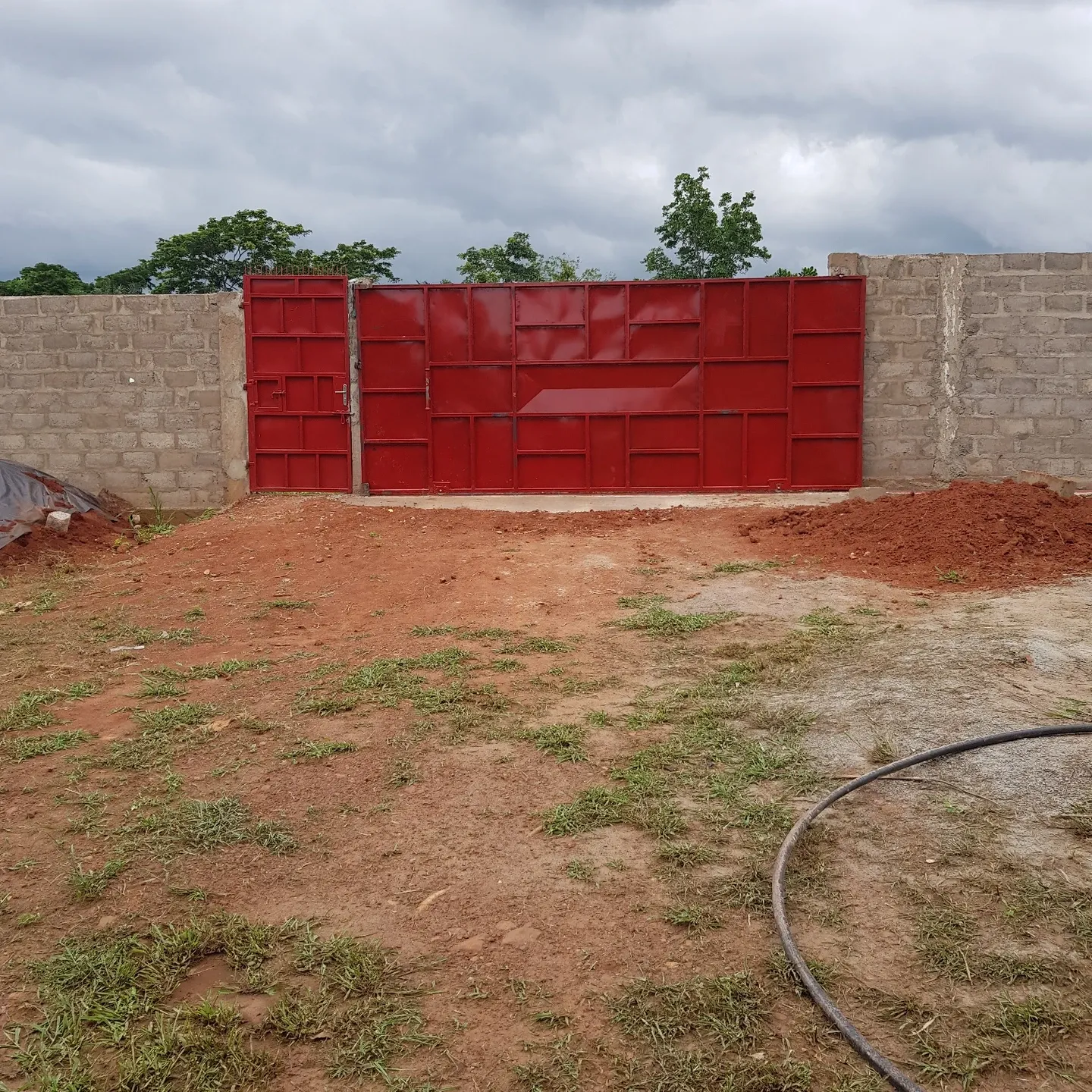
13 May 2022: news from Togo at last. Everything takes a little longer here, but the gates are finished and installed. They are important protection against thieves, a big problem here and a consequence of poverty. Barbed wire is still to be fitted on the walls, as several people advised me.

So far the container is the only place to retreat and sleep

So far the container is the only place to retreat and sleep. That is to change: a small office with sleeping space is planned, and donations are still needed for it.

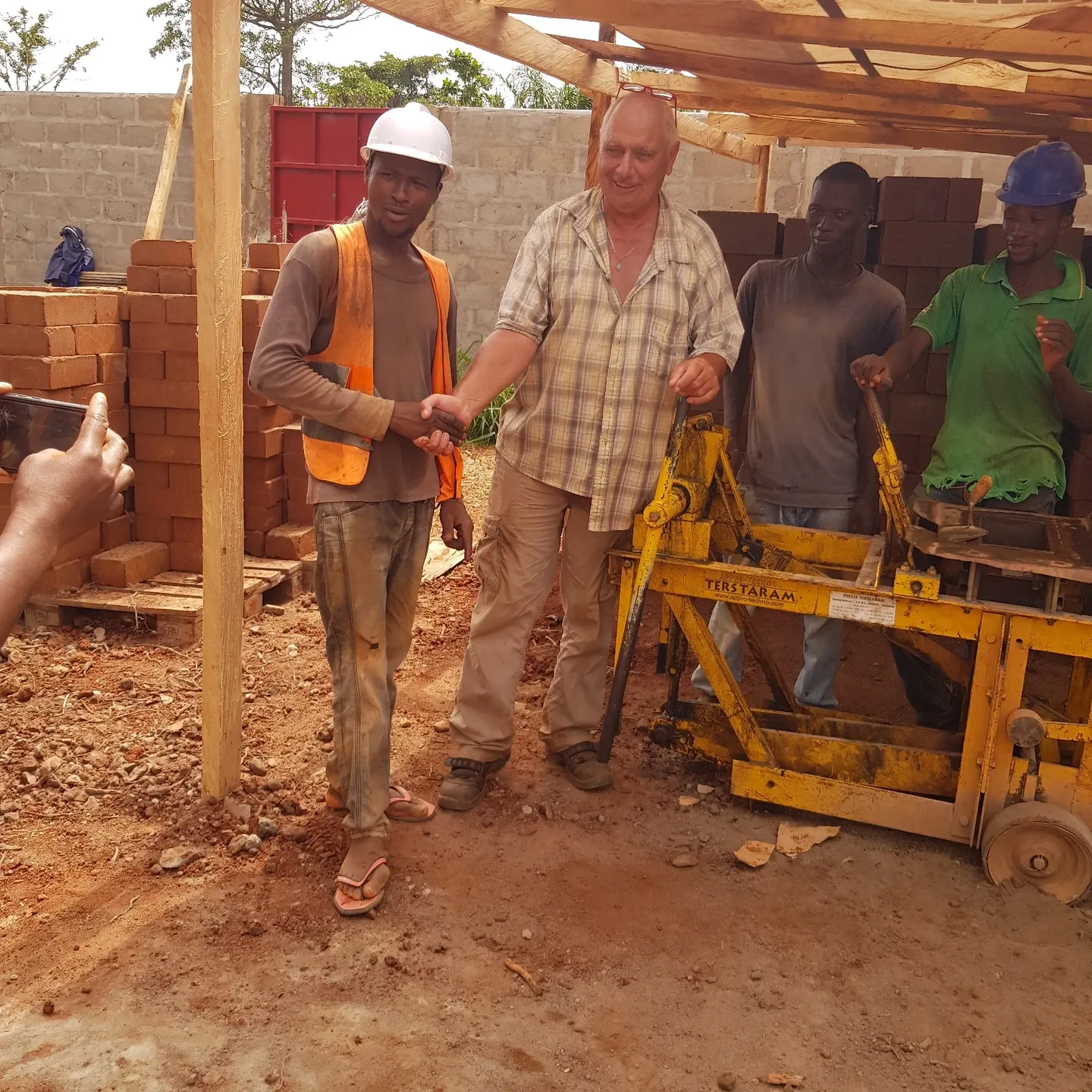
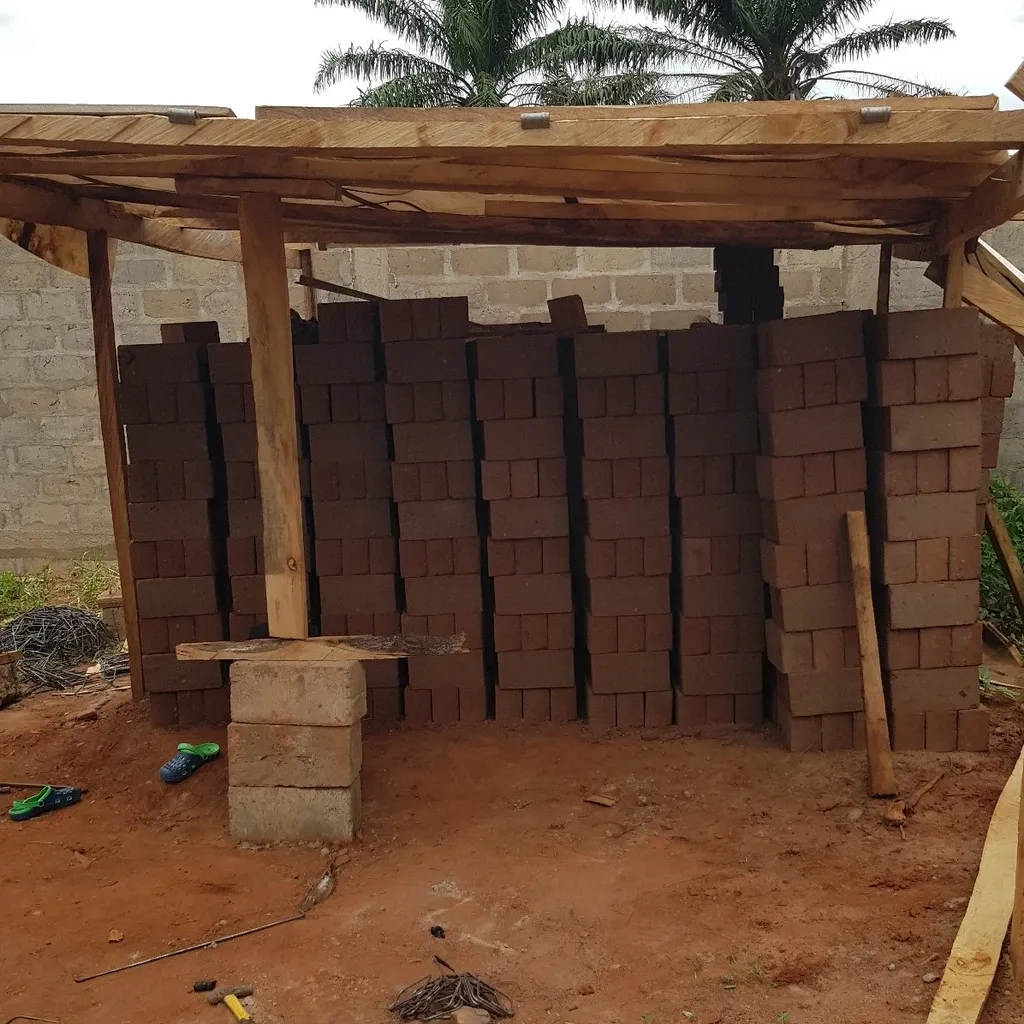
In the middle, the brick makers: with a special press they make bricks from red clay and a little cement that give a very

In the middle, the brick makers: with a special press they make bricks from red clay and a little cement that give a very good indoor climate. The bricks must be protected from sun and rain, and thanks to truck tarpaulins from Giesker & Laakmann we were able to build a proper shelter. The bricks are done, money is still needed for the rest of the building project. Thank you in advance for any help!

Many thanks to Paletten Robers and Werkmarkt Schmeing, both from Südlohn, and to Stade from Dülmen-Buldern for the great

Many thanks to Paletten Robers and Werkmarkt Schmeing, both from Südlohn, and to Stade from Dülmen-Buldern for the great donations. We can make very good use of everything here. Unfortunately there is still not enough money for the gates that secure the site, and we would be grateful for any help!

More equipment: the rotary tiller, the hoe and the generator were unloaded at night by a truck with a small crane

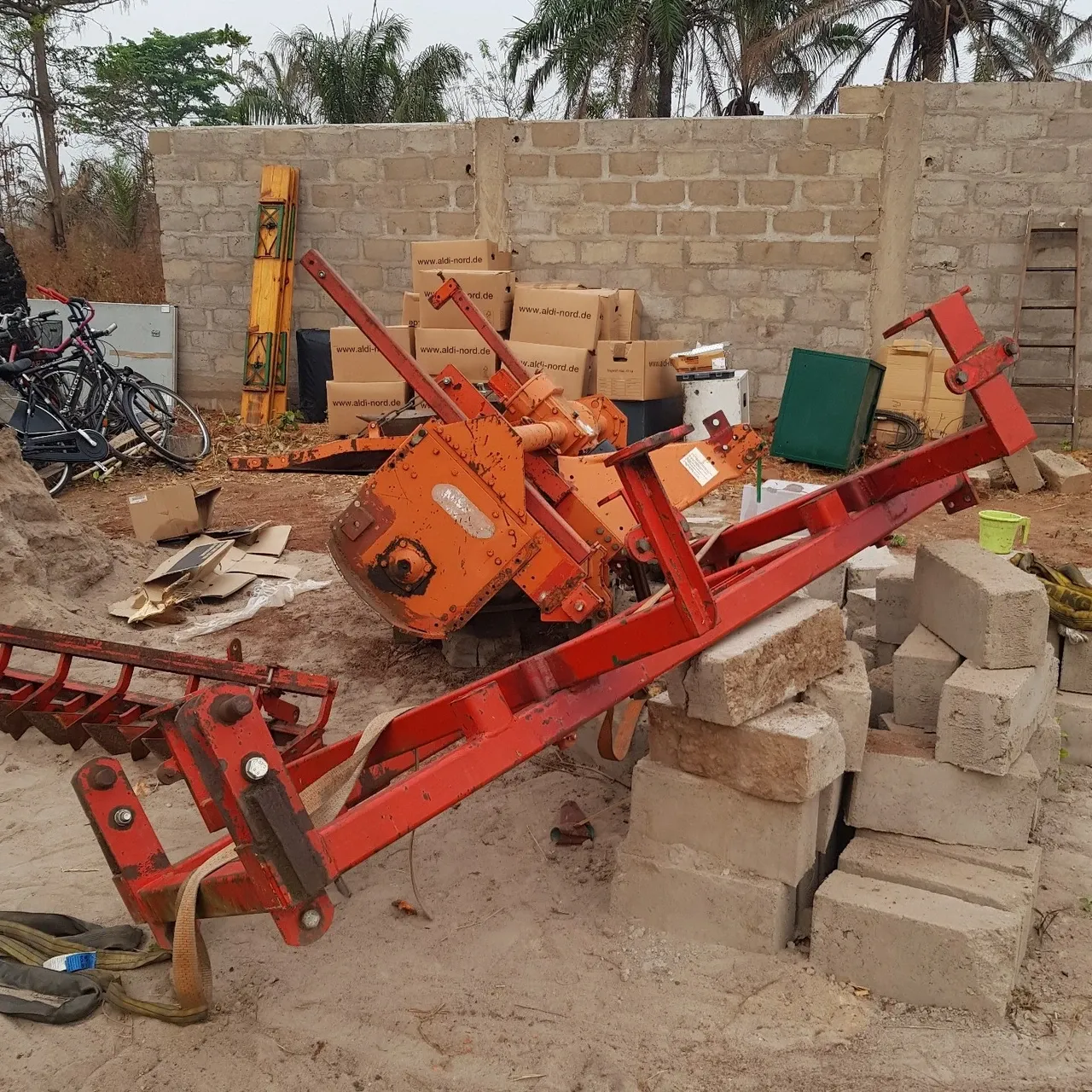
More equipment: the rotary tiller, the hoe and the generator were unloaded at night by a truck with a small crane.

Wall, well and the first container

As there was no crane, the container was to be unloaded the African way: tie it to a tree with two chains and the truck

As there was no crane, the container was to be unloaded the African way: tie it to a tree with two chains and the truck drives off briskly. Unfortunately the container got stuck halfway and the truck could no longer manoeuvre because all the weight rested on the back. Later the small crane came back, lifted the front of the container and lowered it gently to the ground.

The container is being reloaded in an orderly way

The container is being reloaded in an orderly way. First the large container had to be put in place. After several attempts we managed to get a truck with a strong crane from the road construction company the next night, able to lift the empty 4-tonne container into position. The operators are closely supervised, so side jobs are difficult. It came in the dark and we had to switch off all lights. It went quite quickly, some people earned a little extra and everyone was happy. A big problem was solved!

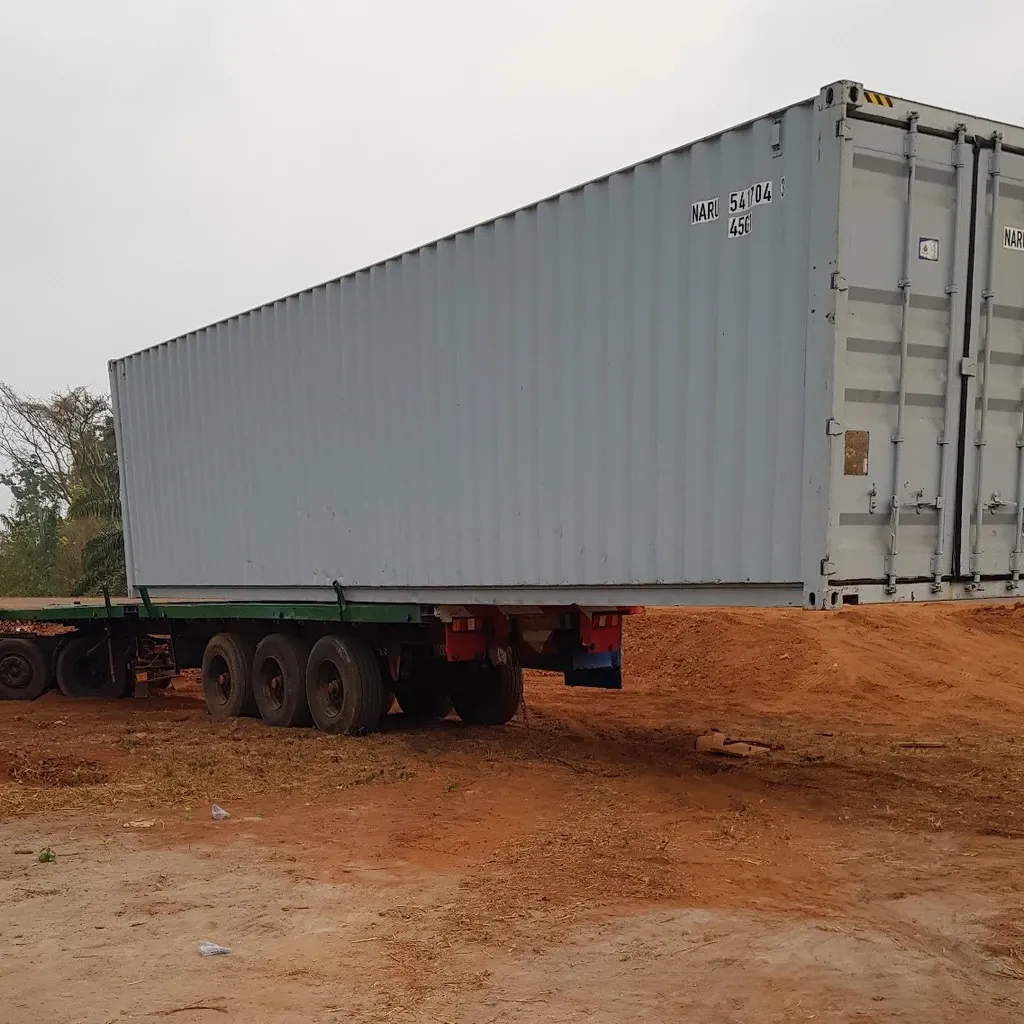
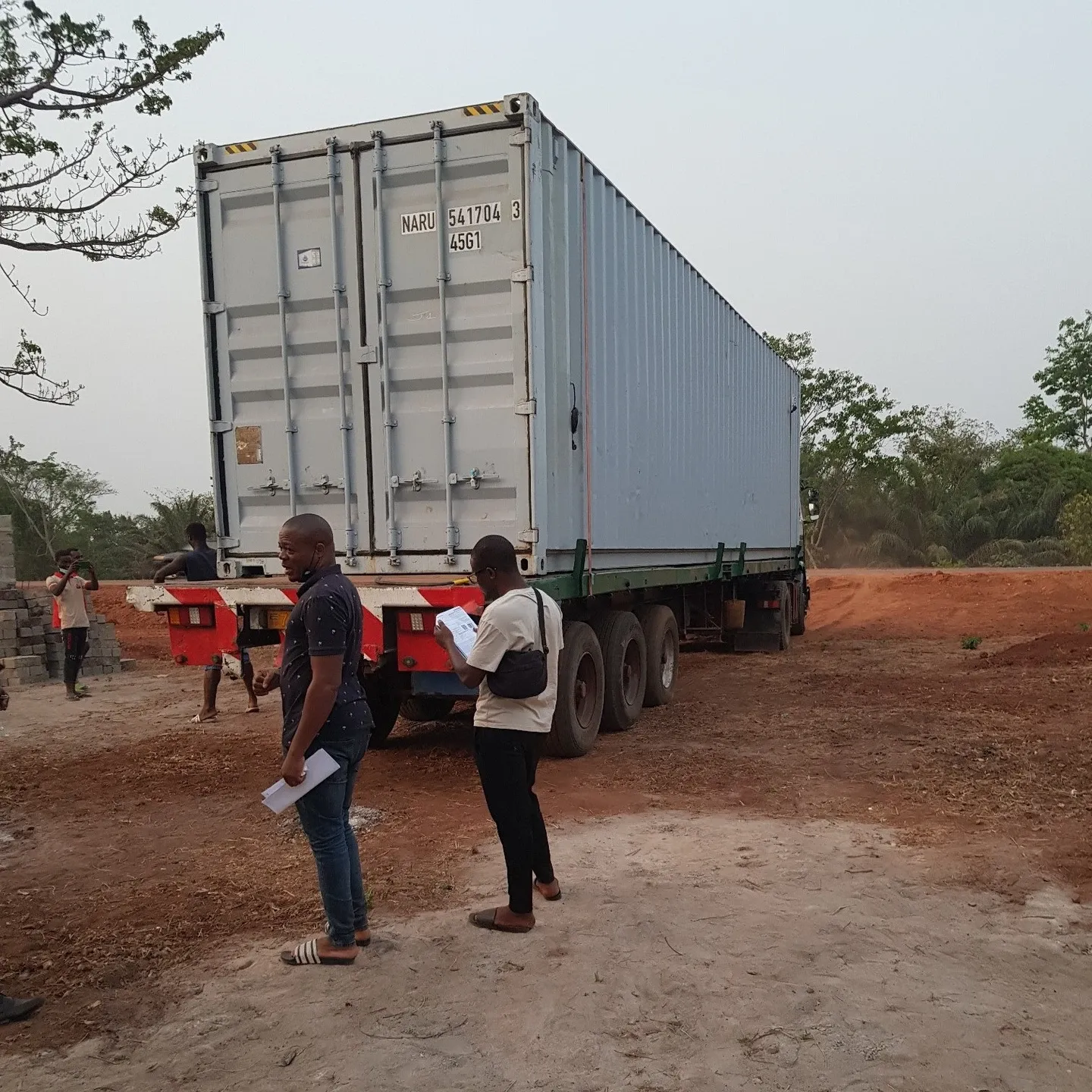
Sunday, 6 February 2022, 5:30 pm: the container has finally arrived

Sunday, 6 February 2022, 5:30 pm: the container has finally arrived! Togo has paperwork too, on the left the truck driver, on the right the customs officer.

The container seals are removed and unloading can begin

The container seals are removed and unloading can begin. I had a lot to organise and we did not finish until late at night.

This is how it looked the next morning

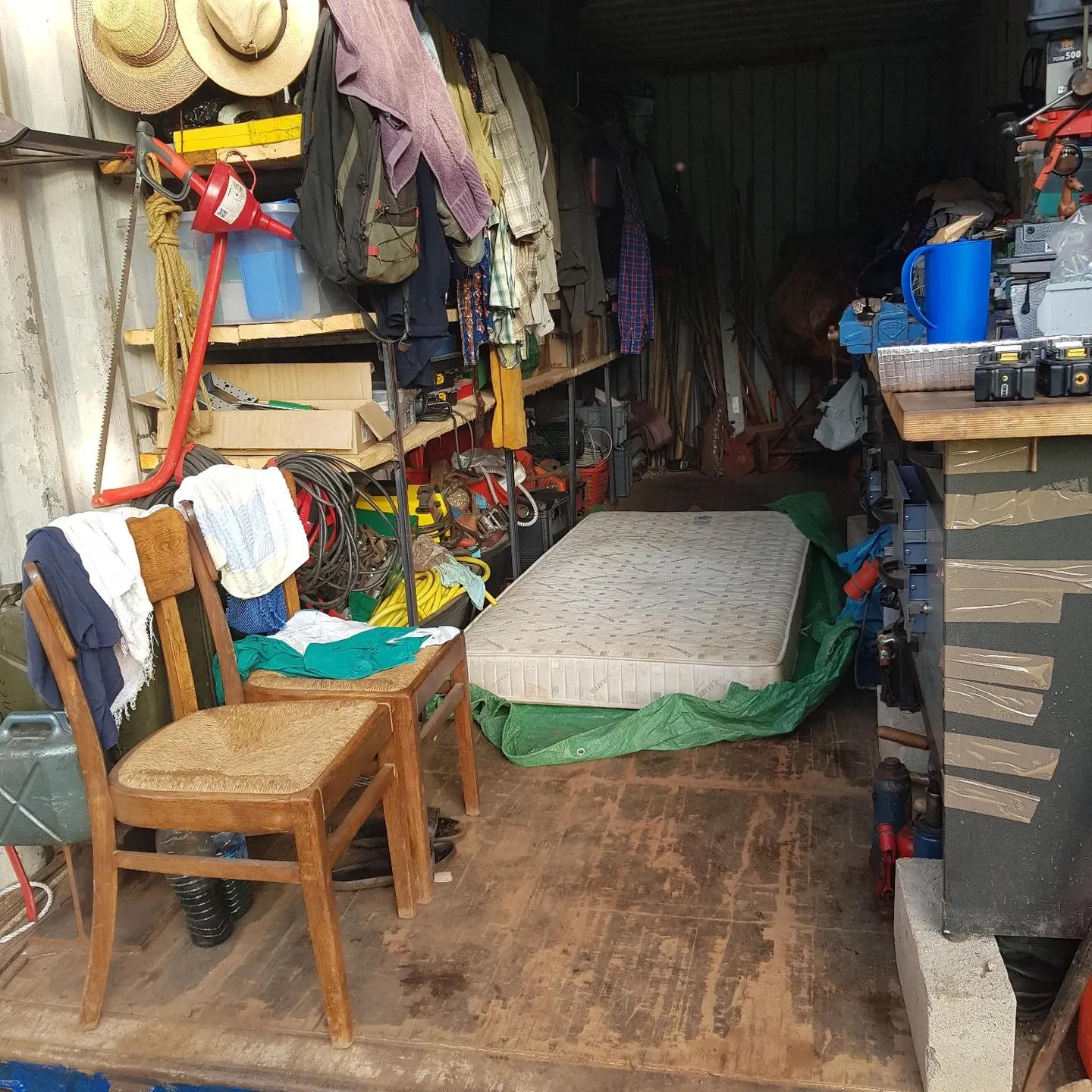
This is how it looked the next morning. That same night a small container was delivered that I received from Father Marian of the Divine Word Missionaries. The material will later be divided between the two: the large container donated by Bewital serves as secure storage, the small one becomes the workshop.

The wall is largely finished

The wall is largely finished. Once the container is delivered, the rest will be built, including the foundations for the sliding gate. After the container delivery our donation account is unfortunately empty again, and we urgently need donations for the gates.

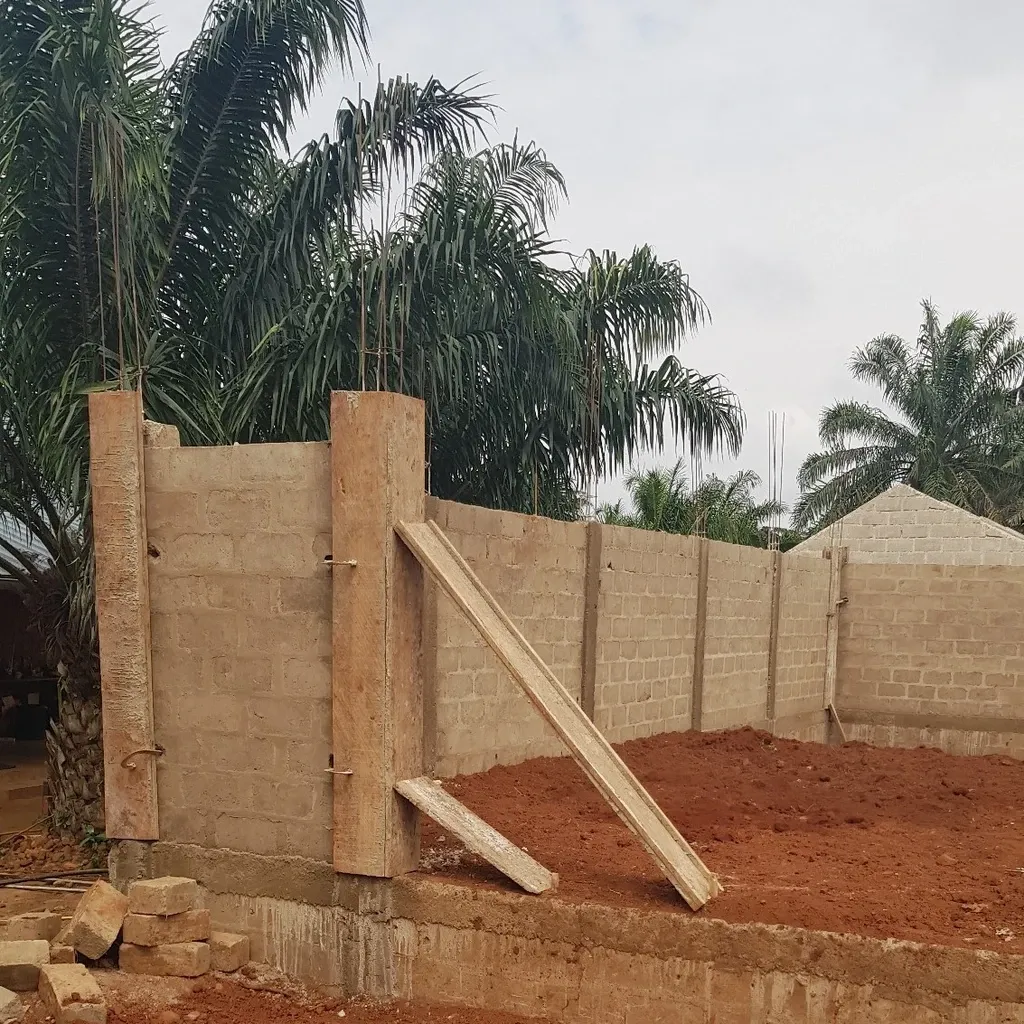
Every 3.5 m the wall is stabilised by a concrete post

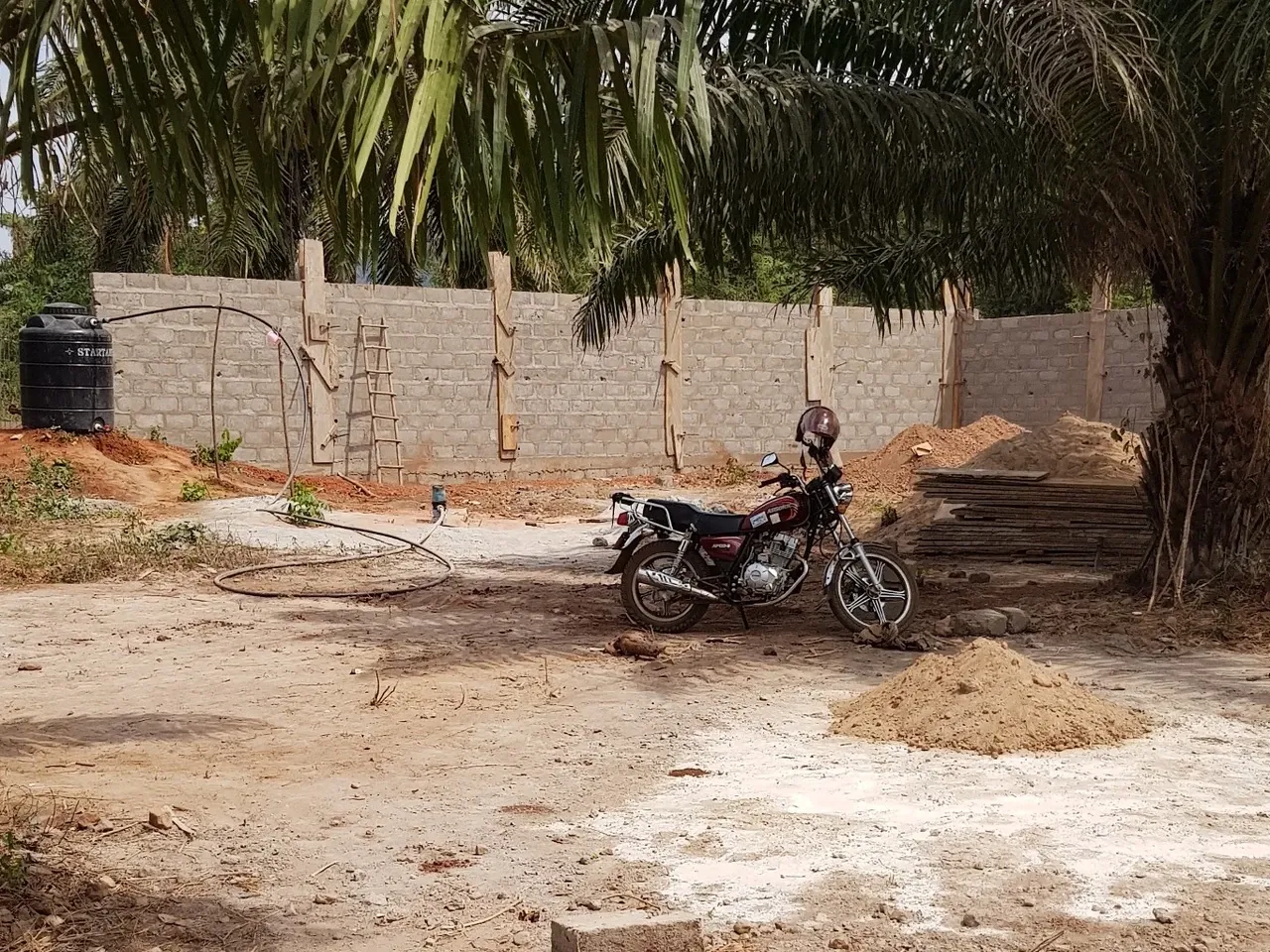
Every 3.5 m the wall is stabilised by a concrete post. The steel reinforcement reaches down into the foundations, which makes it quite stable even though the blocks are only 10 cm thick. On the left the black water tank with a hose to the well; the submersible pump runs on a generator.

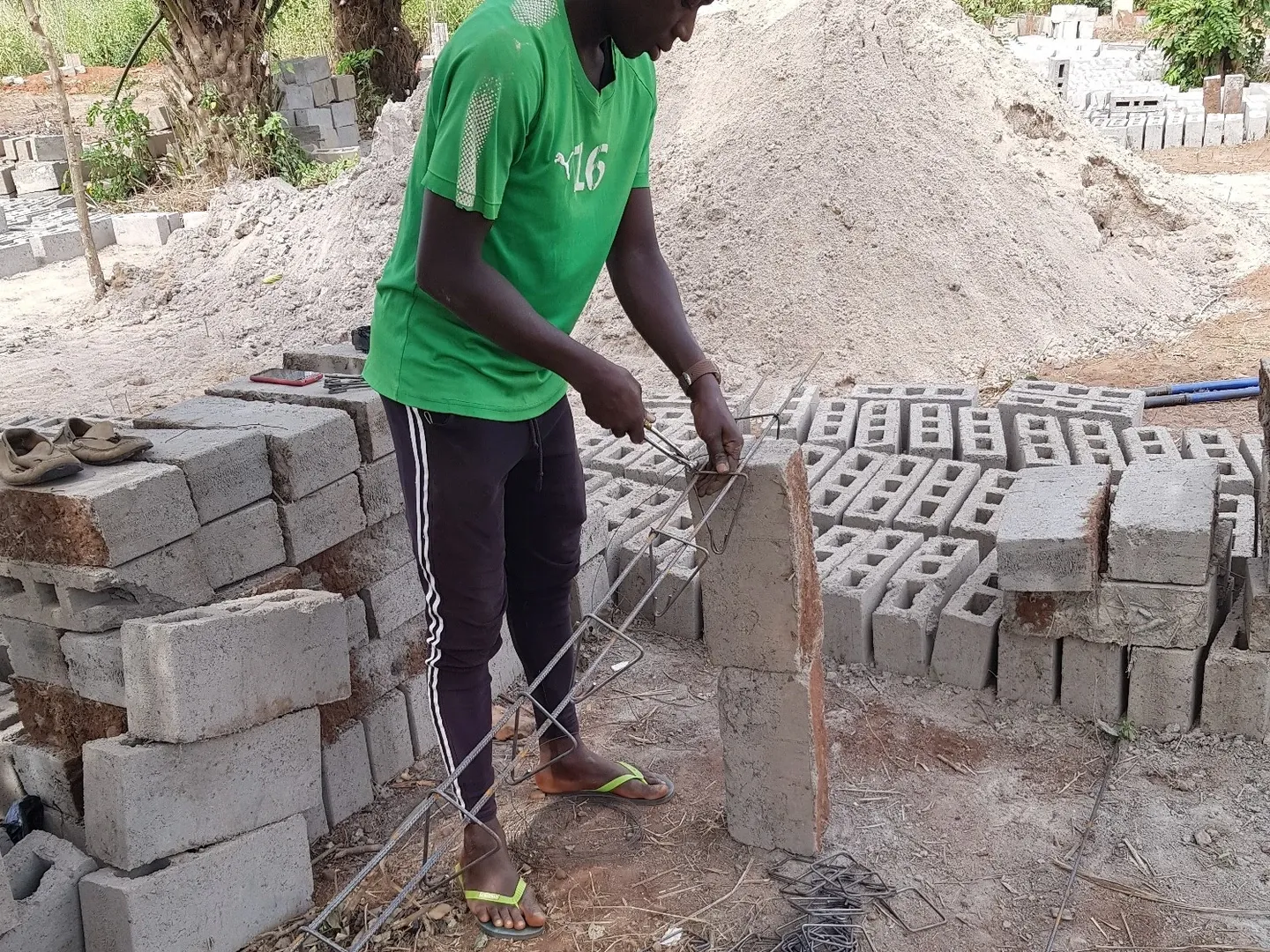
The reinforcement for foundations and concrete posts is bent and tied on site by specialists

The reinforcement for foundations and concrete posts is bent and tied on site by specialists.

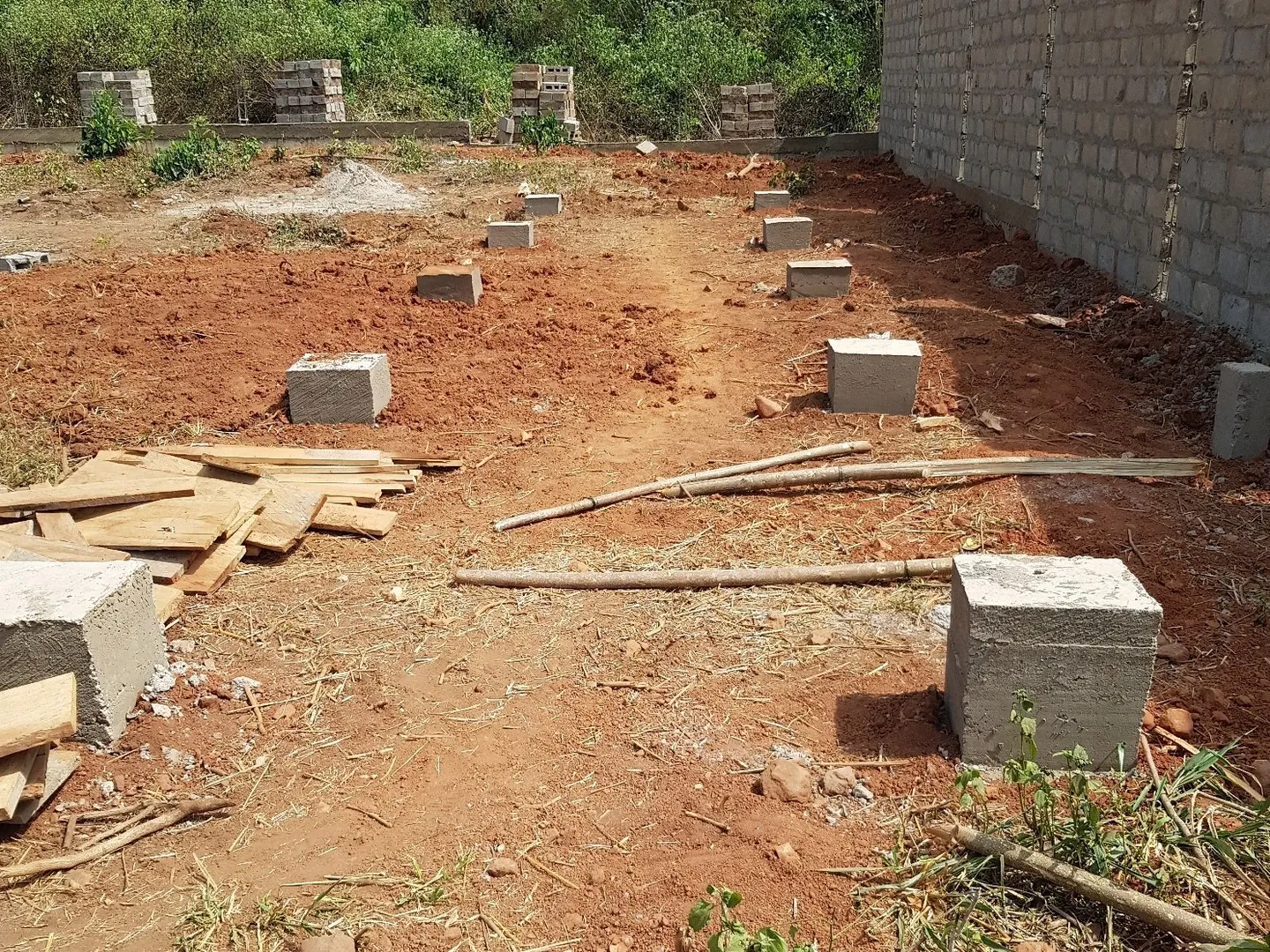
The foundations for the container

The foundations for the container. It has to stand raised so that termites cannot get in. I measured the height myself with a water level. The container is due to arrive in the second week of the year.

Construction of the wall is progressing well, at the moment work even goes on on Sundays

Construction of the wall is progressing well, at the moment work even goes on on Sundays.

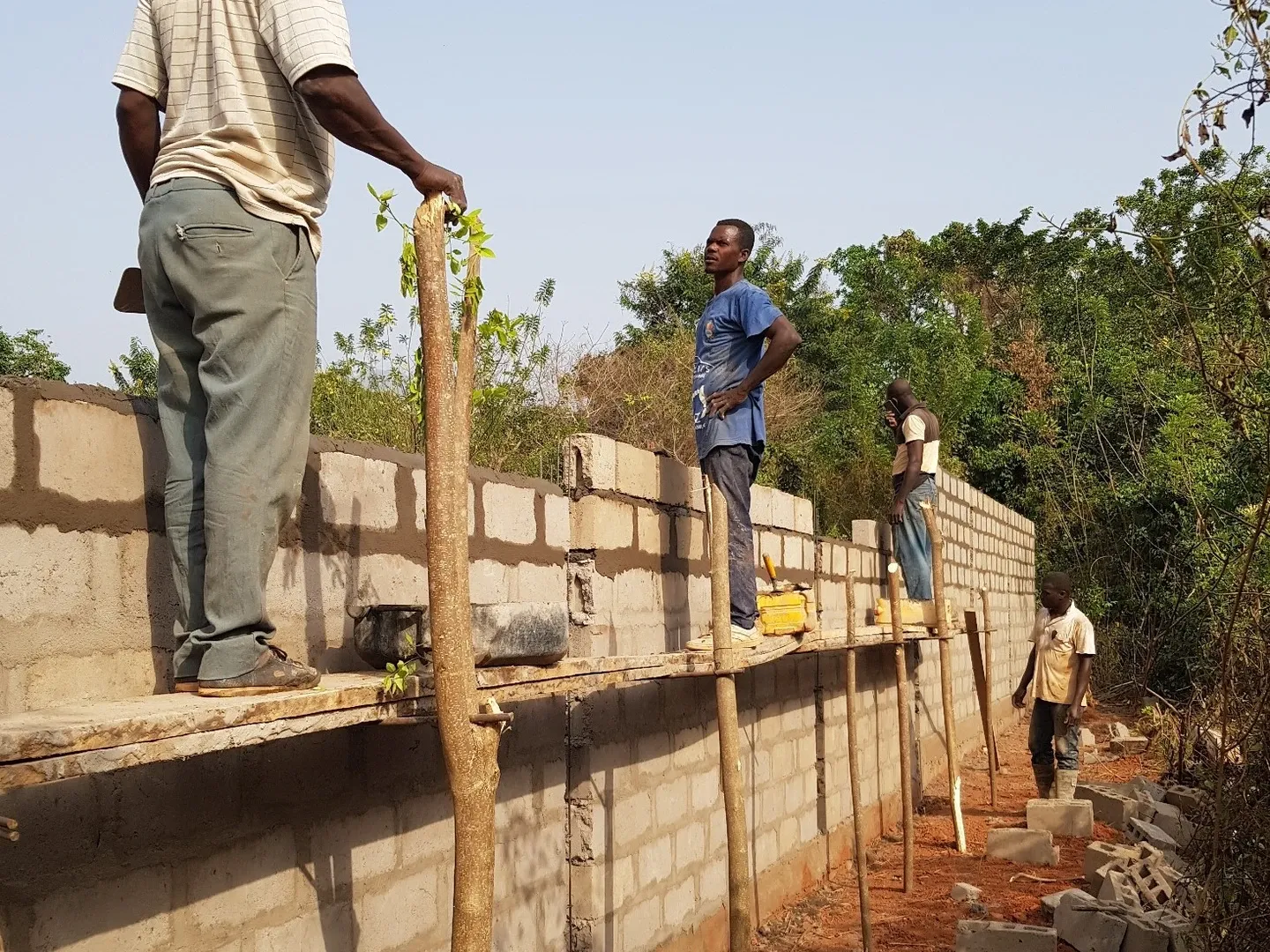
Scaffolding Togolese style, but it works

Scaffolding Togolese style, but it works.

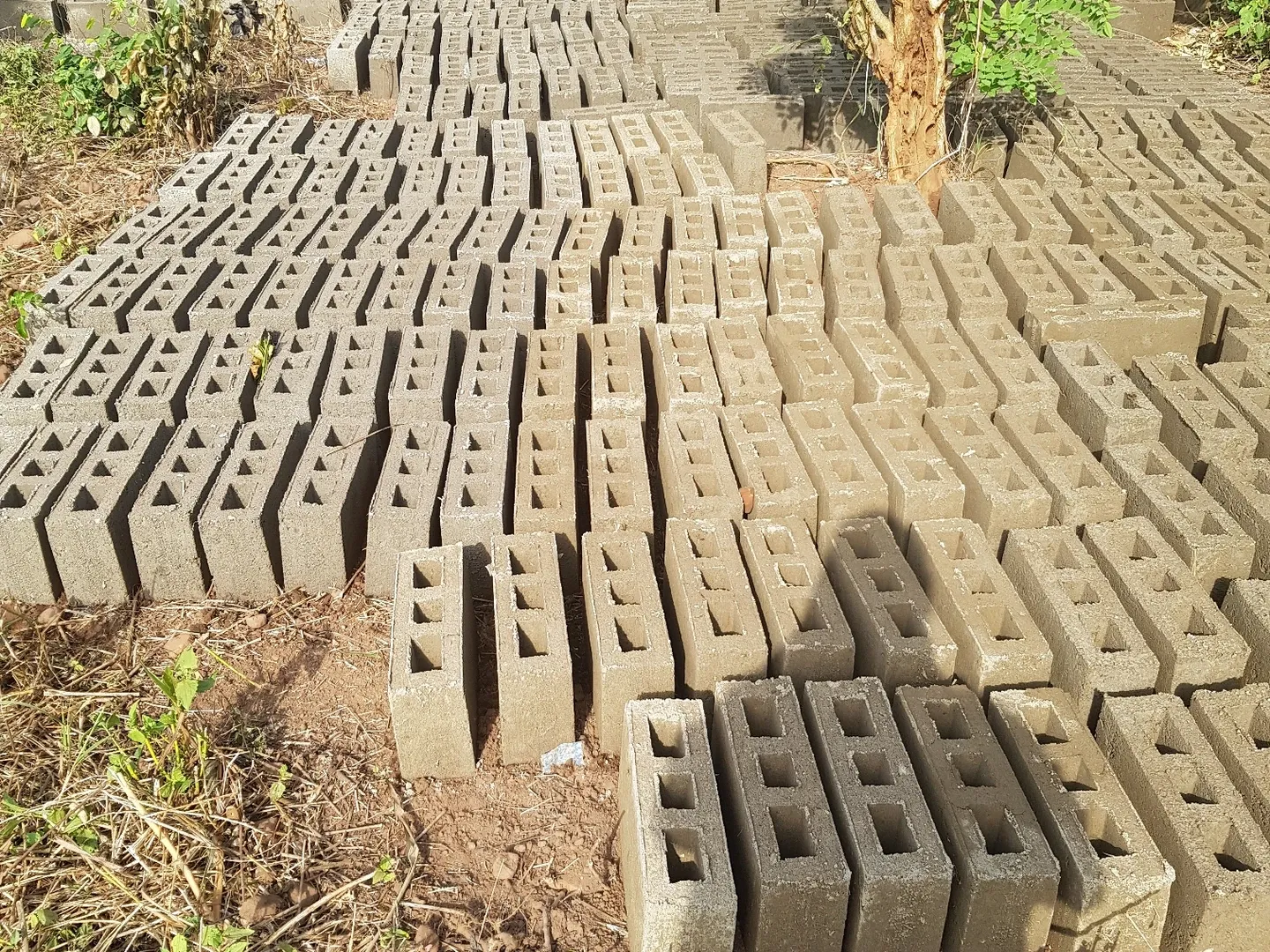
The blocks for the wall are made by hand, production is in full swing

The blocks for the wall are made by hand, production is in full swing.

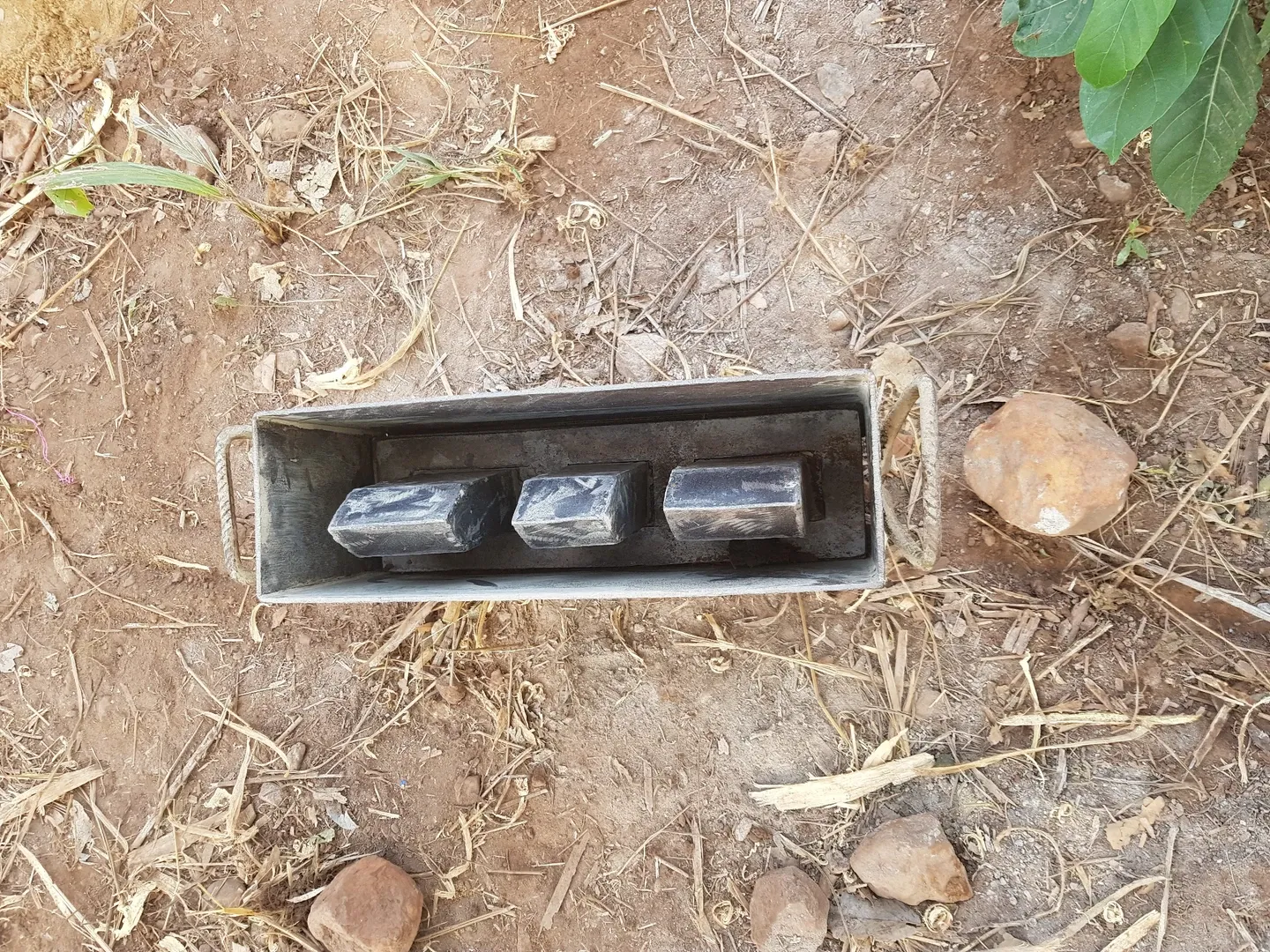
One of the moulds for making the blocks

One of the moulds for making the blocks.

Sand and cement are mixed several times with great skill

Sand and cement are mixed several times with great skill. A second worker adds water until the mix is earth-moist, then it goes into the moulds.

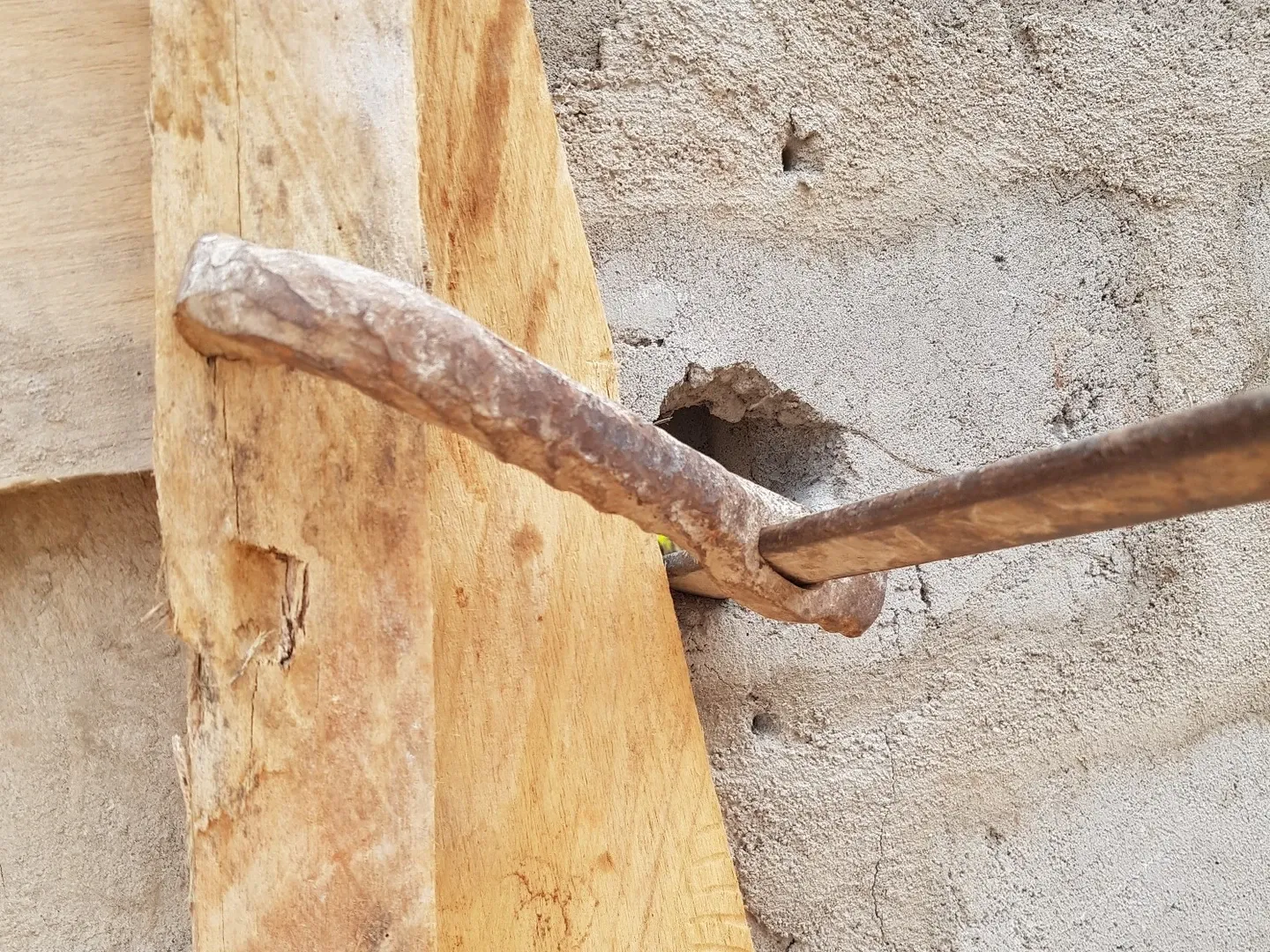
A detail of the formwork for the concrete posts

A detail of the formwork for the concrete posts. A hole is knocked in the wall for the clamps, some of which are forged from rebar.

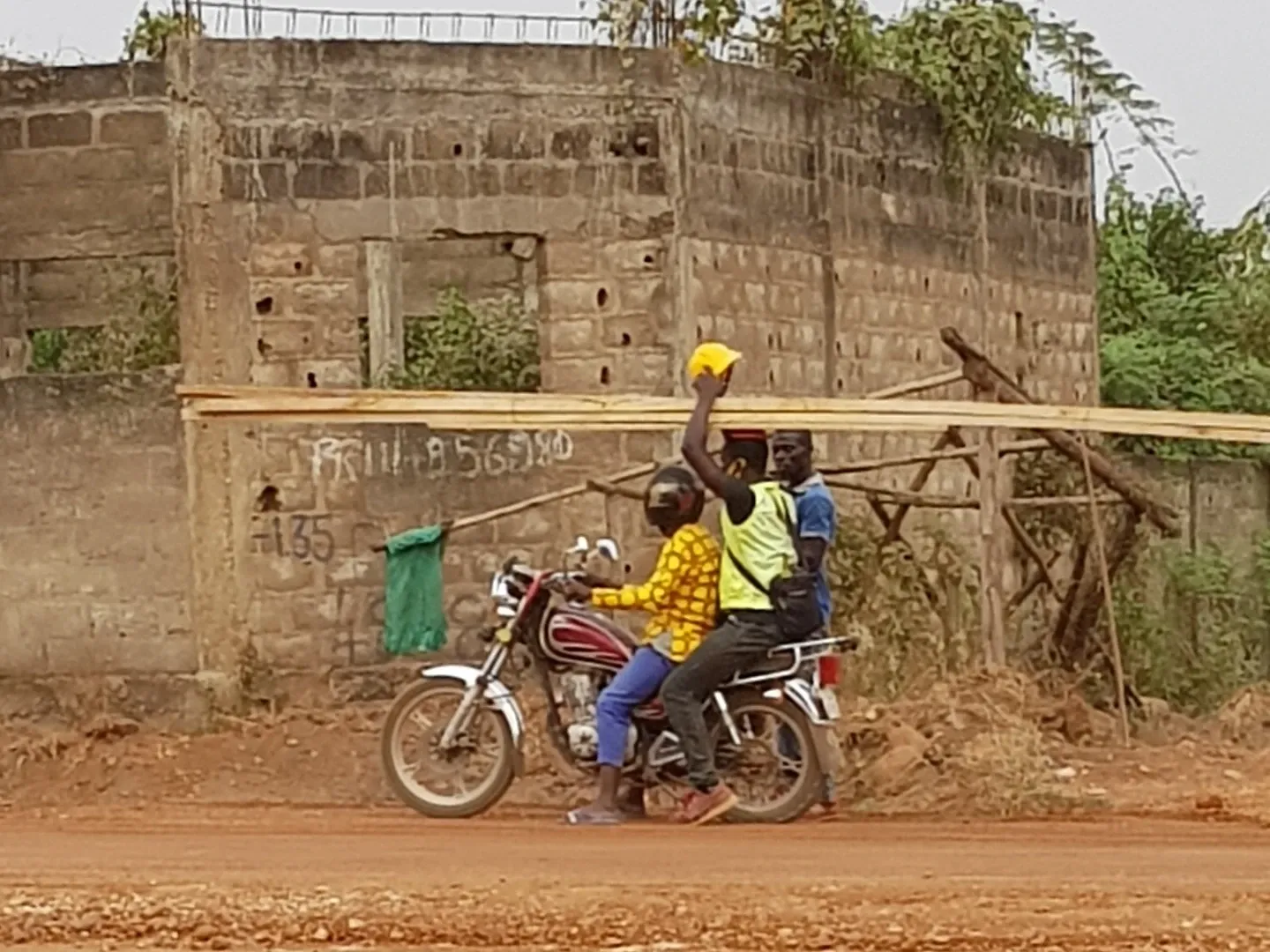
A snapshot in Kpalimé: transporting boards the Togolese way

A snapshot in Kpalimé: transporting boards the Togolese way. Just think how skilful people are!
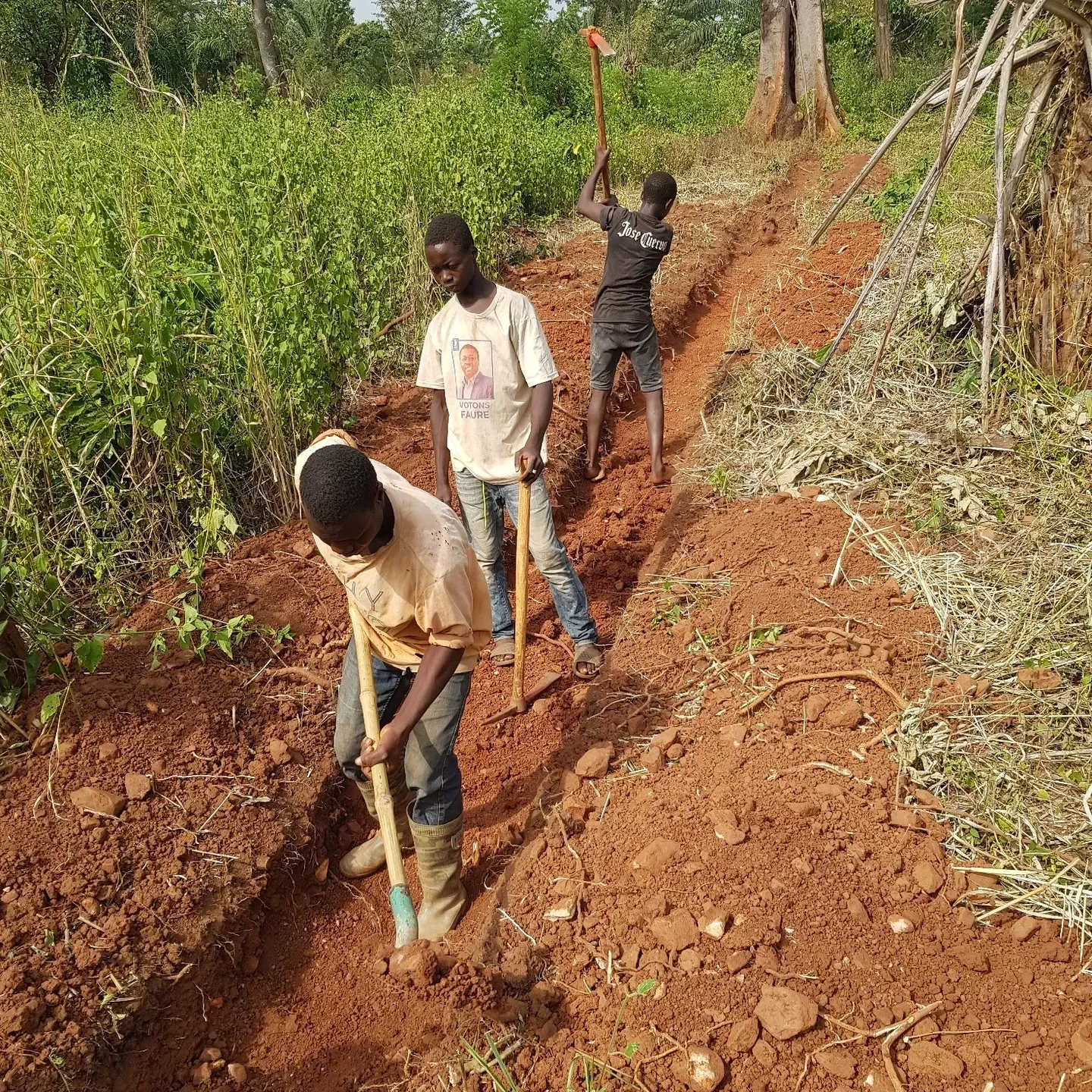
The foundations are dug, all by hand

The foundations are dug, all by hand. I am very impressed by how hard these young men can work.

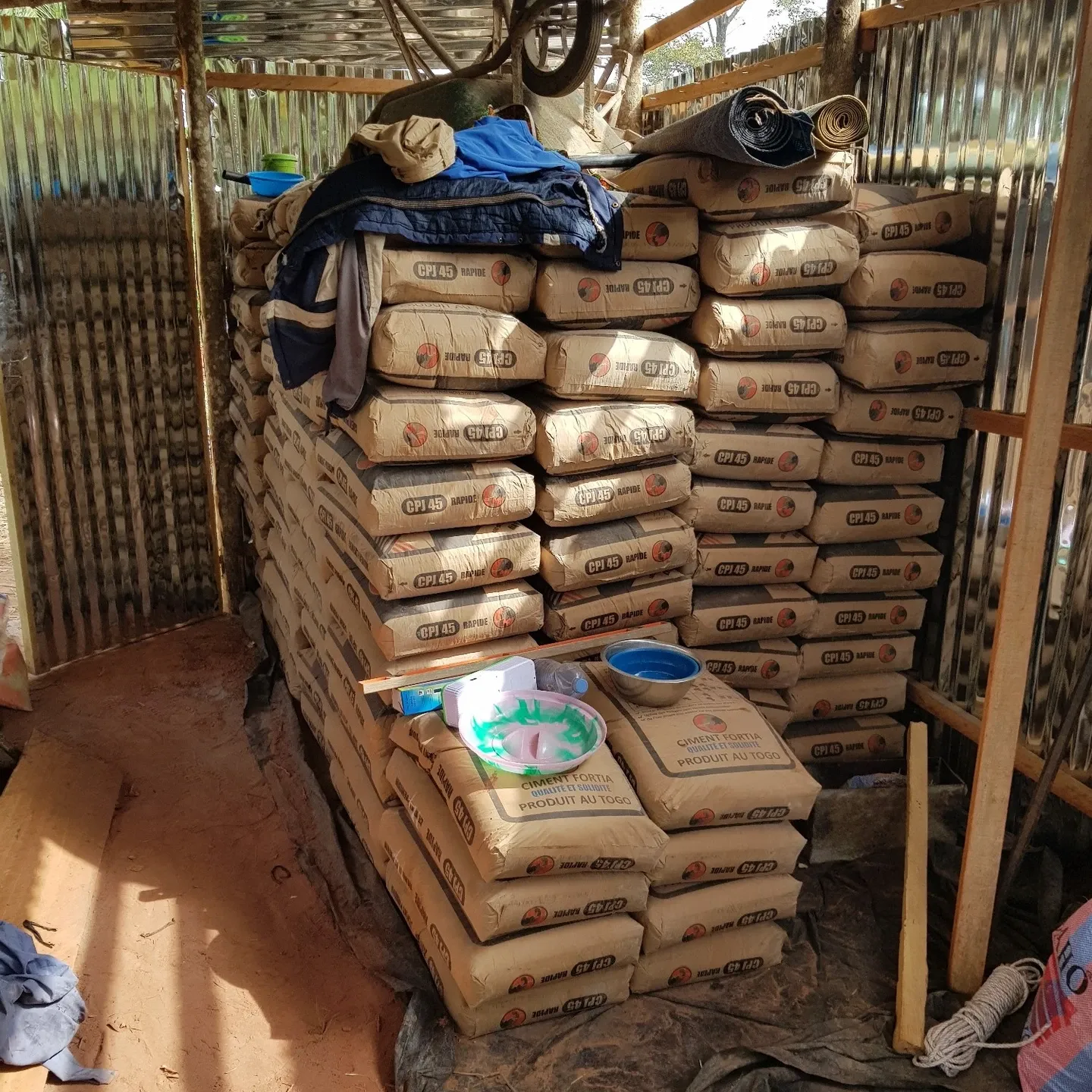
The cement is stored in the storehouse too: 200 bags of 50 kg each, all carried in by hand

The cement is stored in the storehouse too: 200 bags of 50 kg each, all carried in by hand.

Thanks to the donations received we were also able to start a wall around the planned machinery station

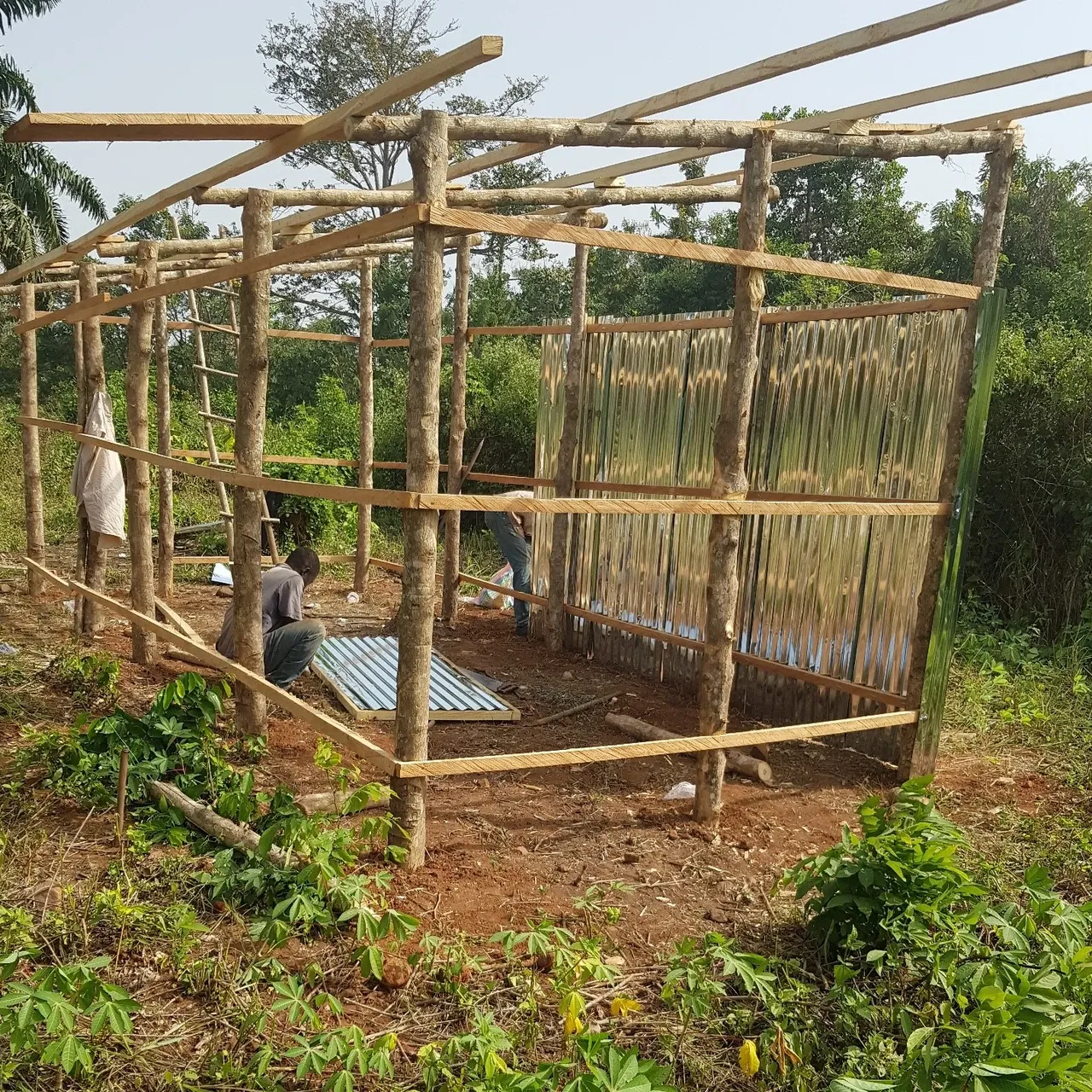
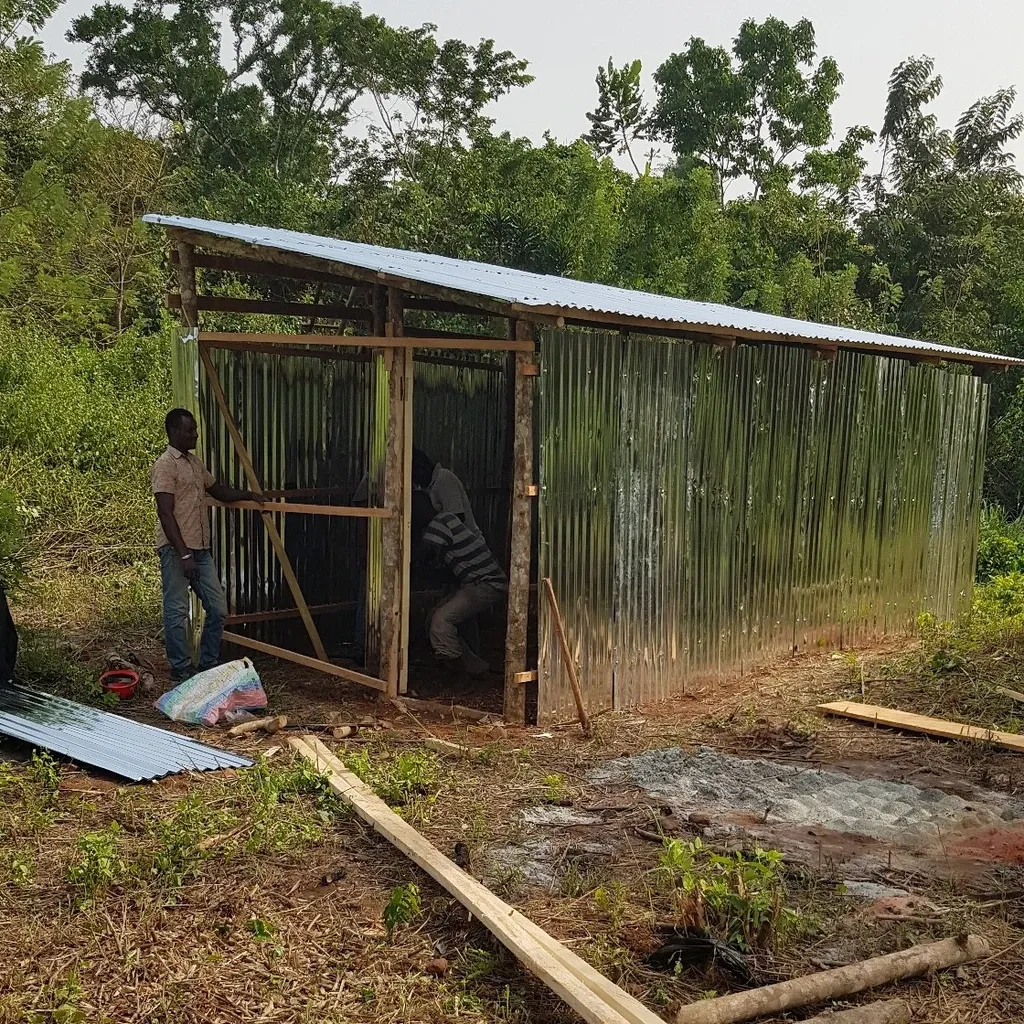
Thanks to the donations received we were also able to start a wall around the planned machinery station. First a storehouse is built to protect against theft.

With great craftsmanship a first building went up in no time

With great craftsmanship a first building went up in no time. It will remain standing for various purposes.

The young men also sleep in the storehouse so nothing gets stolen

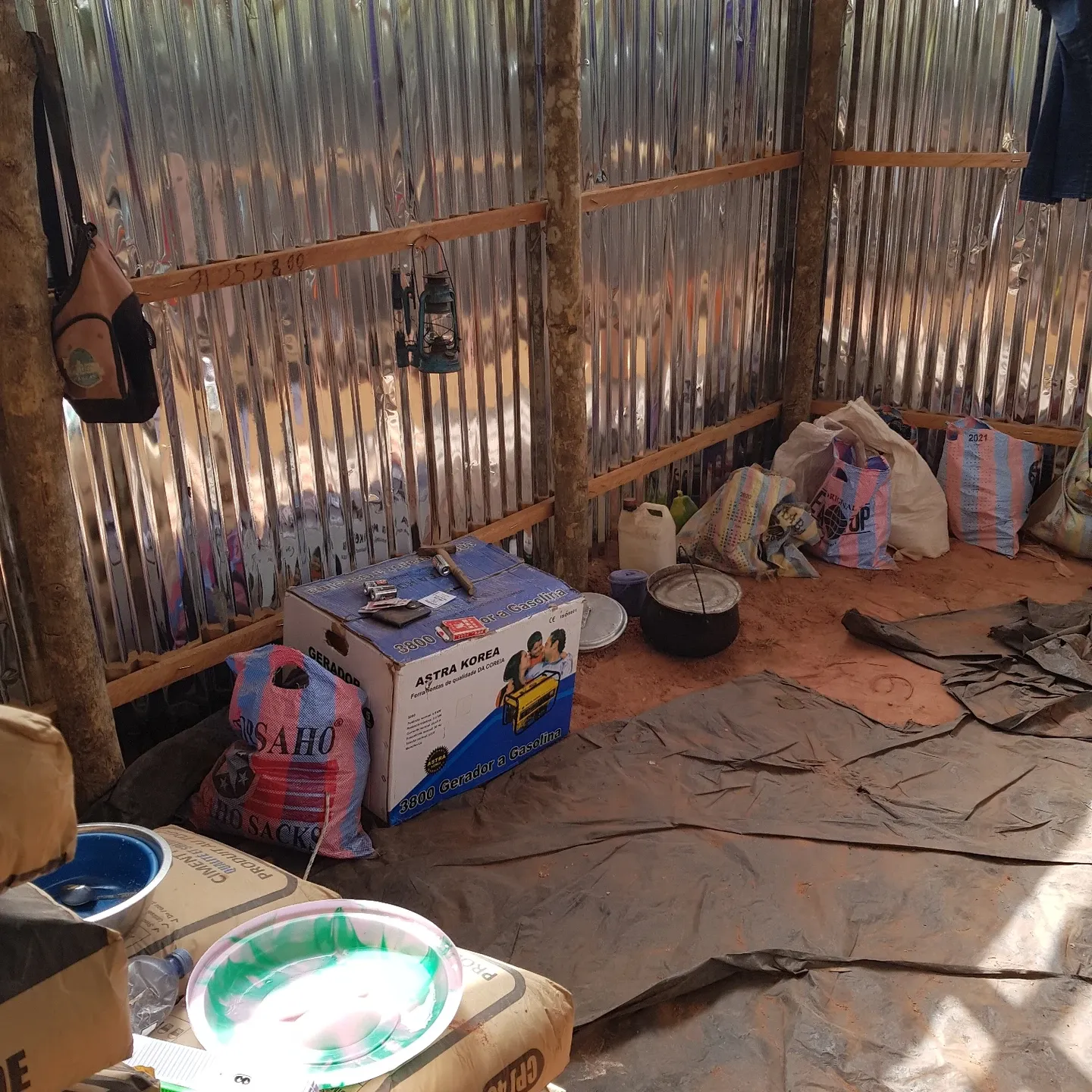
The young men also sleep in the storehouse so nothing gets stolen. Water from the tank is enough for showering, and they cook on site as well.

Thanks to some larger donations, including from Ludger Gausling from Heek and Peter Emming Agrarkontor, we were able to

December 2021: good news

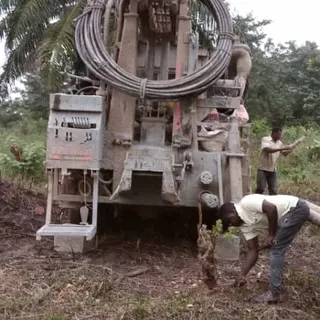
Thanks to some larger donations, including from Ludger Gausling from Heek and Peter Emming Agrarkontor, we were able to continue the project and drill a well for water supply. Beforehand a dowser searched the site for a suitable spot.

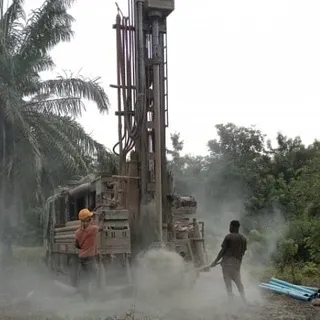
Drilling uses the dry method, the cuttings are blown up with air

Drilling uses the dry method, the cuttings are blown up with air. My heartfelt thanks to all donors, including those who prefer not to be named.

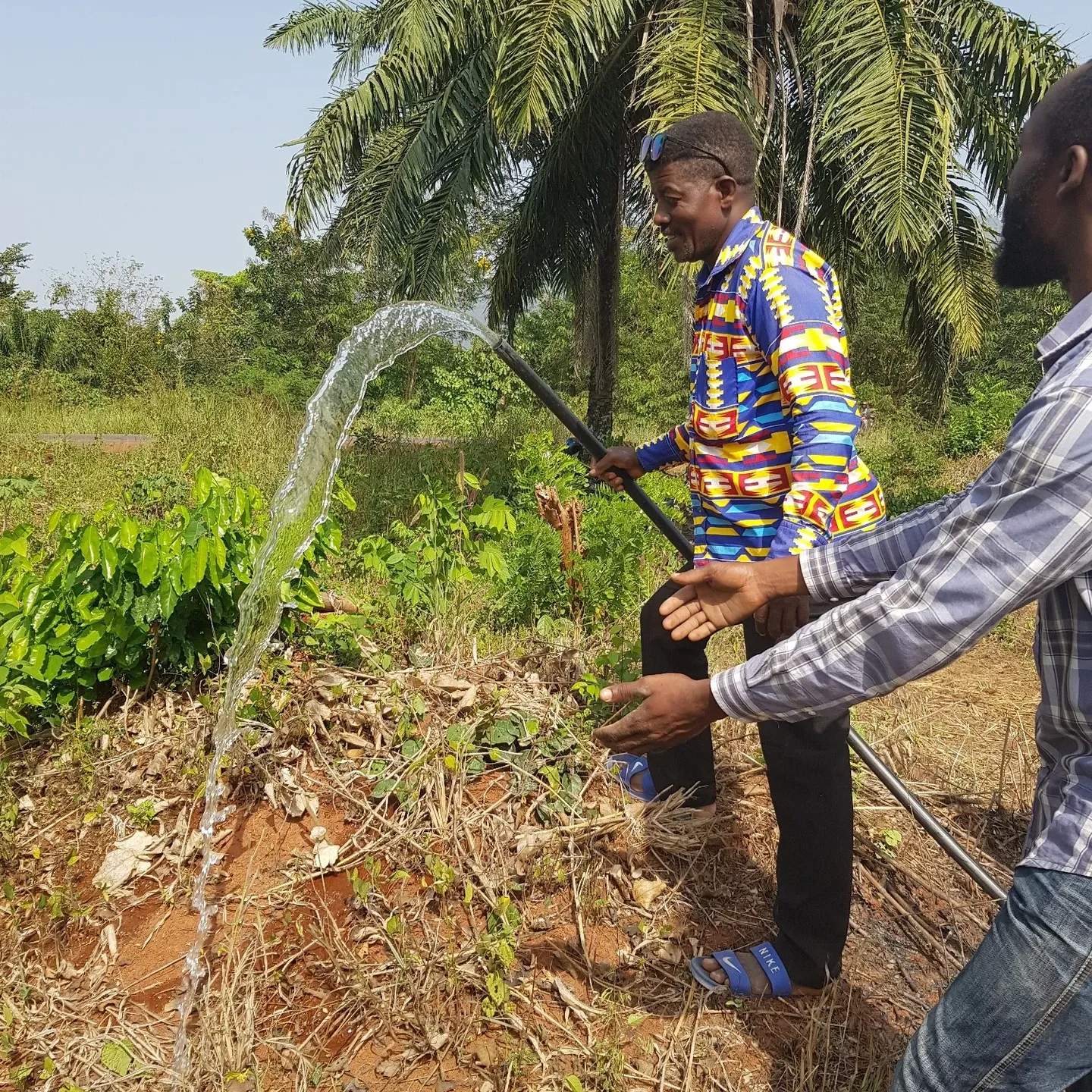
We hit water at 70 m and then drilled on to 90 m

We hit water at 70 m and then drilled on to 90 m. The water is of very good quality and drinkable. Good water is highly valued, especially in Africa.

Preparing the site

We are preparing the machinery station site for the container, which is due at the end of December. A wall has to be built around the site and we need a well for the water supply. Financial help is urgently needed for this.

The beginning: land, NGO ARMA and the first container

The container is loaded with great skill

23 Nov 2021: loading the container

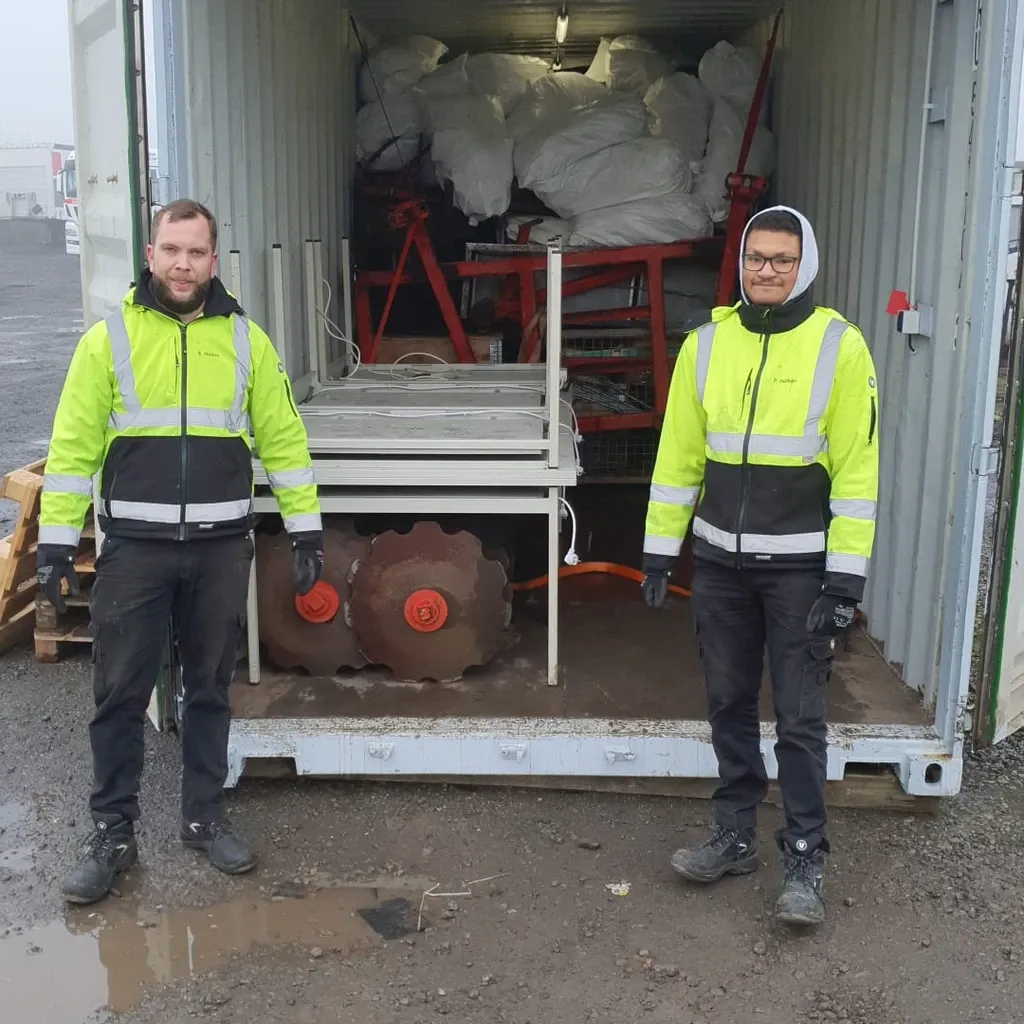
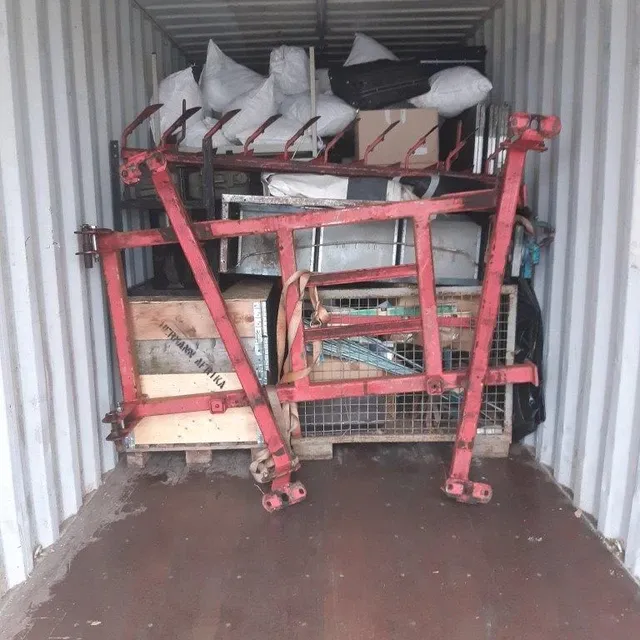
The container is loaded with great skill. To make the best use of space, the disc harrow was dismantled. Excellent packers at work!
A big thank you to Hubert Laakmann and his staff for this great support

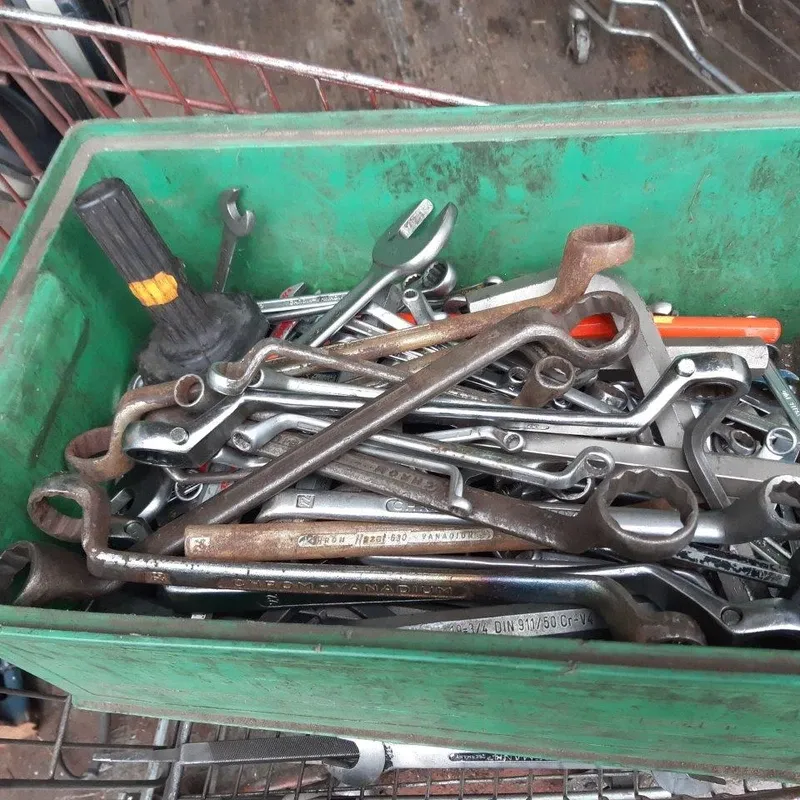
A big thank you to Hubert Laakmann and his staff for this great support. Many, many thanks! Thanks also to Stade in Buldern for the generous donation of tools and more, which we can make very good use of here.

I have been back in Togo since 3 November 2021, the journey went smoothlyI have been back in Togo since 3 November 2021, the journey went smoothlyI have been back in Togo since 3 November 2021, the journey went smoothlyI have been back in Togo since 3 November 2021, the journey went smoothly

Back in Togo

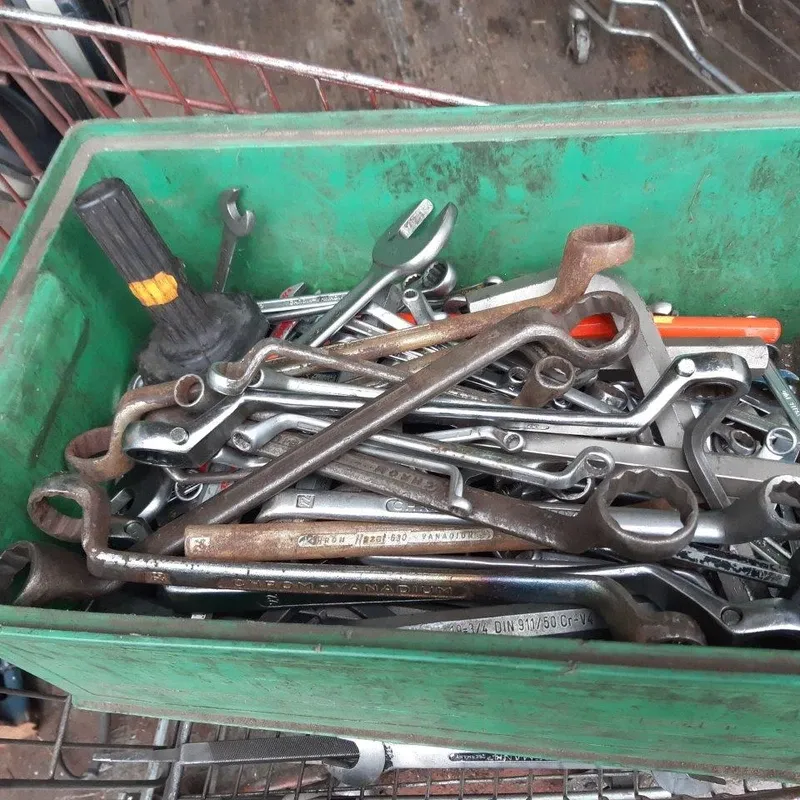
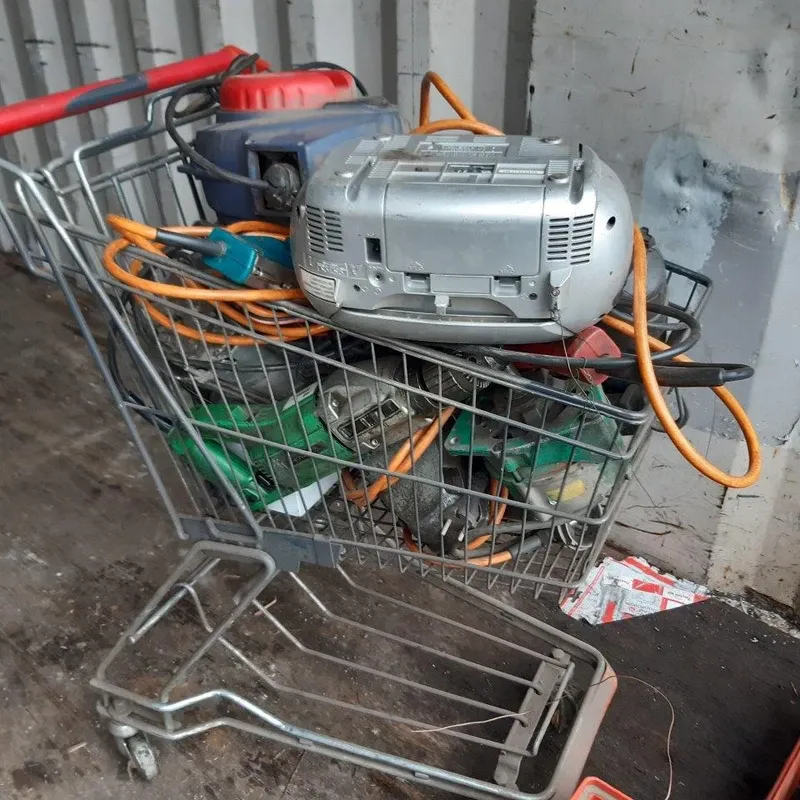
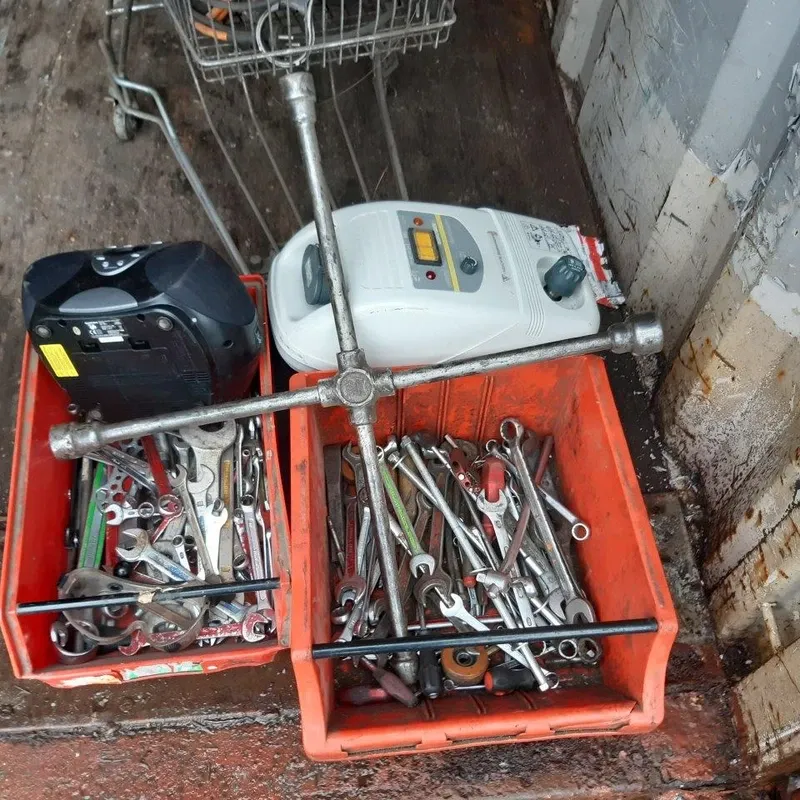
I have been back in Togo since 3 November 2021, the journey went smoothly. On 29 October the material for the container was taken from Südlohn to the Giesker & Laakmann forwarding company in Nottuln, where the container has been standing since 27 October. Now I am handling all the shipping formalities here. Many thanks for the extensive donations in kind from Paletten Robers and Werkmarkt Schmeing. Staff at Haus Hall collected used work boots, which are urgently needed. Thanks also to Giesker & Laakmann for their great support, and special thanks to my friend Charly!

Hooray, what joy

9 Sep 2021: a container is donated

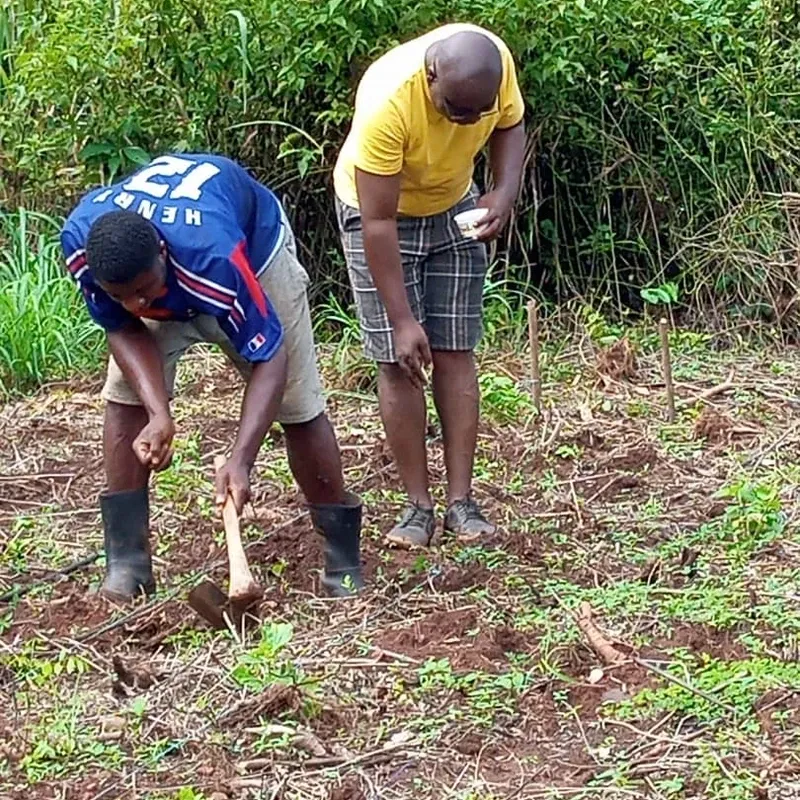
Hooray, what joy! I have just been told that a 40-foot container will be donated. Many thanks to Bewital for this wonderful donation, it gives me tremendous drive. In the photo, beans are being sown on the machinery station site on 21 August 2021.

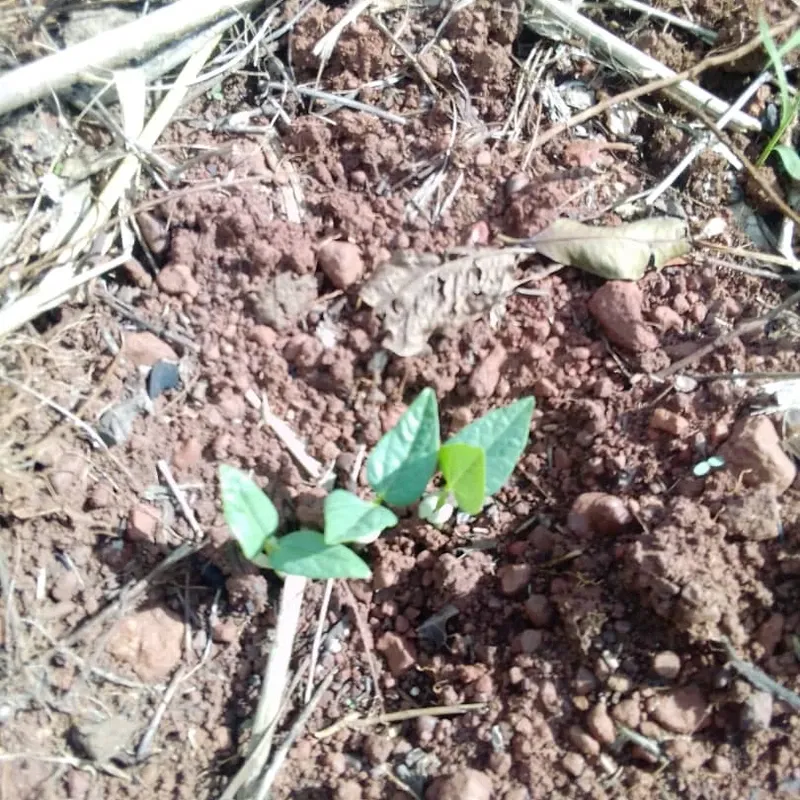
By 24 August 2021 the beans are already showing, things grow fast here

By 24 August 2021 the beans are already showing, things grow fast here!
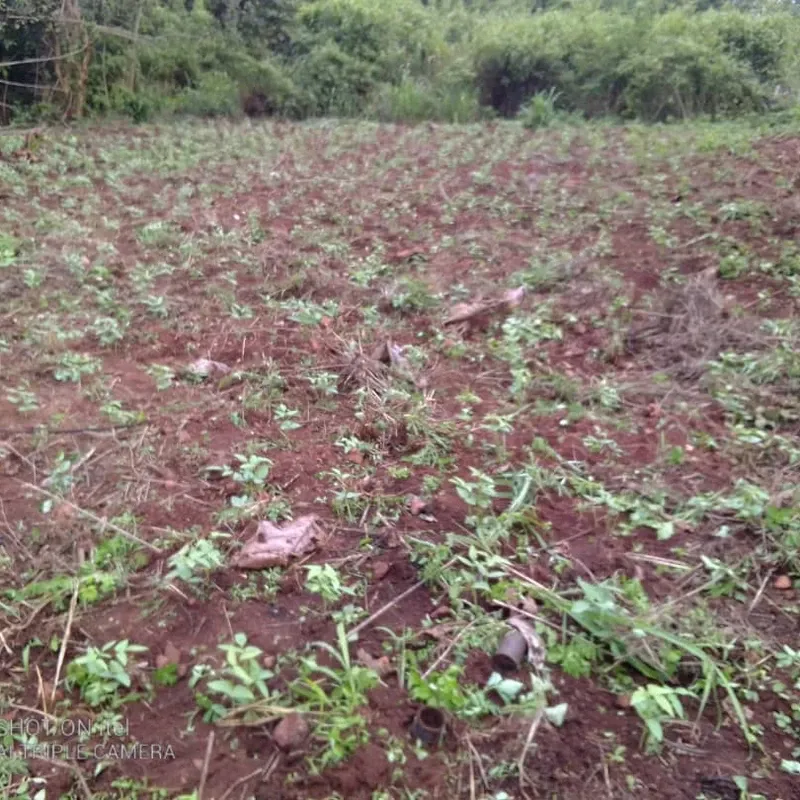
The beans are coming along well, as of 4 September 2021

The beans are coming along well, as of 4 September 2021.

4 August 2021: clearing of the site continues

4 August 2021: clearing of the site continues.

The Secrétaire Général keeps me reliably informed

The Secrétaire Général keeps me reliably informed.

At last it begins: the land for the project is cleared

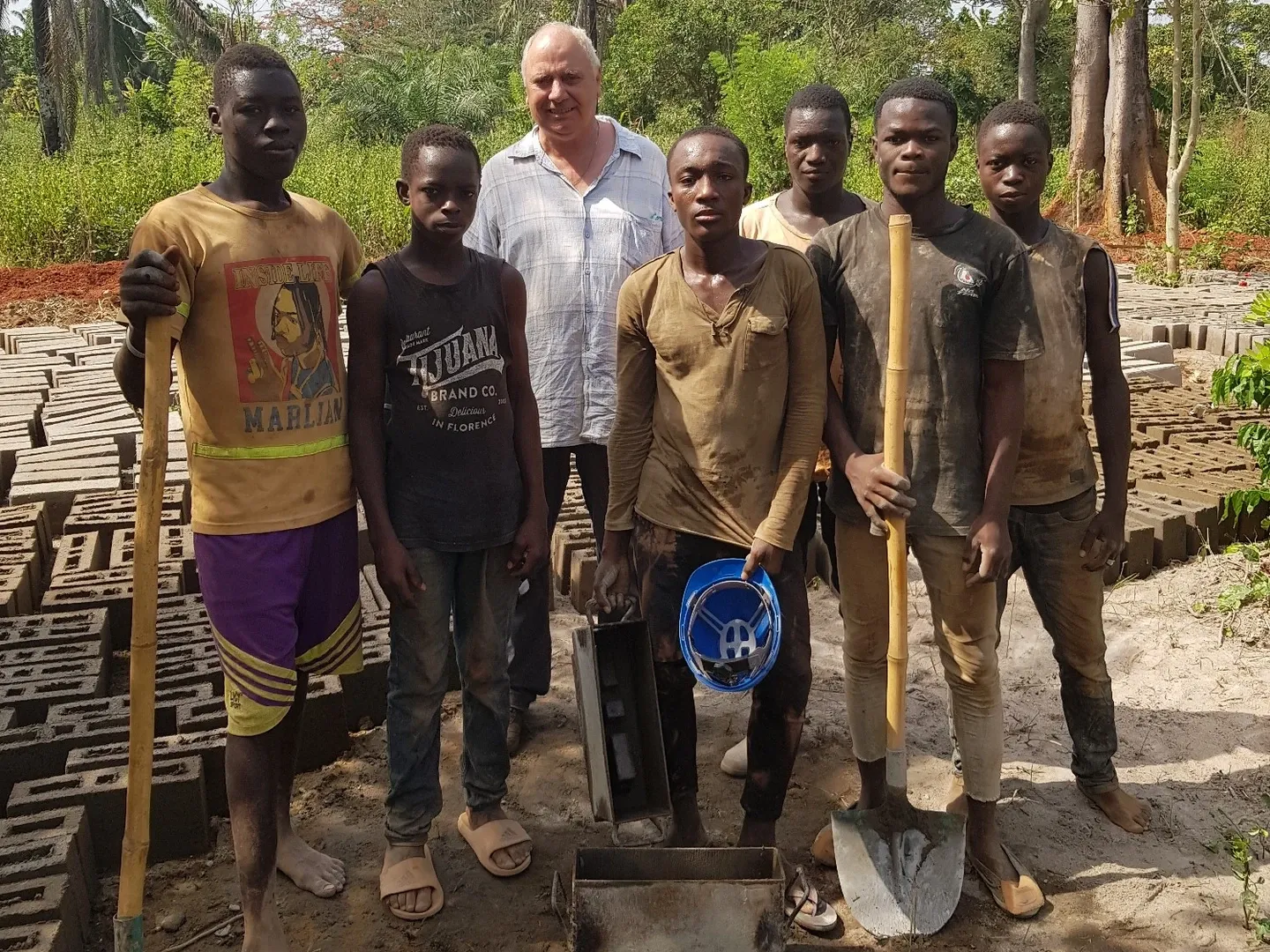
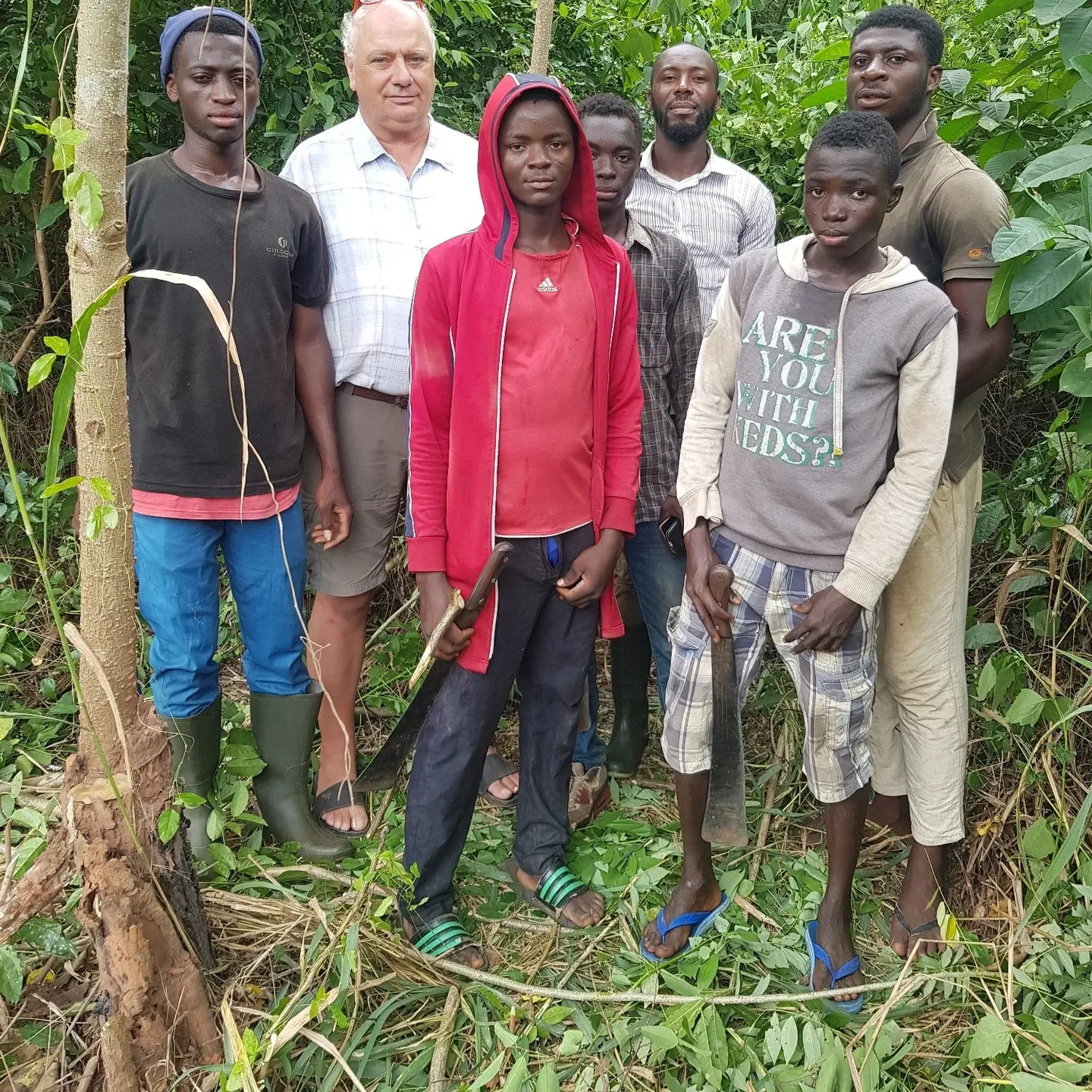
At last it begins: the land for the project is cleared. This is the work crew.

For now it can only be done by hand

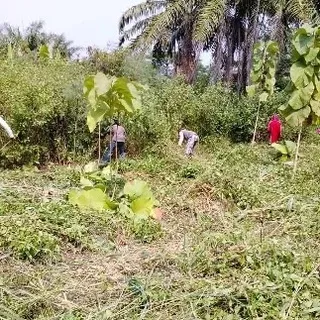
For now it can only be done by hand. Work goes on until midday, after that it is too hot.

Everyone needs a break sometimes

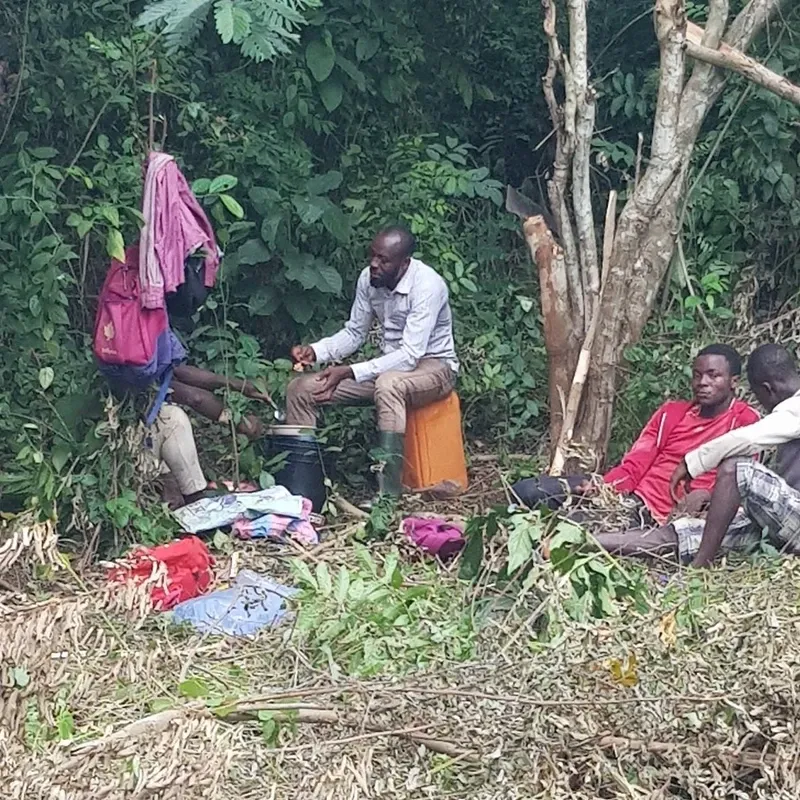
Everyone needs a break sometimes. White beans are still to be sown on the land and will be ripe in two months. Then I will return.

The logo of the NGO ARMA, short for Association pour un Rendement Meilleur en Agriculture, an association for better yields

Founding the NGO ARMA

The logo of the NGO ARMA, short for Association pour un Rendement Meilleur en Agriculture, an association for better yields in agriculture. The documents are ready and the application will soon go to the ministry. That was only possible because I found good and helpful friends. The NGO consists of the Président (that is me), the Secrétaire Général, the Trésorière and two Conseillers (advisers).

Aims of the NGO: mechanising agriculture, better working conditions for farmers, training in maintaining and repairing machines, and advice on crop farming and higher yields.

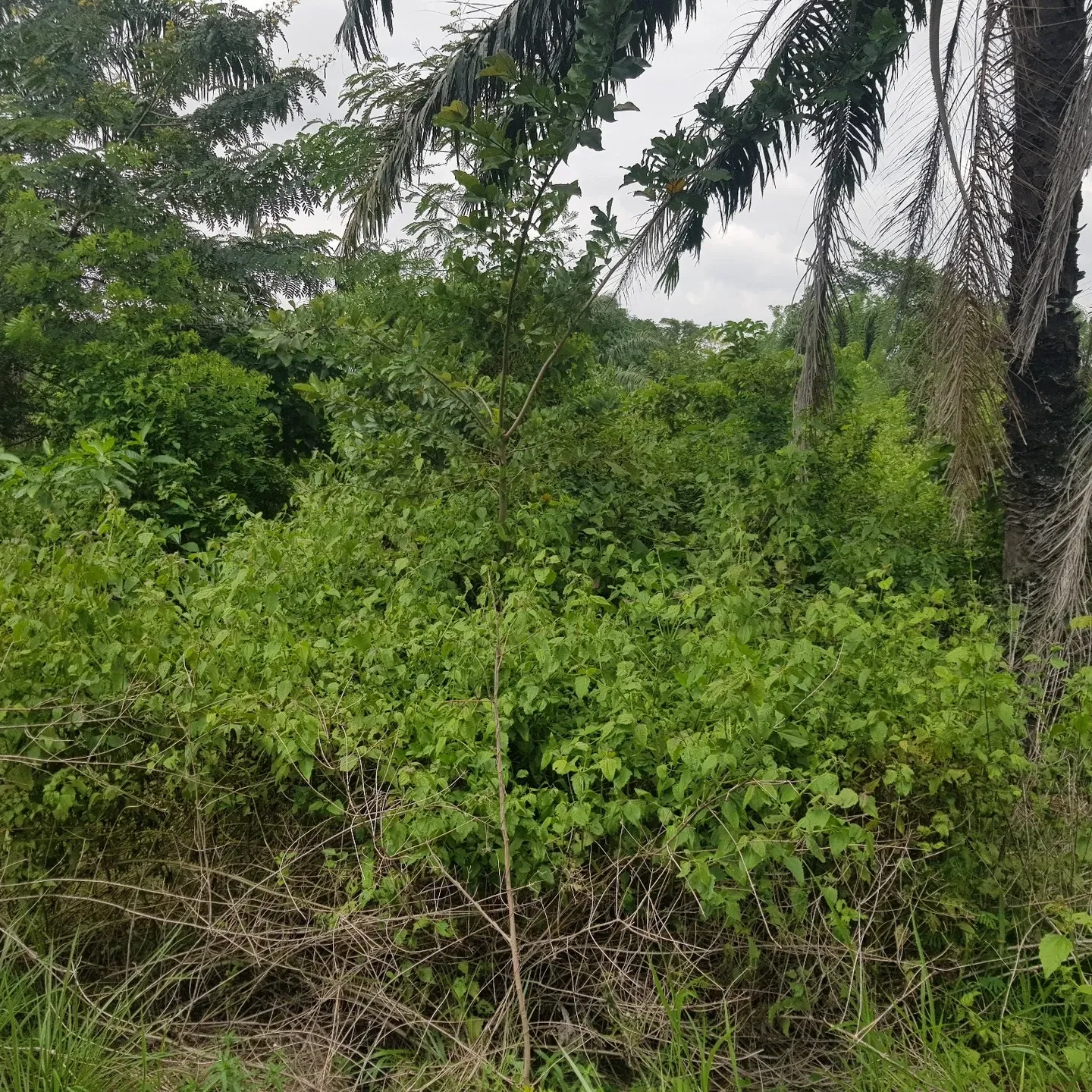
This is what the land looks like at the moment

The land for the project has been bought

This is what the land looks like at the moment. It covers 2 lots; in Togo land is traded in lots of 600 m² each. Soon the scrub will be cleared by hand. Larger trees will stay where they do not get in the way, shade is always welcome.

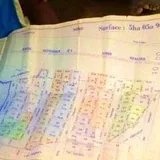
An overview map (unfortunately a little blurred)

An overview map (unfortunately a little blurred). At the top right are the two plots for the project directly on the main road, which adds to security; I was strongly advised against a location away from houses. Togo lies close to the equator, so the nights are almost the same length all year: it gets dark at 6:15 pm and light again at 5:15 am. Kpalimé is 11 km away.

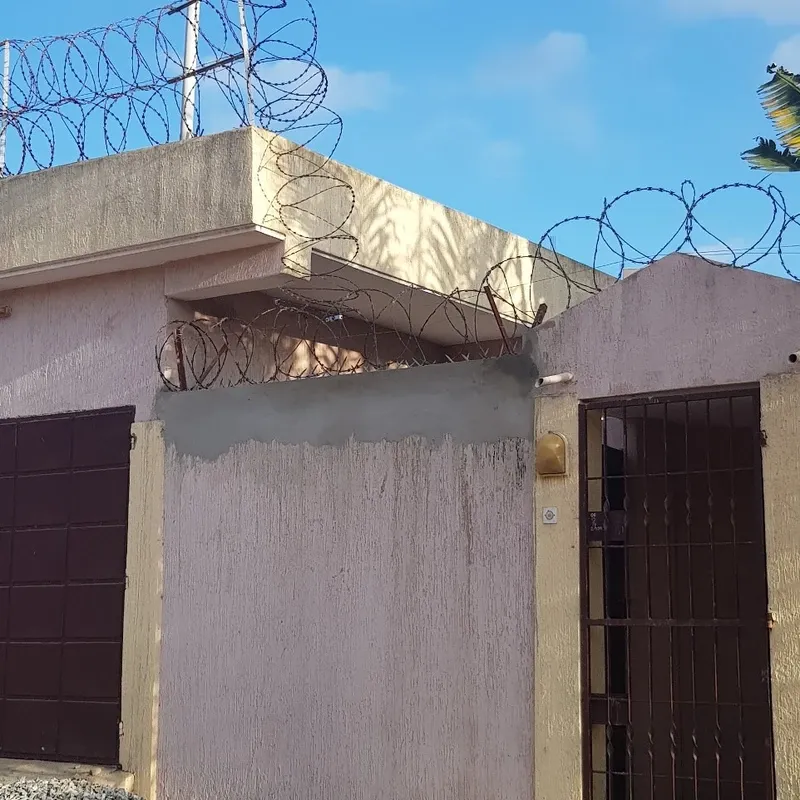
In a poor country like Togo you have to protect your property carefully

In a poor country like Togo you have to protect your property carefully. First a 2.5 m wall with a large entrance gate will be built around the site, possibly with barbed wire. There is a possible power connection 300 m away.