The project
Agriculture in Togo
A maize planter would quickly raise yields. Donations are still urgently needed to buy one.
Traditional farming
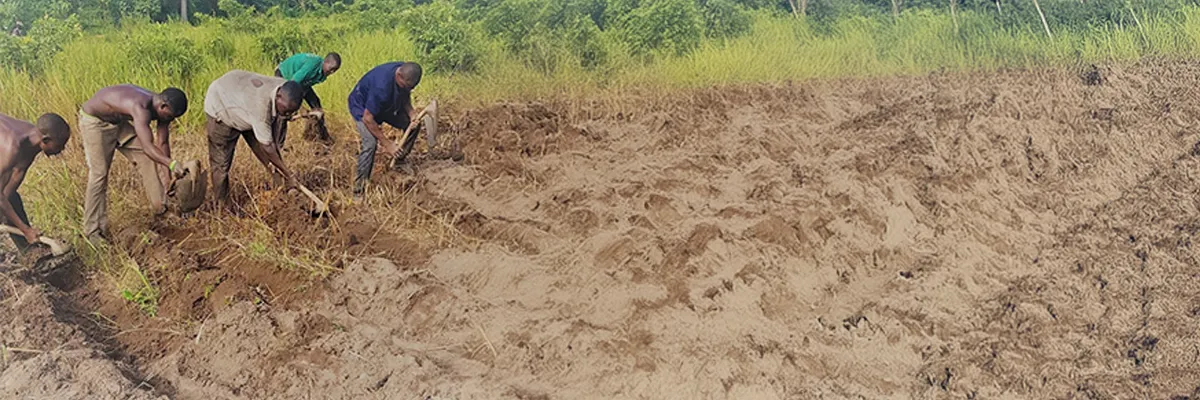
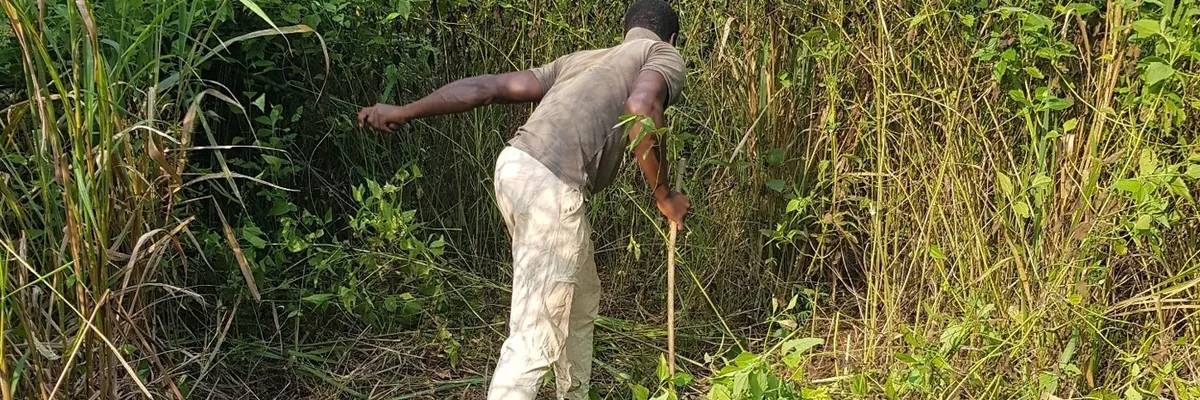
Farming is done by smallholders with 0.5 to 2 ha. Most farmers are very poor and cannot afford machines. Field work involves hardship we can hardly imagine: everything is done by hand and even the harvest is carried home. Loads are traditionally carried on the head with incredible skill, often as heavy as the person's own body weight. Between noon and 3 pm work usually stops because it is too hot even for people used to the tropical sun.
Building a machinery station
The idea of a machinery station in the diocese of Kpalimé came up during a tour of Togo with representatives of OCDI (Caritas). OCDI acts as an adviser, and its local knowledge and contacts are a great help. The station provides a tractor with various implements and a trained driver for field work. Whenever I tell farmers about the idea, I see faces light up with anticipation.
The machinery station
The site is enclosed by a 2.40 m wall and a well supplies water. In January 2022 a container with workshop equipment and other aid arrived in Togo, and in August 2022 we got a power supply (220 V, 15 A). A disc harrow and a rotary tiller were already there, and for maize stubble and weeds the company Dücker from Stadtlohn kindly donated a sturdy mulcher. A maize planter, ideally a no-till drill, would raise yields quickly. Machine work is charged at variable cost.
Workshop for repairs and training
A workshop has been set up in a small container on the station. It is needed for repairs, but above all for training farmers in handling and maintaining the machines.
Location
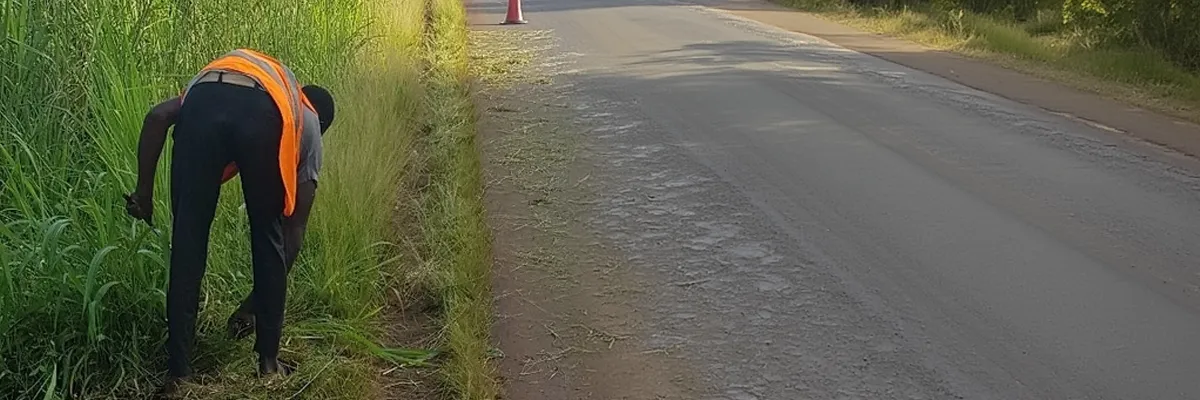
The station is near Agou-Nyogbo, about 110 km north of the capital Lomé and about 11 km south of the regional town of Kpalimé. A new tarmac road makes it easy to reach. To build up the station properly and train staff, I have moved my residence to Togo.
I report on progress regularly under News. Without donations this project is not possible. News
How you can help
Donation account machinery station
- IBAN
- DE57 4015 4530 0050 2943 05
- BIC
- WELADE3WXXX
- Bank
- Sparkasse Westmünsterland
Donation receipts for German tax purposes are issued from 50 euros. Please include your postal or email address with the transfer or send us a short email.